Desk Review: SevenRooms vs Tablecheck — the post-DoorDash CRM stack

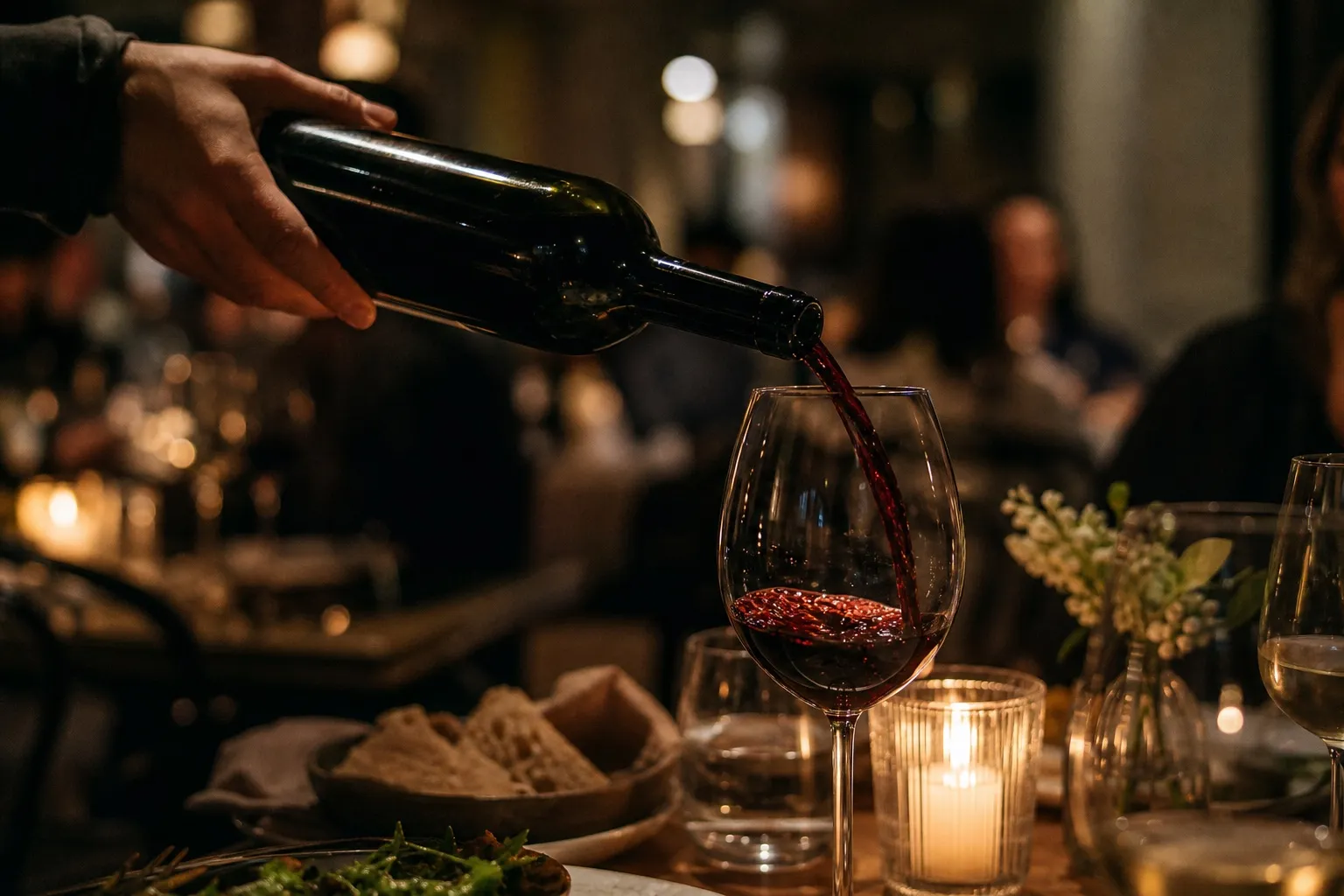
Nine months after DoorDash closed the $1.2B SevenRooms acquisition, I logged into both SevenRooms and Tablecheck on a quiet Wednesday afternoon and ran the same multi-unit operator scenario through each. The contrarian read: SevenRooms is becoming a frontend for delivery-led marketing automation, and Tablecheck's neutrality is worth real money.
It is two o’clock on a Wednesday afternoon and the dining room is empty in the way dining rooms get empty between lunch and the first bar covers of the night. I have my laptop on the bar pass, a coffee that is too cold to drink, and two browser tabs open: the SevenRooms operator console on the left, the Tablecheck operator console on the right. Both are demo environments. Both belong to operators who have generously let me poke around in the back of house for the morning. I have not been doing this comparison from a deck. I have been doing it from inside the products, with my hands on the wheel, for the better part of three weeks.
This is the comparison I have been promising operators in my inbox since the DoorDash/SevenRooms acquisition closed on June 13, 2025. Nine months on, the corporate context around SevenRooms is now stable enough to write about honestly, and Tablecheck has continued to ship as the independent APAC-anchored alternative. The contrarian take I want to argue, up front, before I get into the screens: SevenRooms post-DoorDash is now, in product terms, the frontend for a delivery-led marketing automation strategy. That is not a criticism. It is a description. If your business is fundamentally on-premises — hotel F&B, fine dining, destination dining, international — then Tablecheck’s neutrality is worth real money, and worth more of it the longer the $1.2B all-cash deal compounds inside DoorDash.
Setup: what you get on day one
The first thing you notice when you open both products in parallel is how different the day one operator experience is.
SevenRooms greets you with what the company calls a CRM-first dashboard: a guest list, a reservation grid, a marketing automation rail, and — newer post-close — a tile labelled “DoorDash Reservations” that surfaces inbound bookings sourced through the DoorDash consumer marketplace. There is no Going Out tile in this particular tenant because the operator is not in a Going Out launch market, but the DoorDash branding is now woven through the chrome of the product in a way that was not true a year ago. The header of the operator console is co-branded. The integrations tab leads with DoorDash. The footer carries the parent-company attribution. None of this is bad. It is a consequence of close. It is, however, the visual signal that you are now logging into a DoorDash product.
Tablecheck, by contrast, opens to a reservation grid and a guest CRM with a noticeably more operations-leaning chrome. There is a sidebar for table management. There is a panel for waitlist and walk-in flow. There is an inbound channel manager that surfaces bookings from Google, from Tablecheck’s own marketplace, and — this is the APAC tell — from a long tail of regional booking partners that an operator in Tokyo, Singapore, Sydney, or Hong Kong is going to recognise and an operator in New York is mostly not. The default view rewards the host, not the marketer. The marketing automation tooling is there, but it is one click off the home view rather than the center of gravity.
The day-one difference, summarised: SevenRooms presents as a guest-data platform that happens to take bookings; Tablecheck presents as a reservations and operations platform that happens to do guest CRM. Both descriptions are correct. They reflect two different theories of what the product is for.
CRM: guest profile depth and segmentation
Guest CRM is the category where SevenRooms has historically owned the high ground, and on the operator panel I worked, that high ground is still defensible. The guest profile is genuinely deep. Spend tier, visit count, last-visit recency, tags, allergies, dietary notes, server notes, marketing consent, channel attribution, and — newer — a “delivery affinity” attribute on operator tenants that have a DoorDash integration enabled. Segmentation tools support the standard CRM cuts (high-value, lapsed, anniversary cohort, dietary-restriction cohort) and a marketing builder that ties segments to automated campaigns out of the box. The reference base SevenRooms cites for this stack — Marriott, MGM, Wynn, Mandarin Oriental, Wolfgang Puck, Nobu, JKS Restaurants, Dishoom — is exactly the customer profile where the guest record is the asset, and the platform has been building toward that customer for a decade. The depth shows.
Tablecheck’s CRM is, in honest comparison, a step behind on profile depth and a step ahead on something else: channel-aware capture across a fragmented APAC booking landscape. The guest profile carries the standard fields and adds language preference, inbound-tourism channel attribution, and — usefully for hotel F&B groups operating across multiple APAC markets — a roomed/non-roomed flag that surfaces whether the diner is a hotel guest or an outside reservation. Segmentation is more limited than SevenRooms in the marketing-automation direction and more useful than SevenRooms in the operations-segmentation direction (regulars by daypart, walk-in conversion cohorts, language-routed VIPs).
The cut that matters: if your operator playbook is “spend my marketing dollars on the highest-probability rebook from my own guest list,” SevenRooms is the better tool today, and the gap is meaningful. If your operator playbook is “capture every channel a guest can reach me through and route the operations correctly when they walk in,” Tablecheck closes the gap and arguably surpasses on the operations side.
Reservations: waitlist, table management, integrations
This is the section where the day-one chrome difference starts paying out in concrete workflow differences.
The SevenRooms reservation grid is competent. It does what a reservation grid needs to do: book by party size and time, allow drag-to-reseat, support holds and blocks, surface guest notes inline, and flag VIPs. The waitlist module is solid. Table-management tools are functional and well-integrated with the CRM side. The cover-flow integrations with the operator’s POS are documented, and on the tenants I’ve seen them connected to, they work as advertised. Where the experience starts to drift, post-close, is at the marketing automation layer leaking into the reservation flow: an operator opting in to DoorDash Reservations gets inbound bookings tagged with DoorDash channel attribution, and the cross-sell prompts to enable Going Out features have grown noticeably more present in the operator console over the past six months.
Tablecheck’s reservation and table-management surface is, by feel, the more operations-native of the two. Channel manager is first-class: the operator can see, in one view, inbound bookings from Tablecheck, Google, partner OTAs, hotel concierge channels, and direct embed widgets. Walk-in management is well-integrated with the waitlist module and with floor management. POS integrations are documented across the major APAC and global vendors, and the hotel-PMS connectivity I’ll come to in a moment is the real differentiator. The reservation grid itself is fine — comparable to SevenRooms — but where the platform is doing meaningful work that SevenRooms does not is in the channel-aggregation layer above the grid.
For a multi-unit operator in a market with a fragmented booking ecosystem (most of APAC; meaningful chunks of Europe; increasingly, parts of the US where Google Reserve and direct embeds are taking marketplace share back from the aggregators), Tablecheck’s channel-aggregation work is a real economic benefit. For an operator in a US market dominated by two or three platforms, it is overhead.
Marketing automation: where the DoorDash frontend shows up
Here is where the contrarian thesis earns its keep. SevenRooms has always been a marketing-automation-strong reservations platform — that was true under PSG ownership before HeyPluto, before the eventual sale to DoorDash, and it has remained true under Joel Montaniel’s continued product leadership post-close. The marketing automation rail does segmented email, segmented SMS, automated win-back flows, automated review-prompt flows, automated post-visit feedback flows, and — most consequentially — campaign attribution back to specific guest segments and reservation channels. This is a real product surface and it works well.
What has changed in the marketing automation surface since close is the centre of gravity. The rail now has Going Out as a featured channel where it is available. The campaign builder surfaces “DoorDash channel” as a destination alongside the operator’s own owned channels. The roadmap, as flagged by Parisa Sadrzadeh in post-close interviews and confirmed by the May 2025 announcement materials, is for the marketing automation rail to become bilateral — for SevenRooms-resident guest data to enrich DoorDash consumer profiles and for DoorDash delivery behaviour to enrich SevenRooms guest records. The unified record was the strategic logic of the deal. The marketing automation rail is the operator-facing surface where that logic lands first.
So the contrarian read I want to mark, plainly: SevenRooms’ marketing automation, increasingly, is structured to monetise delivery-adjacent guest behaviour. That is the asset DoorDash bought $1.2B of. The marketing automation rail is the place where the buyer’s strategic logic shows up in the seller’s product. If you are a delivery-leaning operator, this is unambiguously good; the cross-channel marketing pull is the single most concrete benefit you get from being on a DoorDash-owned reservations platform. If you are an on-premises-leaning operator with no meaningful delivery business, the same product surface is, in honest terms, advertising the parent company’s adjacent business to your guest list. That is a price you are paying for the product. Whether it is a price worth paying is your call.
Tablecheck’s marketing automation, by comparison, is more vanilla and more neutral. Segmented email, segmented SMS, automated win-back, automated feedback, and the standard cohort-targeting tools — competent, fully featured, and missing the depth that SevenRooms has on the highest-value cohorts. There is no parent-company adjacent business being routed through the rail because there is no parent-company adjacent business. Tablecheck remains privately held, Tokyo-headquartered, and unaffiliated with a delivery aggregator. For an on-premises-leaning operator, that neutrality is worth a non-trivial premium on the per-cover comparison.
I will mark this as an interpretation rather than a benchmark: the value of marketing-channel neutrality, for an operator whose business is structurally on-premises, is the option value of not having your guest data work pulled toward an adjacent channel that does not serve your unit economics. Option value is hard to price. It is not zero.
The integration story: POS, PMS, and hotel-specific connectivity
The integration story is where the two platforms diverge most sharply on what they are for.
SevenRooms has been ground-truth strong on POS integration in the US market for years. The Toast integration is mature. The Square integration is documented and widely deployed. Lightspeed, NCR Aloha, Micros — the standard US-and-Europe POS stack — is covered. The hotel-PMS integrations are where the install base reference list earns its place: Opera, Infor, Mews, and other hotel-PMS vendors are documented as supported integrations on SevenRooms’ product material, and the Marriott / MGM / Mandarin Oriental / Wynn customer base is the proof that those integrations have been deployed at enterprise scale. The hotel F&B vertical is, in honest terms, SevenRooms’ most defensible customer mix, and the deal documents covering the close consistently mention these accounts as the reference base for the platform’s enterprise depth.
Tablecheck’s integration story is structured differently. POS coverage in APAC is genuinely strong — the platform’s home market has a different POS landscape than the US and Tablecheck has spent years building into it. Hotel-PMS connectivity is, on the operator panels I’ve seen, comparable in depth to SevenRooms on the major global vendors and meaningfully deeper than SevenRooms on the APAC-specific PMS systems that show up in hotel F&B groups headquartered in Tokyo, Singapore, Hong Kong, and Bangkok. The inbound-tourism channel work — Google Reserve, partner OTA channels, hotel concierge channels, regional booking marketplaces — is the part of the integration surface where Tablecheck is not so much ahead of SevenRooms as in a different category of product.
The synthesis on integrations: SevenRooms is the better choice for a US-anchored hotel F&B group whose POS and PMS landscape is the US-and-Europe enterprise stack. Tablecheck is the better choice for a multi-region hospitality group with meaningful APAC exposure, an inbound-tourism customer mix, or a hotel-F&B footprint anchored on APAC-specific PMS systems. For a global luxury group operating across both — a Mandarin Oriental, a Nobu, a Four Seasons-class operator — the honest answer is that you probably end up running both platforms in different regions, which is what some of these groups are already doing.
The scorecard
I want to put numbers on the comparison, with the standard Vibe Check caveat: this is a desk scorecard from the operator-console side, not an audit of every feature. I’ll mark interpretation where I’m marking it, and I’ll keep the categories operator-relevant rather than feature-checklist.
CRM and guest profile depth (1 to 5):
- SevenRooms: 4.5 — the high-water mark in the category, especially for high-cohort-value operators. The DoorDash channel attribution is additive for delivery-leaning operators and neutral for the rest.
- Tablecheck: 3.5 — competent and channel-aware, with operations-side strengths SevenRooms does not match, but a step behind on profile depth for the highest-value guest cohorts.
Reservations and table management (1 to 5):
- SevenRooms: 4.0 — solid grid, solid waitlist, solid VIP flow; channel coverage is concentrated on a few dominant US/global platforms.
- Tablecheck: 4.5 — operations-native, channel-aggregation-first, and the better choice for any operator whose inbound booking landscape is fragmented.
Marketing automation (1 to 5):
- SevenRooms: 4.5 — best-in-class for delivery-adjacent automation, post-close; for on-premises-leaning operators, the same engine routes some of its value into channels that do not serve your unit economics. Interpretation, marked.
- Tablecheck: 3.5 — vanilla, competent, neutral. Less ambitious. For operators who do not want their marketing rail pulled toward an adjacent business, the neutrality is a feature, not a bug.
Integrations: POS, PMS, and hotel-specific connectivity (1 to 5):
- SevenRooms: 4.0 — strongest in the US-and-Europe enterprise stack; mature on the major global hotel PMSes; the reference customer base is the proof.
- Tablecheck: 4.0 — comparable on the global stack, deeper on APAC, materially stronger on inbound-tourism channel plumbing and regional PMS systems.
Corporate-context risk (1 to 5, higher is lower risk):
- SevenRooms: 3.0 — now a DoorDash subsidiary. The product is still shipping. Roadmap is now structurally aligned with DoorDash commerce platform priorities. For some operators that alignment is value; for others it is risk. I mark this as an interpretation rather than a benchmark, and I mark the risk as real.
- Tablecheck: 4.5 — privately held, Tokyo-headquartered, no delivery-aggregator parent. The neutrality is a real and pricing-relevant differentiator for on-premises-leaning operators.
I do not weight these to a single composite number on purpose. Operator weights vary. A delivery-leaning multi-unit casual group will weight marketing automation and corporate-context-as-value sharply differently from a fine-dining tasting menu or a hotel F&B group. The scorecard is a starting point for your own weighting.
The bet
If you have read this far you want to know what I would actually do. So here it is, with the standard caveat that I am writing about platforms and not your specific concept.
If your business is delivery-leaning or you want to be: SevenRooms wins. The integration with the DoorDash consumer marketplace, the Going Out reservation-credit mechanic where it is available, and the marketing automation rail’s bilateral roadmap with delivery data are real assets you cannot get anywhere else in the category. The corporate-context shift since the $1.2B all-cash close is, for this profile, value rather than risk. Sign for it eyes-open, read the data-rights and exclusivity clauses, and price the lock-in honestly.
If your business is fundamentally on-premises — hotel F&B, fine dining, destination dining, international: Tablecheck wins, and on margins that have widened post-close, not narrowed. The neutrality is worth real money. The operations-native chrome is the right chrome for your house. The APAC integration depth is, for any group with global exposure, a competitive advantage rather than a checkbox. The marketing automation rail is less ambitious than SevenRooms’ rail, and for this profile that is closer to a feature than a bug.
If you are a global luxury group operating across regions: the honest answer is that you probably run both, partitioned by region, with SevenRooms covering the US-and-Europe anchor properties and Tablecheck covering APAC. This is the configuration I see most often in the install base of groups in this tier, and it is the configuration that respects the structural strengths of each platform without forcing one to do work the other does better.
The watch item across all three profiles: the companion review we will publish closer to mid-year will return to this comparison after the next two DASH earnings calls have given us a clearer read on how the SevenRooms enterprise base has retained post-close and how aggressively the marketing automation roadmap has shipped against the unified-record commitment. The OpenTable side of the table is the third leg of the category and the right reference point if you are evaluating against the incumbent rather than across the two challengers.
The honest summary, marked as interpretation: the reservations and guest-CRM category is no longer a single-incumbent market and no longer even a clean two-or-three-way contest. It is a market where the corporate-context of your vendor materially shapes which channels your guest data gets pulled toward over the next five years. SevenRooms is now a frontend for delivery-led marketing automation, with all of the strengths and all of the strategic dependencies that framing implies. Tablecheck is the on-premises-native, internationally-anchored, neutrally-owned alternative, with strengths in operations and channel aggregation and a step behind on the highest-cohort-value CRM cuts. Pick the platform whose corporate context aligns with where your business is going, not just with where it is today. The vendor decision compounds over a five-year window. The corporate-context part of the decision compounds over ten.
I am back at the bar pass now. Both laptops are still open. Service is forty minutes out and the kitchen has started prep. I am writing this last paragraph because the operator whose tenants I have been working with this morning has just asked me, point-blank, what I would do. He runs four units, two in New York, one in Los Angeles, one in Singapore. The honest answer for him is the global-luxury answer above: run SevenRooms on the US anchor properties, run Tablecheck on the Singapore property, do not pretend either platform is the right one for both halves of his business. He will roll his eyes at the answer because he wants one vendor. I cannot give him one. The category does not have one. It has two structural answers and a partition between them, and the closing of the DoorDash deal has, if anything, sharpened the partition rather than collapsed it.
— Sofia leads Vibe Check vendor reviews for TableTransfers. Tips: vendors@tabletransfers.com.
Featured
More
Browse all 494 posts
The Voice Agent Maturity Curve
mise
·12 min read
The Four Margins of a Restaurant
mise
·14 min read
The AI Premium in Hospitality M&A: Broker Story or Real Number?
the bottom line
·9 min read
What the DoorDash/SevenRooms Deal Actually Buys
the bottom line
·11 min read
Related posts
vibe check
·16 min read
Desk Review: Lightspeed Restaurant, the Quiet Half of the Duopoly
vibe check
·18 min read
Desk Review: OpenTable's 'System of Record' — what restaurants are actually agreeing to on April 16
vibe check
·18 min read