Desk Review: Toast's AI Suite, Read From the Outside

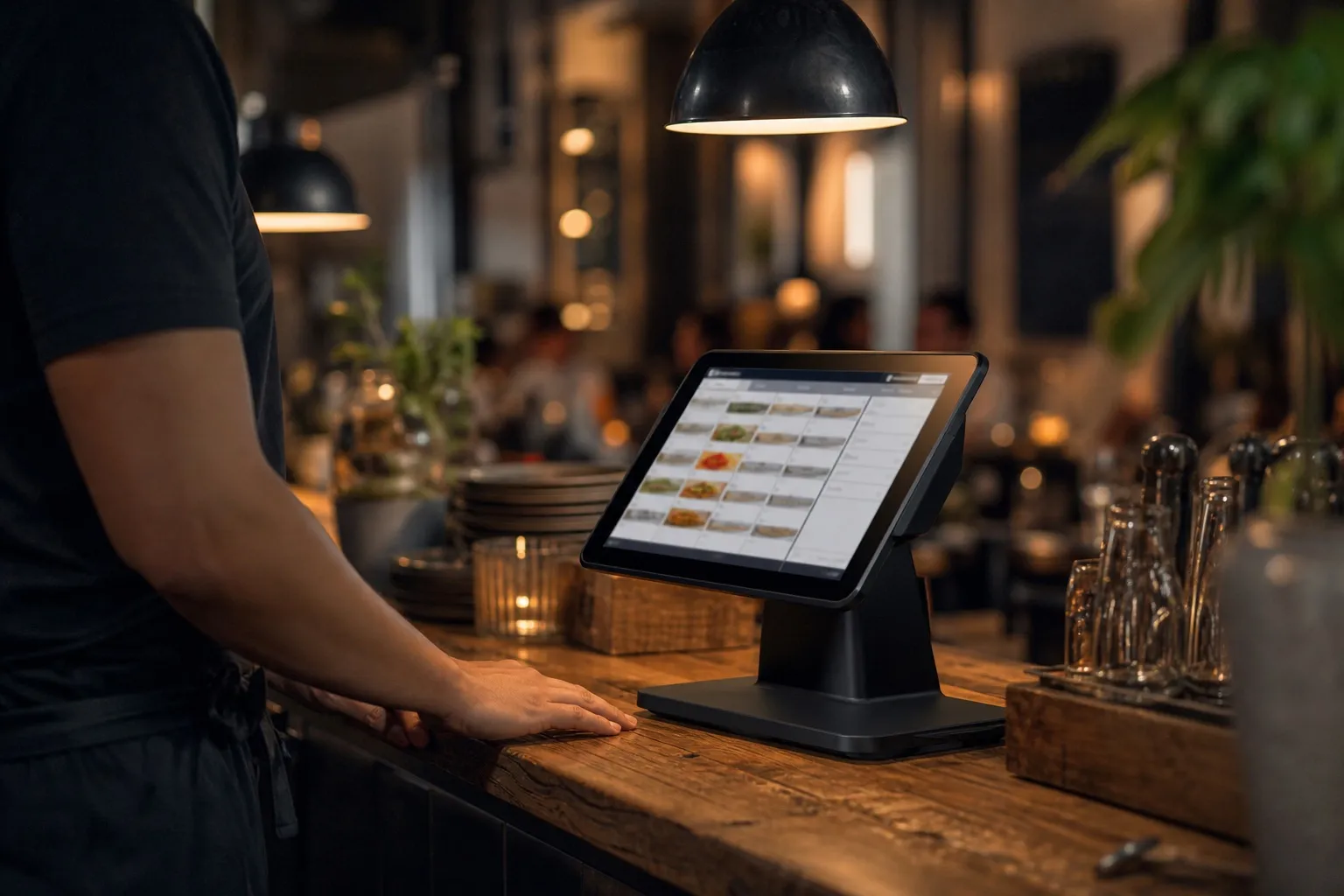
Toast has spent eighteen months turning Sous Chef into ToastIQ, wiring AI into the upsell flow, the marketing stack, and the phone line. We didn't run a panel on this one. We read the docs, the earnings calls, and the operator commentary, then said what we actually think — module by module, with the methodology disclosure up top.
I write this one with a confession in the first paragraph because the format requires it. Vibe Check, done properly, is a six-operator panel running the same tool for ninety days against a structured weekly log and three interview checkpoints. That’s the bar — and it’s a bar we did not clear on Toast’s AI suite, because Toast IQ in the form that matters only reached general availability inside the last seven months, and the marketing agent only debuted at the start of May. You cannot run a ninety-day panel on a product that has been GA for ten days.
So: this is a Desk Review. It’s based on Toast’s public product documentation, the company’s last three earnings calls, press coverage, and operator commentary in publicly accessible forums and substacks — not a multi-operator panel test. I’m being explicit because our usual Vibe Check format runs a six-operator panel for ninety days and we have not done that here. The format is honest about what it is: a synthesis of what’s publicly known, intended to be useful when the in-the-room panel isn’t possible yet. When we can run the panel — likely the back half of this year — we will, and we’ll publish it beside this one so readers can compare what the public materials promised against what the room actually said.
The contrarian lead: Toast’s AI story is not the assistant. It’s the agentification of work the assistant used to recommend. The conversational layer — ask in plain English, get an answer — is the part the press has covered, and it is the least interesting development of the last twelve months. The interesting development is that Toast is now shipping AI features that take the action: build a month of marketing campaigns, draft an upsell prompt for a server, optimize a beverage page. The chat box is the demo; the agents are the product.
What the suite actually is, after the rebrand
Toast began piloting its conversational AI assistant under the codename Sous Chef in 2024. In May 2025, on the Q1 earnings call, CEO Aman Narang told analysts that a pilot restaurant had seen average order volume rise 6% from an AI-powered menu upsell tool, and that an early advertising tool delivered more than 10× return on ad spend for another pilot customer. In October 2025, Toast formally renamed Sous Chef to Toast IQ and shipped the conversational assistant to all U.S. customers across iOS, Android, and Toast Web — the rebrand we covered as breaking news on the day it happened.
As of the Q1 2026 earnings call on May 7, Toast IQ has roughly 40,000 weekly active locations and has processed more than 8 million queries in its first four months. Two days before that call, Toast launched Toast IQ Grow — a marketing agent that builds and optimizes campaigns from sales forecasts and customer data — alongside 20+ other product updates including a reimagined Toast Local consumer app with integrated Resy reservations.
That’s the timeline. The suite, as currently shipped, breaks into five modules any operator evaluating Toast should be able to name:
- Toast IQ Assistant — the conversational layer. Ask in plain English, get an answer, optionally take an action without leaving the chat.
- AI Menu Upsells — server-, kiosk-, and handheld-side prompts drafted from historical sales data.
- Toast IQ Grow (Marketing Agent) — builds and runs a month of SMS, email, and social campaigns from customer and sales-forecast data.
- Coca-Cola Beverage Optimization — an exclusive integration pulling Coca-Cola merchandising assets into the digital menu via the assistant’s “For you” feed.
- Voice Ordering (SoundHound) — phone-order AI agents that take the call and write the ticket directly into the POS, via Toast’s SoundHound integration.
Worth naming separately: Toast is using the same AI investment internally. On the Q1 call, Narang reported engineering coding velocity up 60%+ and roughly 40% of support interactions resolved by AI — the second number is why some Capterra / Trustpilot complaints have a slightly different texture than they did pre-AI.
Module-by-module verdict
We’re going to walk each one. The verdicts here are derived from public materials, not panel data. We mark each one with a confidence level: HIGH (the public evidence is strong enough that a panel would likely confirm), MEDIUM (the public evidence is suggestive but a panel could easily flip it), or LOW (this is a desk read; treat the verdict as a hypothesis).
Toast IQ Assistant — verdict: keep, with the caveat that you have to use it. (Confidence: HIGH)
The assistant is the one piece of the suite where the public adoption data is genuinely strong. 40,000 weekly active locations on a base of roughly 148,000 customer locations is meaningful penetration in seven months. The operator quotes Toast has published — Romain Bernus of Le Petit Four Bakery telling QSR Web that “complex reports take five seconds now” — sound like marketing until you read the substack write-up by a long-time observer of restaurant tech who concludes that the assistant uniquely bridges the insight-to-action gap and matches “the rhythm of the work” in a way previous BI tools never did.
The critical caveat, from that same observer: Toast IQ knows everything that happens inside Toast and very little of what happens outside. It doesn’t see reservation patterns from a third-party booking platform, true distributor costs, reviews on a non-integrated channel, or staff expertise. That’s a real limit. The assistant will feel magical for the operator who has consolidated onto Toast and partial-to-disappointing for the operator who hasn’t.
Reach for it if: you’re already deep into Toast and have at least an hour a week to actually ask it questions. The 8-million-query / 40K-WAL number works out to roughly fifty queries per active location per month, which is the floor for getting value. Hold off if: Toast is one of four systems running your operation and the others don’t talk to it. The assistant will give you a confidently wrong answer about a question whose context lives elsewhere.
AI Menu Upsells — verdict: keep, but verify the 6% on your concept. (Confidence: MEDIUM)
The most-quoted single number in the whole suite is Toast’s claim, on the Q1 2025 earnings call, that a pilot restaurant saw average order volume rise 6% from the AI-powered menu upsell tool. That number is real — it came from Narang’s prepared remarks — but it is one (1) restaurant in a pilot. Toast has not, to our knowledge, published a cohort-wide upsell-lift number, which is the number that would tell you whether the effect generalizes.
The mechanics: the tool surfaces upsell prompts on Toast handhelds, terminals, and the customer-facing kiosk, drafted from the location’s own historical pairings. The Spring 2026 release notes explicitly upgrade Menu Upsells with AI-driven recommendations across handhelds, kiosks, and guest-facing displays.
The thing to watch — which a panel would catch faster than a desk read — is server-side reception. The single most-cited operator complaint about category-wide upsell tools is that they make the floor feel scripted. That risk applies to Toast’s version too, and the public materials don’t address it.
Reach for it if: you have a kiosk or handheld order channel where the upsell is shown to a guest rather than spoken by a server. The script problem disappears when the script is on a screen. Hold off if: your concept depends on server presence and the upsell is going to come through the server. Test the floor reaction before scaling.
Toast IQ Grow (Marketing Agent) — verdict: too new to keep, too interesting to ignore. (Confidence: LOW)
This is the module we cannot honestly form a strong verdict on — it has been GA for seven days as of publication. Toast’s disclosed pilot data: average 8% sales lift across pilot customers versus comparable Toast restaurants, with the top quartile seeing 40%+ growth in the first month. One disclosed standout (Sahara Bistro Shawarma) saw 30%+ sales growth, with nearly a third of March sales attributable to Toast marketing tools. Narang reiterated the 8% pilot lift on the Q1 call two days after launch.
The mechanic is the more important thing: the agent designs and ships a month of SMS, email, and social campaigns in minutes, optimised against the location’s own sales-forecast data, customer behaviour, and contextual signals like weather and nearby events. It’s not a chat interface that suggests; it builds the thing and runs it. That is the agentification I flagged in the lead.
Why LOW confidence: pilot data is selected. The operators most likely to volunteer for a marketing pilot are the ones who don’t have a marketing programme today — which is exactly the cohort where a baseline marketing automation product would produce a big number even if the AI underneath wasn’t great. The 8% lift may be real. It may also be 8% above zero. The panel question: what’s the lift against operators who already had a half-decent SMS programme?
Reach for it if: you have no marketing automation today and are bleeding the lapsed-guest segment. The agent will give you a floor. Hold off if: you have a working programme you trust. Wait until we (or someone credible) publishes head-to-head numbers against existing automation stacks. We’ll publish one in Q4 if we can run the panel.
Coca-Cola Beverage Optimization — verdict: nice if you’re a Coca-Cola account; a curiosity otherwise. (Confidence: MEDIUM)
The part of the October 2025 launch that got the least press attention is, structurally, the most interesting move Toast made all year. Toast and Coca-Cola announced an exclusive AI feature inside Toast IQ that surfaces beverage-optimisation recommendations in the assistant’s “For you” feed — better photos, sharper descriptions, suggested digital-menu placements — specifically for Coca-Cola products.
For Coca-Cola accounts: straightforwardly useful. Beverages are high-margin, under-represented in digital orders, and the merchandising assets are professional. For Pepsi accounts: a competitive moat is being built against you inside the POS your franchisor mandates. That’s a strategic conversation, not an operator-on-the-floor one.
Reach for it if: you’re a Coca-Cola account and you do meaningful digital-order volume. Hold off if: you’re a Pepsi account. Watch the integration like a hawk; the structural precedent matters more than the feature.
Voice Ordering (SoundHound) — verdict: a category bet, not a Toast bet. (Confidence: MEDIUM)
Toast’s voice-ordering layer is built on a partnership with SoundHound that lets the AI take phone orders, sync the menu in real time, and write the ticket directly into the Toast POS. The feature went into beta in June 2025.
The desk read: the maturity question here is a category question, not a Toast question. Voice agents in 2026 are at a developmental stage David Lee maps in The Voice Agent Maturity Curve. Toast’s voice layer sits roughly where most of the category sits — handles structured orders well, struggles with off-menu requests — and the integration is one of the more credible options because the menu-sync problem is solved by the POS being the same system. If you don’t want voice today, this isn’t the module that should change your mind.
Reach for it if: you take a lot of off-hours phone orders and are losing them to voicemail. Hold off if: you’d rather wait one more cycle for the off-menu-request handling to mature.
The wider read
A few things to put on the table that no single module covers.
Adoption is genuinely strong. 40K weekly active locations on ~148K, with 8M queries in four months, is a real curve — better than I’d have guessed pre-launch. It means the assistant cleared the did anyone actually use it bar most enterprise AI assistants fail. It does not tell you whether those locations are pulling value from it. Usage and value are correlated, not identical.
Pricing is unresolved and is the most important thing to watch. On the Q4 2025 call, Toast management said monetisation of Toast IQ is still being explored, with usage-based GPT-style models under consideration. As of Q1 2026, Toast IQ Grow is the first piece tied to a paid SKU; the assistant and Menu Upsells remain inside the core platform fee. That gap is going to close. Operators evaluating Toast on a multi-year horizon should assume the suite will be priced separately within 12-18 months — and should ask about price-lock language now.
The platform-consolidation question is real. The most thoughtful critique of Toast IQ in the public record is from the Substack write-up linked above: consolidating more of your business onto Toast gives Toast more pricing power over you. That’s not a reason to avoid Toast IQ — it’s a reason to use it with eyes open, document your switching costs, and not casually agree to a longer contract just because the AI feature was bundled.
Support is the second-order story. The most consistent operator complaint in the Capterra and Trustpilot review pools — and the one Sofia surfaced in the rebrand piece — is post-sale support quality. Toast’s 40%-of-support-via-AI number from the Q1 call ought to be moving that needle; the public reviews lag by quarters and don’t yet show it. The panel question: has support actually gotten better, or did Toast just reduce ticket cost by deflecting tier-1 questions to the bot?
Reach for the suite if
- You’re already running Toast, your menu has 35+ items, and Toast’s data covers most of your operation.
- You operate three or more locations.
- You have a kiosk or handheld where Menu Upsells can run in front of a guest, not through a server.
- You’re a Coca-Cola account and care about beverage attach on digital orders.
- You have no marketing programme today and Toast IQ Grow would be your floor, not your ceiling.
- You’ve read the Four Margins frame and concluded the AI suite moves your operating margin meaningfully.
Hold off if
- You’re a single-location indie with a menu under 30 items. Menu Upsells won’t have variance to work with; the assistant’s insight is bottlenecked by data volume.
- Toast is one of four systems and the others don’t talk to it.
- You already have a marketing stack you trust. Wait for an independent head-to-head.
- Your concept depends on server presence and you can’t run Menu Upsells through a screen. The script-feel risk is real and we can’t rule it out from desk.
What I’ll change in the panel piece
When we run the ninety-day panel — same six-operator scaffolding we used for the Lightspeed scheduler review — the questions I want to answer are the ones a desk read can’t:
- How much of the 40K-WAL adoption is rep-driven vs operator-pull?
- What is the actual 60-day P&L impact of running the full suite, with a control?
- Does Menu Upsells erode server discretion the way the category historically has?
- What’s the real performance of Toast IQ Grow against operators with an existing marketing stack, not against operators with none?
- Has the support experience actually improved post-AI-deflection, or is the number cosmetic?
Honest summary, from the chair I’m in today: Toast’s AI suite is the most ambitious and best-integrated AI product in the POS-class category right now. The assistant is real. The marketing agent is interesting. The upsell module needs verification at scale. The Coca-Cola play is more strategically important than it looks. The whole thing is one pricing decision away from being either a category-defining bundle or the catalyst for the consolidation backlash Sofia warned about. We’ll know which when the panel runs.
— Sofia leads Vibe Check. Tips: sofia@tabletransfers.com.
Featured
More
Browse all 494 posts
The Voice Agent Maturity Curve
mise
·12 min read
The Four Margins of a Restaurant
mise
·14 min read
The AI Premium in Hospitality M&A: Broker Story or Real Number?
the bottom line
·9 min read
What the DoorDash/SevenRooms Deal Actually Buys
the bottom line
·11 min read
Related posts
vibe check
·16 min read
Desk Review: Lightspeed Restaurant, the Quiet Half of the Duopoly
vibe check
·18 min read
Desk Review: OpenTable's 'System of Record' — what restaurants are actually agreeing to on April 16

vibe check
·18 min read