The Yelp-vs.-SevenRooms-vs.-OpenTable Race After Yelp Spring Release
With OpenTable plus an emerging Yelp Guest Manager play, and DoorDash widely rumored to swallow SevenRooms, the reservation/host layer is consolidating into three platforms. Tock and Resy are the swing tickets, and operators have weeks — not quarters — to lock in.
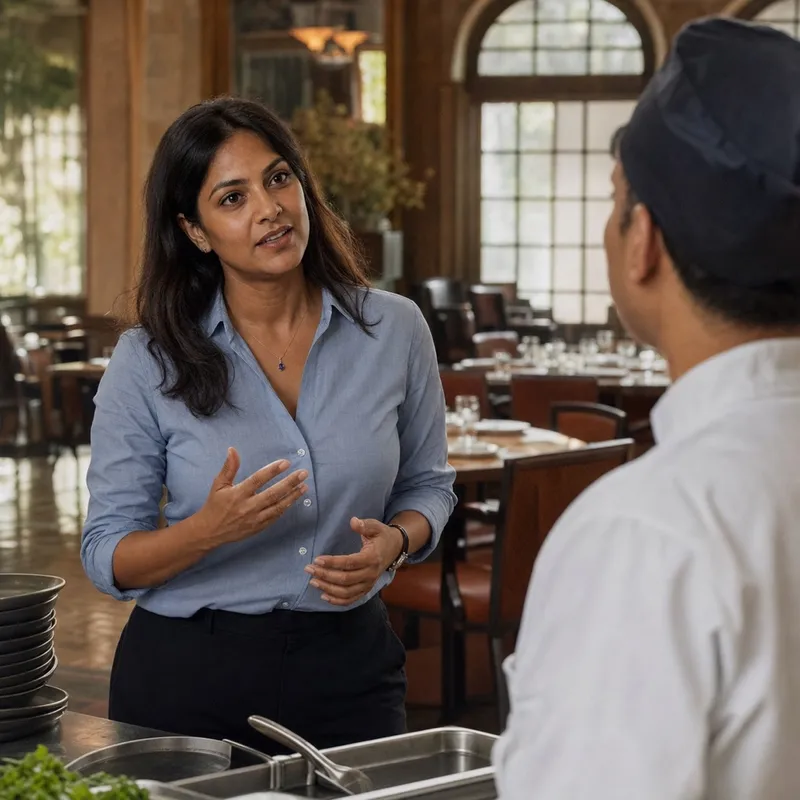
The GM is forty-three, has been running this forty-seat room in the West Village for nine years, and is standing behind the host stand on a Tuesday afternoon holding three printouts. One is an OpenTable contract renewal. One is a SevenRooms upsell deck his rep emailed over last week. The third he printed an hour ago, after Yelp’s Spring Release dropped and his Yelp rep called him before he’d finished his cortado: a Guest Manager Plus pitch with AI voice agents, a traffic attribution dashboard, and a price that — and I am quoting him here — “is genuinely a little insulting to OpenTable.”
He looks up at me. “So what do I do.”
I came in to talk about a different story. I am not leaving with a different story. Because this — the host stand decision, multiplied across the roughly 700,000 restaurants in the U.S. that take some form of reservation — is the story this week. Yelp’s Spring Release landed today, April 29. Hilton’s Q1 also landed today, which is its own consolidation tell I will get to in a different column. And in the background, the entire restaurant-tech press has spent the last three weeks pricing in a DoorDash move on SevenRooms — widely rumored, repeatedly reported as imminent, not yet officially announced as I file this. The deal industry has been treating it as a foregone conclusion. I am going to treat it as widely rumored, because that is what it is on April 29.
But here is the contrarian read I want to put on the table, because I do not see anyone else putting it there: the reservation and host layer for U.S. restaurants is consolidating, this calendar year, into three platforms. Not five. Not seven. Three. OpenTable. A DoorDash-owned SevenRooms (assuming the rumored deal closes on the terms the industry has been pricing in). And — this is the one most operators I talk to are not seeing yet — a Yelp Guest Manager stack that, after today’s Spring Release, has quietly become the third pole.
Tock and Resy are not winners in this consolidation. They are swing tickets. They will get bought, repositioned, or boxed in. And operators have weeks, not quarters, to lock in their procurement choice before the leverage window closes.
This is The Operator’s case study on how to evaluate the three on the dimensions that actually matter at the host stand: data portability, AI roadmap, and pricing leverage. Let’s work it.
What Yelp Guest Manager actually does post-Spring Release
Yelp’s Spring Release announcement hit at 9 a.m. Eastern. The headline most of the trade press is going to run with is “Yelp adds AI voice agents.” That is correct but it is the surface read. The deeper read is that Yelp has, in one product release, stitched together a credible end-to-end restaurant guest stack: discovery (which they already owned), ad attribution (new this morning via the Traffic Attribution Dashboard), inbound voice answering (the AI voice agents in restaurant-side test), waitlist (with iPhone lock-screen updates, which is a small detail that matters more than it sounds), reservation and host floor management (Guest Manager and the new Guest Manager Plus / Enterprise tiers), and guest CRM.
That is — and operators who have lived through a SevenRooms onboarding will recognize this list — the SevenRooms feature set. With Yelp’s discovery graph welded onto the front of it.
TechCrunch’s writeup of the AI voice agent piece is worth reading because it makes the point I want to make about scope. The voice agents are not just “answer the phone and take a reservation.” They are designed to handle the eighty-percent case of inbound restaurant calls — hours, parking, allergens, vegetarian options, do-you-have-a-private-room, am-I-on-the-waitlist — without a human picking up. For a forty-seat West Village room with no dedicated reservations coordinator, that is not a nice-to-have. That is the entire afternoon shift’s phone burden, gone.
The investor-facing release on Yelp’s IR site makes the strategic frame explicit in a way the consumer blog post softens: Yelp is repositioning the platform from “review site that sells ads” to “AI-mediated local discovery and transaction layer.” The reservation/host layer is the wedge.
The Guest Manager Plus tier — and I am going off the pricing the GM at the West Village room got quoted, which I have heard echoed in two other operator conversations today — is being priced aggressively against OpenTable’s per-cover model and against SevenRooms’ enterprise floor. Yelp does not need this product to print P&L this year. They need to plant a flag in the host stand and use it to defend the discovery franchise from a future where Google, ChatGPT, or a DoorDash-owned SevenRooms route restaurant intent away from yelp.com. As our later coverage of Yelp’s ad business frames it, the discovery layer only matters if it converts; Guest Manager is the conversion infrastructure.
The Traffic Attribution Dashboard is the other detail operators are sleeping on this morning. For the first time, a Yelp-listed restaurant can see — at the cover level — which reservations came from a Yelp page view, which came from organic search routed through Yelp, and which came from paid Yelp ads. That is the data OpenTable has historically held closest to its chest. Yelp is going to hand it to operators as a default feature of the Plus tier.
If you are the GM at the West Village room, the question Yelp’s release forces you to answer is: do I believe Yelp’s ten-year roadmap, and do I want my guest data sitting in a stack where the discovery layer and the host stand are owned by the same company? Because that is the bet.
Why the SevenRooms deal is the strategic frame, not the headline
I want to be careful here because timing matters. As I am filing this on Tuesday, April 29, the DoorDash/SevenRooms deal has not been officially announced. It has been reported, rumored, and widely priced into restaurant-tech analyst notes for at least three weeks. Bloomberg-adjacent industry outlets have run “talks are in advanced stages” stories. One PE source I trust told me ten days ago the deal was “papered, just not announced.” A formal announcement is widely expected to drop in the next week to ten days. I am going to treat it, for this column, as the most strongly rumored M&A event in restaurant tech this quarter, and I am going to assume — for the operator decision framework — that operators should price it in as likely.
What the rumored deal actually does, strategically, is more important than the deal mechanics. SevenRooms is the gold-standard host stand and CRM product for independent and small-group operators who care about guest data ownership and bespoke hospitality. DoorDash is the logistics, demand-aggregation, and consumer-app layer for restaurant transactions outside the four walls. Stitching them together means DoorDash gets — in one acquisition — the on-premise guest graph it has never had. SevenRooms gets — in one acquisition — distribution into 30+ million DoorDash MAU and a check-writer that can subsidize the per-cover cost down to something that competes with Yelp Guest Manager and undercuts OpenTable.
Here is the part that should worry operators on SevenRooms today, and the part that should worry operators considering switching to SevenRooms this quarter. DoorDash’s revenue model is take-rate on transactions. SevenRooms’ revenue model is per-cover SaaS plus enterprise services. Those models do not have the same incentive structure on guest data. A DoorDash-owned SevenRooms will have a strong incentive to route DoorDash demand through SevenRooms’ reservation inventory, and to use the SevenRooms guest graph to improve DoorDash’s discovery and recommendation surfaces. That is good for DoorDash. It is good for some operators. It is a meaningful change to the data-portability contract that current SevenRooms customers signed.
Operators evaluating SevenRooms right now — and I have been on five of these calls in the last two weeks — need to ask their rep, on the record, what the data portability terms look like post-close. If the answer is “no change,” ask for it in the contract. If the answer is “we cannot comment on rumored M&A,” that is its own answer.
The other piece of the rumored deal I want to flag: DoorDash has been building out a non-delivery, on-premise restaurant services line for the last eighteen months. SevenRooms is the keystone of that strategy. This is not a financial M&A. This is a strategic stack play. Which means the post-close SevenRooms is going to be priced and packaged to compete head-on with OpenTable and Yelp Guest Manager, with DoorDash demand and DoorDash logistics as the bundled differentiator.
OpenTable’s position, decoded
OpenTable is the incumbent, the default, and — operators will tell you this if you buy them a coffee — the most resented vendor in the stack. The per-cover fee model has been the source of operator grievance for fifteen years. The dining-rewards program and Booking Holdings’ ownership give OpenTable a marketing-spend lever that SevenRooms has never had and that Yelp is now matching on the discovery side. The product itself, after a multi-year UX refresh, is genuinely solid.
But OpenTable’s position is more fragile than the market share number suggests, and I think the next twelve months are going to surface that fragility in a way the last ten years have not. Three reasons.
First, the discovery layer is being eaten from both ends. ChatGPT and Google Gemini are increasingly the entry point for “restaurants near me” intent, and neither of them defaults to OpenTable’s reservation widget. They both default to whatever returns the structured answer first, which today is sometimes OpenTable, sometimes Resy, sometimes the restaurant’s own site, and — as of today, post-Yelp Spring Release — increasingly Yelp’s surfaces. OpenTable’s distribution moat is leakier than its NPS suggests.
Second, the per-cover fee is the most attackable pricing surface in restaurant SaaS. Both Yelp Guest Manager and a DoorDash-owned SevenRooms have structural reasons to undercut it. Yelp can subsidize because the discovery franchise is the real product. DoorDash can subsidize because the delivery economics carry the cost. OpenTable’s parent, Booking Holdings, is a public company with margin discipline. OpenTable cannot simply slash the per-cover fee without affecting the consolidated story.
Third — and this is the one operators do not talk about enough — OpenTable’s AI roadmap is the least visible of the three. SevenRooms has been shipping AI-driven guest CRM features for eighteen months. Yelp shipped voice agents today. OpenTable has talked about AI in earnings calls but the product surface is thinner. In a market where the next eighteen months are going to be defined by how reservation platforms use AI to reduce the host-side labor cost, that gap matters.
The operator case for staying on OpenTable, right now, is: it works, the staff knows it, the guest-side brand recognition is real, and the per-cover economics — while resented — are predictable. The case against is: every other vendor in the space is moving faster, and the renewal you sign this quarter is the leverage you give up next quarter.
Tock and Resy as swing tickets
I said at the top that Tock and Resy are not winners in this consolidation. I want to defend that claim because I have gotten pushback on it from two friends who run independents on Resy and who love the product.
Tock’s strategic position is interesting and isolated. Squarespace owns Tock. Squarespace is a public company with a clear SMB-website thesis. Tock’s prepaid-reservations and tasting-menu specialization gives it a defensible niche at the high end. But Tock is not big enough to be a third pole and Squarespace is not a strategic acquirer in food and beverage. The likely outcomes for Tock are: continue as a profitable niche product inside Squarespace, or get sold to one of the three poles. The buyer most often floated in operator conversations is, ironically, OpenTable — because OpenTable’s tasting-menu and prepaid-experience footprint is weak and Tock would plug it.
Resy is the more poignant case. American Express owns Resy. Amex bought it in 2019 and has run it as a member-benefits play. The product is good. The brand is excellent at the high-end-but-not-tasting-menu tier where Tock plays. But Amex is not a restaurant-tech company and the strategic logic for keeping Resy is the cardholder benefit, not the reservation P&L. In a market where the three poles are pricing aggressively and shipping AI features monthly, the Amex-owned Resy is going to be perpetually one product cycle behind. The likely outcome over the next twelve to eighteen months is either Amex sells Resy to one of the three poles, or Resy gets repositioned as an Amex-only cardholder benefit and ceases to be a viable independent platform for operators.
This is why I call them swing tickets. The question for an operator on Resy or Tock today is not “do I switch off.” It is: “do I have a backup plan if my platform gets bought by a competitor or repositioned in eighteen months.” If you are on Resy and your platform gets sold to, say, DoorDash-SevenRooms, you need to know what your data portability rights are before that happens.
How to choose this quarter
Here is the decision framework I am giving the GM at the West Village room. It is the framework I am giving every operator who calls me this week, and it is the framework I think holds up across the next two quarters as the consolidation pressure intensifies.
There are three dimensions that matter for this procurement decision in 2025: data portability, AI roadmap, and pricing leverage. Most operators evaluate on feature set and rep relationship. That was the right frame in 2018. It is the wrong frame now.
On data portability, the operator question is: if I am unhappy in eighteen months, can I export my guest graph, my reservation history, my CRM tags, and my preference notes in a usable format, and use them somewhere else. OpenTable’s portability has historically been weak. SevenRooms’ has historically been strong — and is the variable most likely to change post the rumored DoorDash deal. Yelp’s, as of today’s release, is unproven but the contractual language in the Guest Manager Plus tier is — and I have looked at one — surprisingly operator-friendly on this dimension. If you are signing a contract this quarter, the data portability clause is the clause to negotiate hardest on.
On AI roadmap, the question is not “do they have AI features today.” Every vendor has AI features today. The question is: what is the labor-cost reduction this product is going to deliver over the next eighteen months, and is that reduction credible based on the product the rep can actually show me. Yelp shipped voice agents this morning, in restaurant-side test. SevenRooms has the most mature CRM-side AI in production. OpenTable’s roadmap is, frankly, the murkiest. I would push every vendor for a six-month, twelve-month, and eighteen-month feature commitment in writing.
On pricing leverage, the question is: which vendor has the most incentive to discount, and what is the renewal cliff. Yelp Guest Manager Plus is in market-entry pricing mode, which means the operators who sign in Q2 and Q3 of 2025 are going to get pricing the late-adopters will not see. SevenRooms is in pre-deal-close mode, which means reps are empowered to discount aggressively to lock in logo wins before the DoorDash announcement (rumored, again, but the rep behavior suggests they are pricing it in). OpenTable is in defend-the-incumbency mode, which means renewal negotiations this quarter have unusual leverage if the operator is credibly evaluating alternatives.
The window is real and it is narrow. Once the SevenRooms deal closes (rumored, not announced, but expected), the pricing-leverage calculus changes inside about ninety days. Once Yelp’s Guest Manager Plus moves past market-entry pricing — which I would estimate is a second-half-of-2025 event — that lever closes too. Operators who are still on annual OpenTable renewals in early 2026 will have given up the leverage window without using it.
The way I would play it, if I were running the West Village room, is to run a structured three-way RFP this quarter, get all three vendors on a four-week procurement clock, push hard on data portability and AI roadmap commitments in the contract, and sign whichever vendor blinks first on a multi-year deal with a hard data-portability exit clause. The lock-in is real. The leverage to negotiate the lock-in is now.
Operator takeaways
The reservation and host layer is consolidating, this calendar year, into three platforms. Yelp Guest Manager is now a credible third pole post Spring Release, and most operators have not yet processed that. The DoorDash/SevenRooms move is widely rumored and the industry is pricing it in, but it is not yet officially announced; the strategic implication for operators is that SevenRooms data portability terms are about to be the most-negotiated clause in restaurant SaaS. OpenTable is the incumbent under structural pressure on three vectors — discovery distribution, pricing surface, and AI roadmap visibility. Tock and Resy are swing tickets that will most likely get bought, repositioned, or boxed in over the next twelve to eighteen months. The labor-cost reduction story on the AI side mirrors the dynamic in a later piece on QSR-side AI scaling, where the unit economics of voice automation and CRM personalization are the actual product, not the chrome.
Five concrete moves I would make this week if I were sitting at the host stand:
- Negotiate the data portability clause before you negotiate the price. Every vendor will discount. Only some will give you a clean export-on-exit contract. The export clause is the only thing that preserves your leverage at renewal.
- Get an AI roadmap commitment in writing. Six, twelve, and eighteen months. Vendors who will not commit on paper are telling you something.
- Run a structured three-way evaluation this quarter, not next. The pricing-leverage window closes when the SevenRooms deal closes and when Yelp moves Guest Manager Plus past market-entry pricing.
- If you are currently on SevenRooms, get clarity from your rep — on the record — about post-rumored-deal data terms. If they will not comment, that is its own data point and you should factor it into your renewal stance.
- If you are on Resy or Tock, build a backup procurement plan now. You probably will not need to execute it for twelve to eighteen months. You will be glad you have it when you do.
The GM at the West Village room is going to make a decision this quarter. He told me, before I left, that he is leaning Yelp Guest Manager Plus, with a hard data-portability exit clause and a twelve-month AI roadmap commitment in the contract. I asked him what changed his mind. He held up the three printouts. “The fact that I have three printouts to choose from,” he said. “I have not had three printouts to choose from in nine years.”
That is the consolidation, in one sentence. Three printouts. Three platforms. One quarter to choose.
— Priya files The Operator. Tips: tips@tabletransfers.com.
Featured
More
Browse all 494 posts
The Voice Agent Maturity Curve
mise
·12 min read
The Four Margins of a Restaurant
mise
·14 min read
The AI Premium in Hospitality M&A: Broker Story or Real Number?
the bottom line
·9 min read
What the DoorDash/SevenRooms Deal Actually Buys
the bottom line
·11 min read