Applebee's just became its own franchisee. The territory math is the trade.

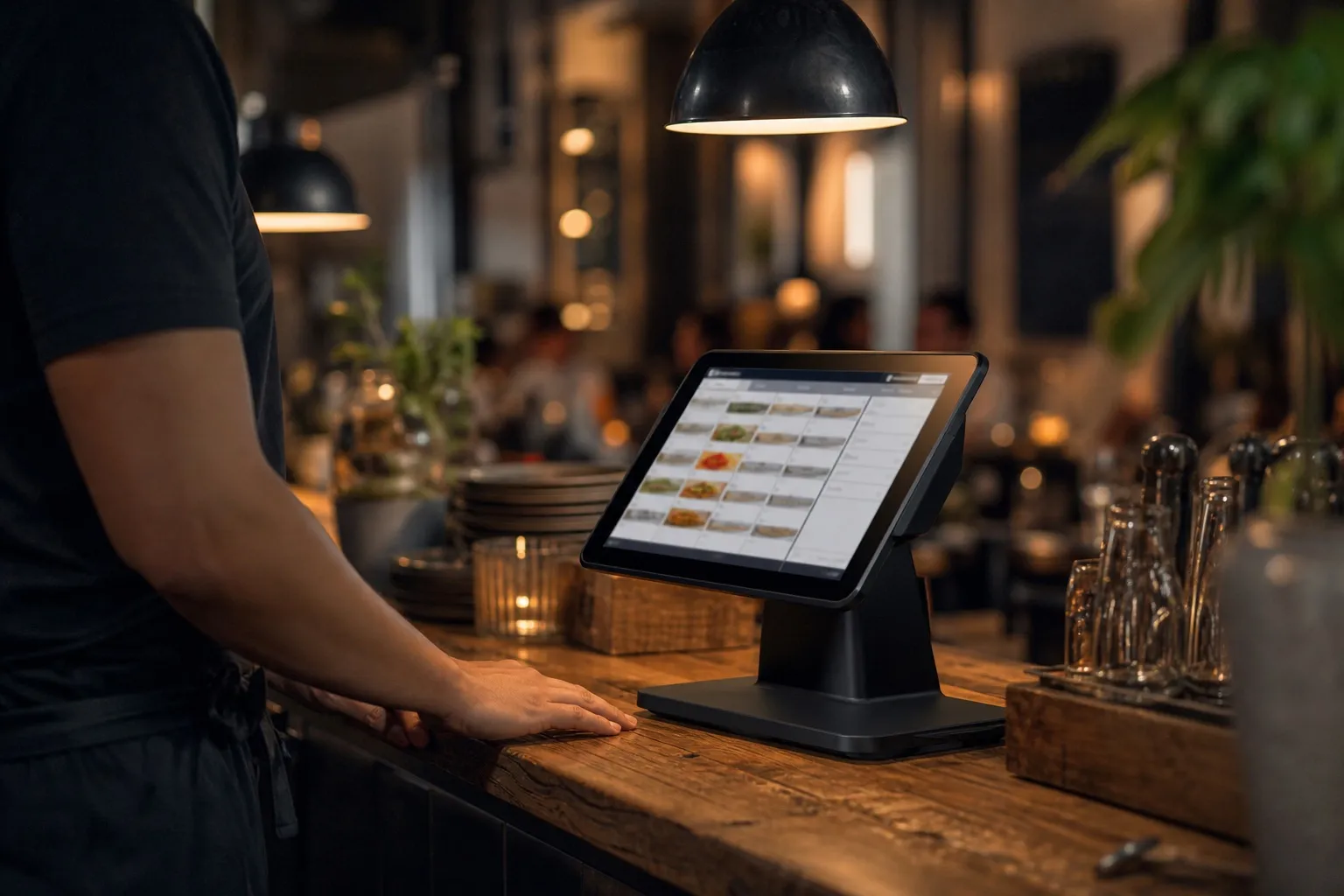
NRP Florida's Chapter 11 puts 53 Applebee's units back on Dine Brands' balance sheet via a stalking-horse bid. The contrarian read: this is asset-heavy at exactly the wrong moment for AI-premium logic — but the territory defense and stack standardization is the actual play.
It’s Tuesday evening, the coffee in front of me has gone cold for the second time, and I am rereading a paragraph in Joe Guszkowski’s Restaurant Business piece for the fourth time. The line that keeps catching me is the one about Neighborhood Restaurant Partners Florida — NRP — operating 53 Applebee’s across Alabama, Florida, and Georgia, and owing more than $13 million to Equity Bank. The filing went in on March 24. Dine Brands, the franchisor, has put itself in as the stalking-horse bidder. Closing is targeted for mid-May.
I write a line in the margin of the printout: Dine just became its own franchisee.
Then, because the espresso has landed and because I have spent the last three months writing about why the AI premium favors asset-light operators, I write a second line: and that is supposed to be the wrong trade right now.
That’s the thesis I want to walk through. The surface read of this filing is that Dine Brands is doing something defensive and slightly embarrassing — taking 53 units back onto its own books at exactly the moment that the public market is paying up for franchisors who don’t have to own the dirt or the P&Ls. The contrarian read is that Dine is buying something the public market hasn’t priced yet: territory protection, stack standardization, and a controlled wind-down option that you cannot get any other way.
Let me show you the math, and then let me tell you where I think the interpretation flags belong.
What actually got filed
The reported facts, per Guszkowski’s reporting on March 25: NRP Florida filed Chapter 11 on March 24, 2026. The entity operates 53 Applebee’s restaurants across three Southeastern states — Alabama, Florida, and Georgia. More than $13 million is owed to Equity Bank as the principal secured creditor. Dine Brands, the parent franchisor of the Applebee’s brand, is the stalking-horse bidder in the 363 sale that will run inside the Chapter 11. The expected closing is mid-May 2026, which is fast — fast enough to suggest this was negotiated in advance of the filing rather than improvised after it.
A stalking-horse bid is the floor. It sets the minimum acceptable price and the deal terms that any competing bidder has to beat to win the auction. In a distressed franchisee situation, the franchisor showing up as the stalking-horse signals two things at once: nobody else is likely to bid (because the franchise agreement gives Dine consent rights that would chill an outside bidder anyway), and Dine has decided the alternative — letting these units close, or get picked up piecemeal by other franchisees on Dine’s network — is worse than absorbing them itself.
The 53 units are a meaningful chunk of system. Applebee’s runs roughly 1,500 units in the US. NRP Florida is therefore about 3.5% of the domestic system. Not catastrophic. But not nothing, either, in a brand that has been quietly closing locations for most of the post-pandemic period and where comp-sales recovery has trailed the rest of casual dining.
The asset-light versus asset-heavy pivot, and why the timing reads wrong
Here is the part that is going to bother the buy-side.
Dine Brands’ entire equity story since the Applebee’s-IHOP merger has been asset-light franchisor. The pitch was royalty streams, low capex, high return-on-invested-capital, predictable cash flow, dividend coverage. The valuation framework the sell-side has used on Dine for a decade is a franchisor-multiple framework — high single-digit EV/EBITDA on a royalty business that essentially never has to write a meaningful capex check.
What this deal does, mechanically, is move 53 P&Ls onto Dine’s consolidated books. Even if Dine intends to refranchise these units within 12–24 months — which I expect — the interim period puts Dine in the operator seat for ~$200–250M of system sales (interpretation; 53 units at $4–5M unit volumes is the sane range for Applebee’s in these markets). That’s operating leverage, labor risk, food cost exposure, and capex obligations Dine did not previously carry.
The AI-premium thesis I’ve been laying out in this column — most recently in the case against the AI premium that’s forthcoming from my colleague, and which I’ll link to properly when it runs — argues that the operators who win the next cycle are the ones who can layer software and demand-generation tools on top of a franchisee base without owning the operating risk. Toast does this. Olo does this. Dine has historically done this. Taking 53 units back onto the balance sheet is, on the face of it, a move in the opposite direction at exactly the wrong moment.
So why do it.
The territory map is the asset, not the units
This is the part I think the surface read misses.
Applebee’s, like every mature casual-dining franchise system, runs on a territorial development agreement model. Each franchisee has exclusive rights to develop and operate within a defined geography. When a franchisee fails, those territory rights don’t just evaporate — they revert to the franchisor, but only if the franchisor is the party that takes the assets through the bankruptcy. If a third-party buyer wins the 363 auction, the franchisor has to re-grant the territory rights, which is a different and weaker position.
By stalking-horse-bidding, Dine is doing two things that are invisible in the headline number but enormous in the long-run economics:
First, it consolidates territory. Dine ends up holding the exclusive operating rights to Alabama, Florida, and Georgia trade areas that had been locked up under NRP’s development agreement. Some of those rights were probably underdeveloped — territories where NRP had committed to open new units and never did. Dine can now either operate those whitespace markets itself or sell development rights to a stronger franchisee at fair-market value. The territory map gets re-drawn from a position of strength.
Second, it forecloses optionality for competitors. A casual-dining brand with the right footprint in the Southeast is exactly the kind of asset that a private-equity-backed roll-up — think the kind of consolidation play that JRI ran with Freddy’s, which I wrote up earlier this month — would happily absorb at the right price. If Dine had let these units fall to a third-party buyer, the buyer could have used the platform as a base to push for better royalty terms, area-development concessions, or even a multi-brand strategy that diluted Applebee’s positioning in the region. The stalking-horse blocks that.
That is what Dine is actually paying for. The 53 units are the wrapper. The territory rights and the foreclosure of competitor optionality are the trade.
The re-platforming math nobody is putting in the deck
Now the second-order trade, and this is the part I think is genuinely under-discussed.
NRP Florida is, as best as I can tell from the public record and from talking to a handful of casual-dining tech vendors over the last year, running a hybrid technology stack that predates Dine’s recent push to standardize the Applebee’s system onto a preferred set of vendors. (Interpretation flag: this is my read, not a Dine disclosure.) Dine’s preferred stack — at the digital-ordering layer, Olo; at the loyalty and CRM layer, PAR/Punchh — has been the direction for the last 18 months across the franchisee base, but adoption is uneven. Larger franchisees with legacy contracts and their own POS preferences have been slow to convert.
When Dine takes operational control of the 53 NRP units, it gets to re-platform them onto the preferred stack without negotiating with a franchisee. The math on that re-platforming, using vendor list prices and integration costs I’ve sanity-checked against two recent casual-dining migrations:
- Olo enterprise digital ordering implementation: ~$8–12K per unit in setup plus ongoing per-unit licensing
- PAR/Punchh loyalty migration: ~$10–15K per unit including data migration and staff training
- POS reconfiguration and integration testing: ~$8–15K per unit
- Network, hardware, and back-office system harmonization: ~$5–10K per unit
Call it $25–50K per unit, fully loaded (interpretation; the range reflects how much of the existing stack survives the transition). Across 53 units, that is $1.3M to $2.6M of one-time technology spend that Dine eats inside the post-acquisition integration.
The instinct is to call this a cost. I think it’s better understood as an asset purchase that happens to get expensed.
Here is why. Once those 53 units are running on the standardized stack, three things become true that were not true under NRP’s ownership:
- The unit-level data flows back to Dine in clean, consistent format — meaning Dine’s corporate analytics team can run promotional, menu, and labor experiments on these units the way it can on its small population of corporate-owned IHOPs. The 53 units become a controlled-test population for the entire Applebee’s system.
- The eventual refranchising package is dramatically more attractive to the next operator. A buyer of 53 already-standardized, already-Olo-enabled, already-Punchh-integrated units pays a premium relative to a buyer of 53 idiosyncratic legacy-stack units. The refranchising sale price absorbs the re-platforming cost and then some.
- Future distressed-franchisee situations become easier to underwrite. Dine now has a documented playbook — Chapter 11, stalking-horse, re-platform, refranchise — that it has run end-to-end. The second time you do this it costs 30% less and takes 40% less time.
That third point is the one I’d circle in red.
The bet: this is the template
If you back up far enough, what Dine is doing here is not really about NRP Florida. It is about establishing a repeatable mechanism for absorbing distressed franchisee equity at a moment when the broader franchisee base is going to face real stress.
Casual dining is in a structural margin squeeze. Labor costs have re-rated permanently higher. Traffic at mid-market chains has not recovered to 2019 levels in most markets. The franchisees who came into the post-pandemic period over-levered — and there are a lot of them — are going to keep filing through 2026 and into 2027. My M&A roundup from earlier this quarter is forthcoming and will lay out the broader pattern, but the short version is: the casual-dining franchisee distress cycle is just getting started.
A franchisor that has a clean, fast template for re-absorbing failed franchisees — without having to negotiate with third-party buyers, without losing territory, and with a built-in stack-standardization side benefit — has a structural advantage over a franchisor that has to improvise each time. Dine just ran the template. The 53 NRP units are the pilot.
Which brings me back to the asset-light/asset-heavy question I opened with. The surface read is that Dine has moved in the wrong direction at the wrong moment. The actual read is that Dine has bought the option to do this again, faster and cheaper, the next time a 30-or-40-unit franchisee files. In a cycle where filings are going to be the dominant M&A activity in the franchise space, owning the playbook is worth more than owning royalty-stream purity.
The bet I’d make today, with the usual caveat that I cannot trade Dine:
Base case: the 53 units are refranchised in tranches between Q4 2026 and Q3 2027 at prices that fully recover the acquisition consideration plus the re-platforming spend. Dine ends the cycle with cleaner territory rights, a standardized regional stack, and a documented playbook. The headline EBITDA hit during the operating-holdco period is real but absorbable, and the sell-side eventually re-narrates it as transitional. Multiple holds.
Upside: another two or three franchisee filings happen in the back half of 2026, Dine runs the same template, and by mid-2027 the market starts pricing in the playbook itself as a strategic asset rather than a defensive necessity. The sell-side note that flips the narrative will be written by someone who reads the NRP deal as the template, not the outlier.
Downside: the refranchising market in the Southeast is softer than Dine expects, the 53 units sit on the balance sheet longer than 24 months, and the operating drag eats two quarters of dividend coverage. The asset-light narrative cracks. Multiple compresses toward operator comps.
I am in the base case, leaning upside. The thing I’d want to see in the next 90 days to push me further: a leak or a disclosure on what Dine intends to pay above the $13M Equity Bank claim, and any signal on which technology vendors are getting the re-platforming work. The first tells me how aggressive Dine is being on the territory math. The second tells me whether the stack standardization read is right.
For now, the line on my desk stays the same. Dine just became its own franchisee, which is supposed to be the wrong trade in an AI-premium-favors-asset-light world. But the territory map and the playbook are the actual assets here, and neither of them shows up cleanly on the consolidated income statement until somebody in the sell-side decides to model them.
The $25–50K-per-unit re-platforming number, the $200–250M of system sales coming onto the books, the 24-month refranchising horizon — those are my numbers, not Dine’s. Price them accordingly. But the direction of the trade is harder to argue with than the levels. Franchisors who own the playbook for re-absorbing failed franchisees are going to look very different by the end of this cycle than franchisors who don’t.
Dine paid $13M-plus to find out first. The rest of us get to watch the integration.
— Marcus edits The Bottom Line for TableTransfers. Tips: ma@tabletransfers.com.
Featured
More
Browse all 494 posts
The Voice Agent Maturity Curve
mise
·12 min read
The Four Margins of a Restaurant
mise
·14 min read
The AI Premium in Hospitality M&A: Broker Story or Real Number?
the bottom line
·9 min read
What the DoorDash/SevenRooms Deal Actually Buys
the bottom line
·11 min read
Related posts
the bottom line
·11 min read
Darden trades like a tech company. It shouldn't.
the bottom line
·12 min read
Applebee's just became its own franchisee. The territory math is the trade.
the bottom line
·12 min read