Bahama Breeze is closing. Darden's portfolio thesis just got tighter.
Buried inside Darden's Q3 FY26 print is a $0.21-per-share goodbye to Bahama Breeze. The 33-unit Caribbean concept closes or converts between now and Q4 FY27. The contrarian read: this is the cleanest portfolio decision Darden has made in a decade.
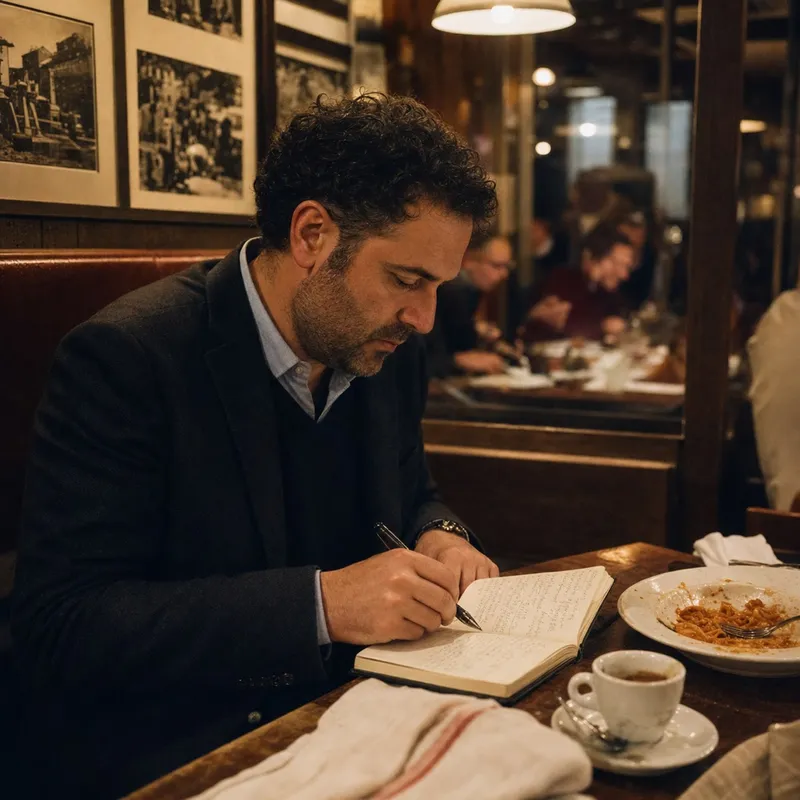
I went back to the Q3 deck a second time Thursday afternoon, after the call had run, because the line I had circled in my notebook had a number next to it I didn’t trust on the first pass. Twenty-one cents. Five plus sixteen. That is what Bahama Breeze cost Darden in EPS this quarter, on its way out the door. Thirty-three restaurants, a brand Darden has owned since the late 1990s, retired in a single bullet on a single slide of an earnings exhibit otherwise full of plus signs.
The contrarian read — and this is INTERPRETATION, not anything Rick Cardenas said on the call — is that the Bahama Breeze ending is the most important thing in the print. The +4.2% comp and the +7.2% LongHorn line, which I walked through in the main earnings piece this morning, are the headline. The sidebar is the portfolio. Darden just admitted, in writing and in dollars, that a 33-unit experiment it kept on life support through two CEOs no longer earns a slot in the system. That admission is rare. It is also expensive. And it tells you something specific about how this management team plans to allocate capital for the next thirty-six months.
What the filing actually says
Per the Q3 FY26 results exhibit, the per-share impact reconciliation includes “$0.05 of closed restaurant and other costs related to the exploration of strategic alternatives for the Bahama Breeze brand” and “$0.16 of impairment due to restaurant closures.” The exhibit notes that “all Bahama Breeze locations are expected to close or be converted between Q3 FY26 and Q4 FY27.” That is the runway. That is the language. Thirty-three buildings, eighteen-month window, two line items on the EPS bridge.
On the call, per the Q3 transcript, Cardenas treated the Bahama Breeze decision the way a confident CEO treats a closed chapter: briefly. He did not pitch the conversions as a growth lever. He did not promise that every box becomes a LongHorn or a Cheddar’s. He framed it the way you frame a portfolio decision you have already finished making — past-tense, fully reserved, fully boxed. Mark that tone. It is the tone of a board that has stopped debating.
A note on what is reportable and what is interpretation. The $0.05 and $0.16 line items, the 33-unit count, and the conversion window are in the filing. Everything in the next section is my reading.
Why the portfolio gets tighter, not bigger
This is the INTERPRETATION section. The thesis, plainly: Darden is choosing concentration over breadth, and the Bahama Breeze decision is the cleanest example of it since the Red Lobster spin. The system going forward flexes around three brands that can absorb operator-level investment without a concept-side narrative — Olive Garden at scale, LongHorn with the recertification compounding, and Chuy’s as the post-acquisition integration that still has runway. Yard House and The Capital Grille keep their slots. The smaller, slower-comping concepts have just been put on notice that the bar is higher than it used to be.
Why does that matter for TableTransfers readers? Two reasons.
First, a tighter Darden portfolio changes the M&A math for everyone underneath them. Casual-dining sellers in the 20–60-unit range have been pitching Darden — or Darden-adjacent strategics — as the natural exit for almost a decade. If the message from this quarter is we are not adding shapes to the system, we are subtracting them, the strategic bid for sub-scale full-service concepts thins out materially. Marcus’s forthcoming M&A roundup will price the strategic side directly; my read is that the disclosed Bahama Breeze impairment, more than any specific transaction, is the data point a banker has to explain to a seller this spring.
Second, the absence of Bahama Breeze removes the easiest argument for a tech-led turnaround inside the Darden portfolio. Bahama Breeze had been, at various points in the last three years, the brand analysts pointed to when they wanted to say “this is where Darden could deploy a kitchen-AI pilot, a guest-data overlay, a labor-AI scheduling rollout.” It was the loose tile in the floor. Cardenas has, by retiring the tile, foreclosed the question. The portfolio that remains is the portfolio that printed +4.2% by running its existing playbook harder. Oliver’s forthcoming buy-side note on the AI premium reaches a similar conclusion from the underwriter’s chair: the operators winning this cycle are not the ones with the longest vendor list. Darden just removed its longest-standing candidate for that experiment from the system.
The five cents and sixteen cents are the price of not spending the next eighteen months in board meetings about whether Bahama Breeze gets one more chance. That is the cheapest twenty-one cents Darden has spent in years. The conversions will run on a schedule. The portfolio that comes out the other side, in Q4 FY27, will be three brands smaller and — if the rest of the print is any guide — meaningfully more disciplined.
The headline number Thursday was +4.2%. The number to file is thirty-three.
— Luca covers restaurants for TableTransfers. Tips: tips@tabletransfers.com.
Featured
More
Browse all 494 posts
The Voice Agent Maturity Curve
mise
·12 min read
The Four Margins of a Restaurant
mise
·14 min read
The AI Premium in Hospitality M&A: Broker Story or Real Number?
the bottom line
·9 min read
What the DoorDash/SevenRooms Deal Actually Buys
the bottom line
·11 min read