M&A Tracker: PAR Sets the Tape for Restaurant Tech 2025

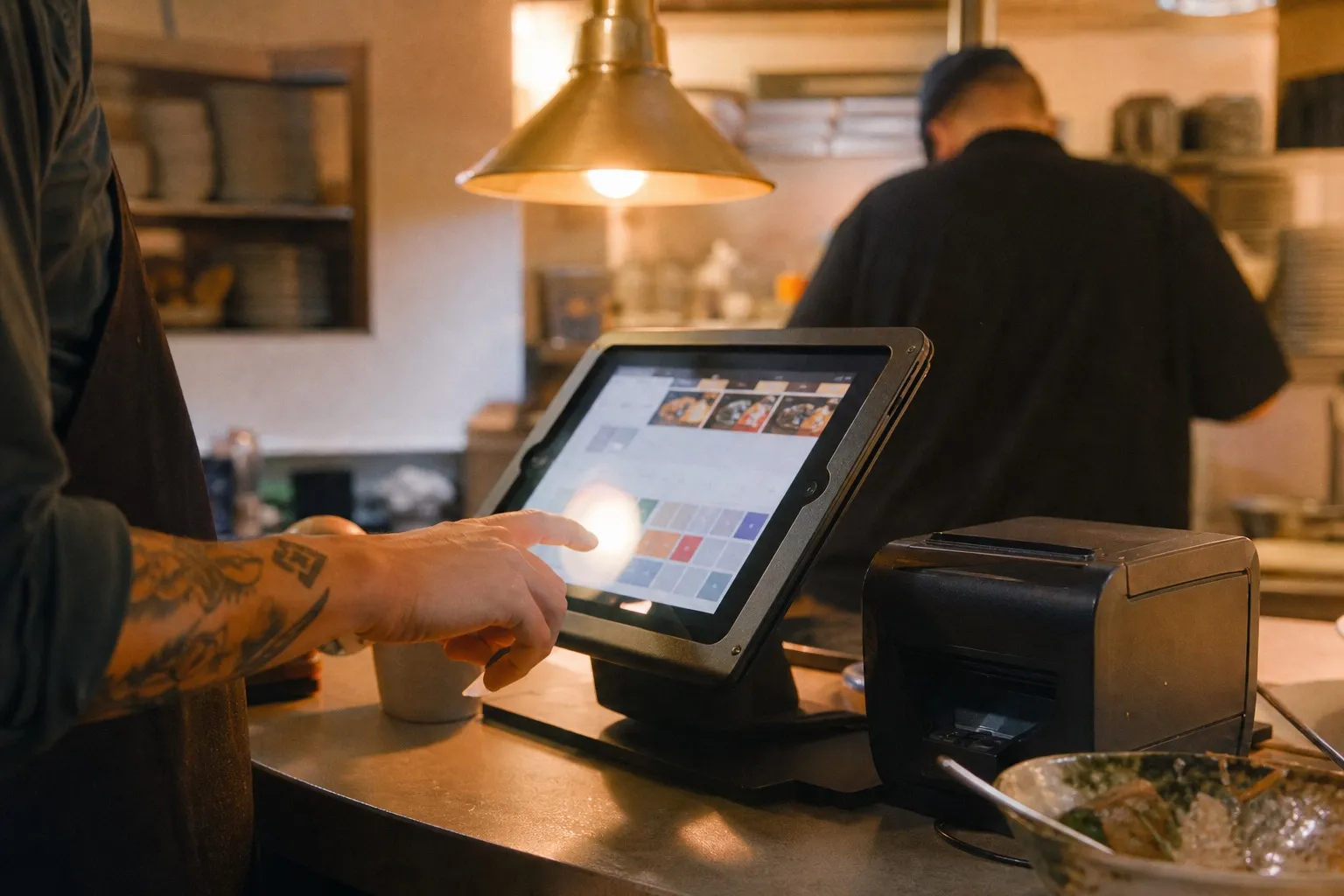
A roll-up of the consolidation thesis: PAR's pattern (TASK 2024, Stuzo 2024, Delaget Dec 2024) plus Yum's Byte centralization plus SevenRooms strategic optionality reads as platform-vs-roll-up.
It’s 3:42 p.m. on a Friday in mid-January, the kind of afternoon where the Street thins out early and the only people still toggling between the comp model and the news terminal are the ones who can’t quite let the week go. I have three browser tabs open. One is PAR Technology’s 8-K trail for 2024. One is a half-finished pivot table I’ve been using to sanity-check restaurant-tech revenue multiples since Q3. The third is a draft of next week’s column that I keep telling myself I’ll finish before the inauguration on Monday shoves everyone’s attention elsewhere for at least seventy-two hours.
The pivot table is the one I keep coming back to. Because if you line up what actually happened in restaurant technology M&A in calendar 2024, and then squint at what’s queued up for 2025, you start to see two very different stories getting told inside the same sector. One story is a roll-up. The other story is a platform war. Both are real. Both will define the tape this year. But the market keeps pricing them as if they were the same trade, and they are not.
Here’s my contrarian read, and we’ll defend it for the next two thousand words: PAR Technology set the consolidation tape in 2024, but the larger-dollar M&A in restaurant tech is still in front of us. The deals that will move the index — the ones that get covered in the FT rather than just on pymnts.com — are the strategic-acquirer trades that haven’t printed yet. PAR taught the sector how to roll up middleware. The strategic acquirers will teach it how to consolidate distribution. Those are not the same thing, and the multiples are not going to be the same either.
Let’s walk the tape.
PAR’s 2024: Three Deals That Add Up to a Thesis
If you were grading 2024 restaurant-tech M&A by deal count, PAR Technology basically swept the category by itself. The company executed three acquisitions in a twelve-month window: TASK Group in the first half of the year, Stuzo in the middle, and Delaget in December — that last one closing at roughly $132 million according to the pymnts coverage of the announcement.
Read those three deals together and the thesis writes itself. TASK gave PAR international footprint and a customer-engagement layer that the legacy Brink POS platform did not natively have. Stuzo extended PAR into the convenience-store and fuel-retail customer-engagement vertical, which is a market the pure-restaurant point-of-sale vendors have historically been weak in. Delaget added back-of-house analytics and operational reporting — the unsexy part of the stack where margin actually gets defended at the franchisee level.
What PAR built across those twelve months is not a point-of-sale company anymore. It is a unified-commerce platform with a POS at the core, customer engagement on the front end, and operational analytics on the back end, with vertical extensions into convenience and fuel. The strategic logic is clean. The execution risk is non-trivial — integrating three acquisitions inside one fiscal year is hard at any market cap, and PAR is not a $50 billion company with infinite integration bandwidth — but the strategic logic is clean.
My base case on PAR for 2025 is that they spend the first three quarters digesting Delaget rather than printing another headline acquisition. The cadence of a TASK-Stuzo-Delaget year is not a cadence you repeat without burning credibility. The bigger question is what the multiple does. Restaurant-tech middleware comps have been compressing since the 2021 peak; if PAR can demonstrate cross-sell from the Stuzo c-store base into the Brink installed base by mid-year, you can defend a higher revenue multiple than the comps would otherwise support. If they can’t, the integration story becomes the story, and the multiple compresses back to where it was before the deal pattern started.
But here’s the thing the consolidation-thesis bulls keep missing: PAR’s three deals are roll-up math, and roll-up math has a ceiling. You can stack adjacent modules around a core platform for a while, but you eventually run into the problem that the strategic acquirers — the ones who own the demand-side relationship with the diner, not just the supply-side relationship with the operator — have a structurally different cost of capital and a structurally different deal capacity. That’s where the next chapter of the tape gets written.
Yum’s Byte Centralization Is the Other Half of the Story
While PAR was rolling up middleware in public markets, Yum! Brands was doing something quieter and arguably more important inside its own four walls. Yum has been consolidating its proprietary technology stack under the Byte by Yum! umbrella throughout 2024 — a strategic decision to own the digital ordering, point-of-sale, and customer-data infrastructure that powers KFC, Taco Bell, Pizza Hut, and Habit Burger rather than rent it from third-party vendors.
This matters for the M&A tape for two reasons. First, every dollar Yum spends building or acquiring inside Byte is a dollar that doesn’t flow to a third-party vendor’s revenue line. The franchisor-as-platform story is the single biggest demand-side risk to the restaurant-tech vendor index, and Yum is the highest-profile incumbent making the build-versus-buy call in the direction of build. Second, Byte centralization is itself an acquisition signal. A franchisor that has decided to own the stack is a franchisor that will tuck in capabilities it cannot build organically in a reasonable timeframe.
We don’t have Yum’s full-year 2024 financials yet — the 10-K is not expected until later in February, and the Q4 earnings release should land on or around February 6, which is three weeks out from when I’m writing this. What we do have is the Q3 2024 10-Q, which is the cleanest public bridge into Yum’s current capital-allocation posture, plus the SEC EDGAR filing trail that gives you the documentation underpinning the technology transition. The Q3 10-Q does not name specific acquisition targets, and I would not handicap one off public disclosure alone. But the directional signal from Byte is unambiguous: Yum is building, and where Yum cannot build fast enough, Yum will buy.
My base case on Yum-as-acquirer for 2025 is small tuck-ins, not transformational deals. The franchisor model does not need a $1 billion acquisition to move the needle on the back of a $7 billion EBITDA base; it needs a series of $50-150 million capability fills that get folded into Byte and shipped to franchisees as part of the standard tech stack. Those deals are not going to lead the tape, but they will quietly reprice the comp set for any restaurant-tech vendor whose primary distribution channel is enterprise QSR.
SevenRooms and the Strategic-Optionality Question
The third leg of the tape is the SevenRooms situation, which is where I have to be careful, because the rumor mill on this name has been running hot for at least two quarters and I don’t want to confuse what’s public with what’s plausible.
What’s public: SevenRooms is a privately held guest-experience and CRM platform for full-service restaurants and hotels, last raised at a meaningful valuation in 2022, and operates in a category — the diner-relationship layer, sitting between the reservation system and the POS — that every strategic acquirer in restaurant tech has identified as adjacent to their existing footprint. What’s plausible: a strategic acquirer with a delivery-marketplace relationship at the diner level could find SevenRooms strategically attractive as a way to extend further into the dine-in occasion. That is not a deal announcement. That is a structural argument about strategic optionality.
I want to flag this carefully because I have seen the speculation get out ahead of the facts in this name, and we have not seen a confirmed announcement on a SevenRooms transaction as of the close of trading today. If one prints in the back half of Q1 or into Q2, it would fit the strategic-optionality thesis cleanly. If it doesn’t print, the thesis still holds: the diner-relationship layer is a 2025 consolidation target, and SevenRooms is the highest-profile asset sitting in it.
The reason I’m spending a column inch on a deal that hasn’t happened is that the SevenRooms case is the cleanest illustration of the platform-versus-roll-up framework I keep coming back to. PAR’s three 2024 deals were horizontal extensions of an operator-facing platform — middleware for the people running the restaurant. A SevenRooms-style transaction in 2025 would be a vertical extension of a diner-facing platform — software for the people coming through the door. Same sector. Completely different deal logic. Completely different multiples.
Hospitality Technology’s recent piece on the consolidation outlook for 2025-2026 lays out the broader category context if you want a survey-level read. As our later coverage of the DoorDash deal flow argues, the strategic-acquirer side of the trade is where the more interesting capital-allocation decisions are going to surface this year.
Why the Big Money Is Still in Front of Us
This is the contrarian part of the column, so let me say it plainly: I think the consensus read on 2025 restaurant-tech M&A is overweighting PAR’s roll-up cadence and underweighting the strategic-acquirer pipeline. The PAR pattern is what the sector talks about because PAR is publicly traded and the deals are documented in real time. The strategic-acquirer trades are what the sector underwrites because that’s where the larger-dollar moves anticipated through 2025 are most likely to hit.
Here is the comp math, roughly, that I keep on the back of an envelope. Restaurant-tech middleware roll-ups have been transacting in the 3-6x revenue band for the last eighteen months — Delaget at $132 million on a reported revenue base that I can sanity-check off the announcement coverage prints right in that range. Strategic-acquirer trades, when they happen, tend to land in the 6-10x revenue band because the strategic acquirer is paying for distribution synergy, not just for the standalone asset. That delta — three to four turns of revenue — is where the larger-dollar dynamics sit. A $400 million revenue asset gets bid as a $1.2-2.4 billion deal in the middleware roll-up frame and as a $2.4-4 billion deal in the strategic-acquirer frame. Both are real prices for the same asset, depending on who shows up at the auction.
My base case is that at least one strategic-acquirer trade in restaurant tech prices in the back half of 2025 at a multiple that resets the comp set upward for the entire diner-facing software category. I am not handicapping which one. I am handicapping that the structural setup — strategic acquirers with strong balance sheets, a sector with clear consolidation logic, and a private-asset universe with a backlog of late-2021-vintage cap tables looking for liquidity — produces at least one print in that band before year-end.
If I’m wrong, the failure mode is one I want to flag for the record: it’s that the regulatory environment under the new administration tightens around tech-adjacent M&A faster than the deal pipeline can clear. The inauguration is Monday. The FTC chair transition is a known unknown. The EU AI Act compliance deadline on February 2 is a separate forward catalyst that adds compliance overhead to any deal involving model-driven personalization. None of those individually kills the strategic-acquirer thesis. Stacked together, they could push deal timing from Q2-Q3 into Q4 or into 2026. The base case is still that the deals print. The risk case is that they print later than the sell-side expects.
In a piece we later publish on the broader M&A landscape, we’ll walk through the cross-sector read on this — how restaurant tech compares to adjacent verticals like hospitality and grocery technology, where the same platform-versus-roll-up dynamic is playing out on different timetables. The short version, previewed here: restaurant tech is the leading indicator, not the lagging one. What prints in restaurant-tech M&A in the first half of 2025 will tell you a lot about what prints in hospitality-tech M&A in the second half.
The Friday-Afternoon Conclusion
Back to my three browser tabs. The PAR 8-K trail tells me the roll-up is real and the cadence is fast. The Q3 10-Q for Yum tells me the franchisor-as-platform story is structurally underway and Byte centralization is the directional signal that matters more than any individual capability acquisition. The pivot table tells me the multiples for middleware roll-ups and for strategic-acquirer trades are on different glide paths and the market is pricing them as if they were on the same one.
The Bottom Line take, written down so you can hold me to it: PAR sets the consolidation tape for 2025, but the tape is going to get rewritten in the back half of the year by the strategic acquirers. The roll-up is the warm-up act. The platform war is the headline.
Watch the diner-facing software names. Watch the franchisor capability-fill announcements that don’t lead the wire. Watch the strategic-acquirer balance sheets — the ones with $4-6 billion of dry powder and an articulated thesis about extending from the marketplace layer into the operator stack. That’s where the larger-dollar M&A in restaurant tech is going to hit between now and year-end.
I’ll be wrong on the timing of at least one of these calls. I’d rather be early and write the framework now than be late and write the recap in December.
— Marcus writes The Bottom Line. Tips: tips@tabletransfers.com.
Featured
More
Browse all 494 posts
The Voice Agent Maturity Curve
mise
·12 min read
The Four Margins of a Restaurant
mise
·14 min read
The AI Premium in Hospitality M&A: Broker Story or Real Number?
the bottom line
·9 min read
What the DoorDash/SevenRooms Deal Actually Buys
the bottom line
·11 min read
Related posts

the bottom line
·11 min read
Darden trades like a tech company. It shouldn't.
the bottom line
·12 min read
Applebee's just became its own franchisee. The territory math is the trade.

the bottom line
·12 min read