Olo, SevenRooms, and the Privatization of Restaurant Tech Infrastructure

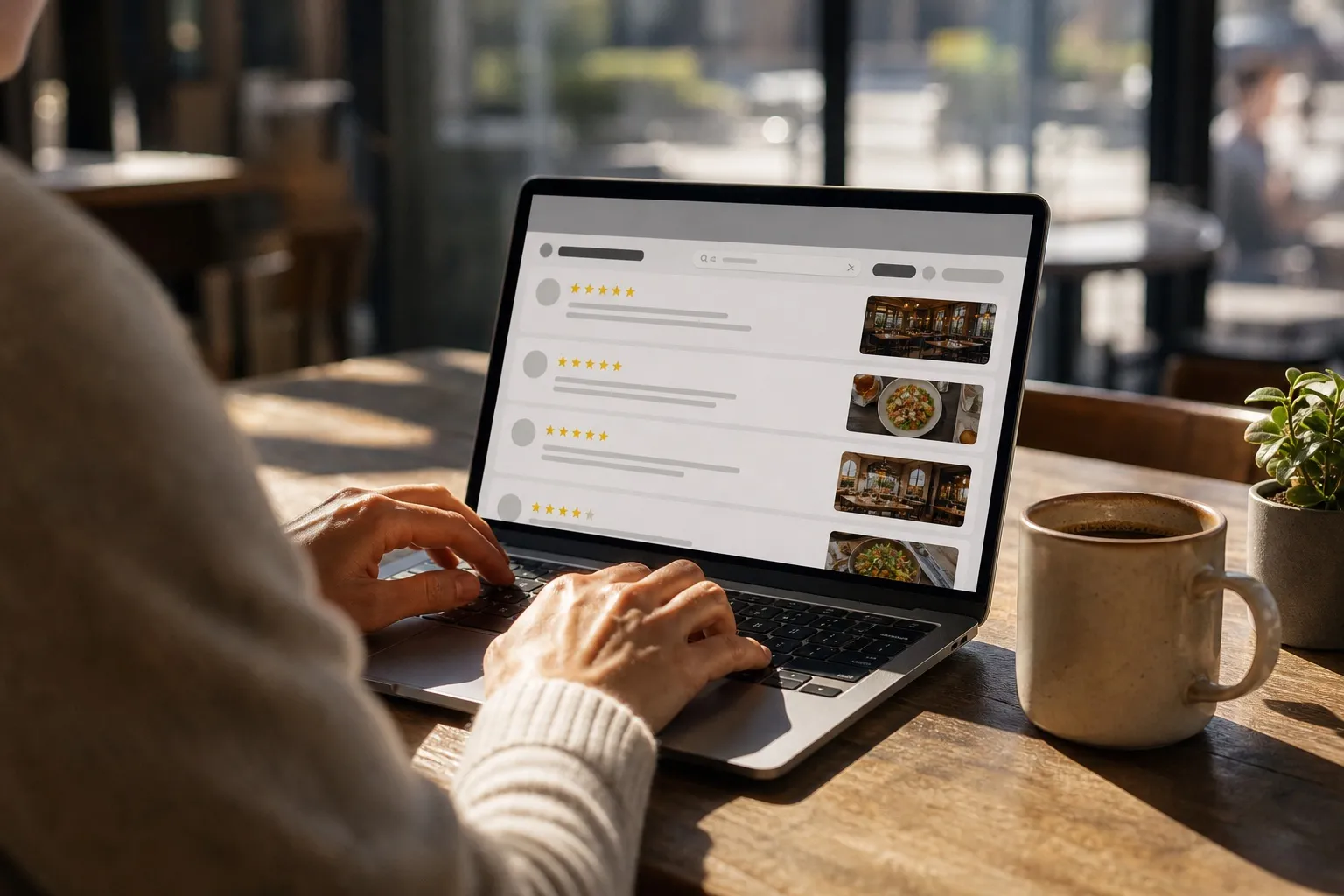
Olo went private at $2B on September 12. SevenRooms sold to DoorDash for $1.2B in June. Read together, the two deals describe a structural shift — not a coincidence — and the 2026 calendar already has the next carve-outs penciled in.
I spent most of a Tuesday in September watching a stock disappear. Olo, ticker OLO, traded for the last time on the New York Stock Exchange the morning of September 12, 2025. By the closing bell the Thoma Bravo deal was complete — $10.25 a share, $2 billion in cash, the public float retired in a single line of a registrar’s ledger. Three months earlier, on June 13, SevenRooms had closed its $1.2 billion sale to DoorDash — the other reservation-side carve-out the trade press kept reading as a one-off.
It is not a one-off. The 2025 double-take is the structural story of the year in restaurant tech, and I will say it plainly: 2026 will see at least two more private-equity-led carve-outs of POS or CRM infrastructure businesses currently trading on public markets or stranded inside larger conglomerates. The math says so, the layoff pattern says so, and the buyer rotation says so. Below is the work.
What actually happened in 2025
Strip the press releases and the two deals are mirror images.
Olo: founded 2005, IPO’d March 2021 at $25 and a $4.6 billion valuation, peaked at roughly $43 a share six weeks later, then ground sideways and down for three and a half years. By the time Thoma Bravo’s tender opened in July, OLO was trading in the high sevens. The $10.25 final price was a 65% premium to the unaffected 60-day VWAP and roughly forty cents below the IPO price four and a half years earlier. The math is unkind: a unicorn restaurant-tech IPO returned its early public holders nothing, and the workout was a private-equity take-private at a discount to the listing sticker.
SevenRooms: never public. Founded 2011, last private round was a Providence Equity-led $50 million Series B in 2020, DoorDash announced the acquisition in May, closed June 13 at a reported $1.2 billion. The buyer is strategic, not financial, but the structural read is identical: a guest-data and CRM layer the public markets did not want to underwrite was rolled into a delivery platform with the cap-table tolerance to absorb it.
Two infrastructure businesses, two exits inside ninety days, both at multiples the public market refused to pay. That is not a coincidence. That is a regime.
The math the public market was running
Here is the spreadsheet view. Olo’s last reported trailing twelve months at the time of the deal showed roughly $310 million in revenue and adjusted EBITDA margins in the high single digits. The $2 billion enterprise value implies an EV/revenue multiple of about 6.5x and an EV/EBITDA multiple north of 60x on trailing — extraordinary on EBITDA, unremarkable on revenue for a category-leader SaaS asset. The public market was valuing Olo at roughly 4.5x revenue in the weeks before the bid. Thoma Bravo wrote a check at 6.5x. The premium is real, but it is the premium relative to where the public market had marked the asset, not relative to where private buyers will pay for the cash flows.
SevenRooms tells the same story differently. Trade press estimates put SevenRooms at roughly $75–90 million ARR at the time of the DoorDash deal. The $1.2 billion price implies 13–16x ARR — a multiple no public hospitality SaaS comp would touch today, and one that requires strategic synergy (DoorDash’s restaurant graph plus SevenRooms’ diner identity layer) to underwrite.
The interpretive flag: public market multiples for vertical SaaS in hospitality have decoupled from private-market and strategic multiples by a factor of two to three. When that gap opens and stays open, take-privates are not an opportunity — they are the obvious move. Boards have a fiduciary problem if they do not run the auction.
PitchBook’s H1 2025 restaurant-tech M&A volume number — up 45% year over year — is not a sentiment indicator. It is the spreadsheet running against itself across the sector.
Why the layoffs after Olo matter more than the price
The most under-reported thing about the Olo close is what happened on September 18, six days after the deal funded. Layoffs hit the company immediately — primarily in marketing, partnerships, and middle-management product roles. The headcount cut was modest in absolute terms but precise in shape: every reduction was in a function that does not directly touch the revenue-per-location math.
This is the Thoma Bravo playbook executing on schedule. It is the same playbook applied to Anaplan, Coupa, and SailPoint — three public-to-private deals where the operating thesis was identical: the asset has durable category position and high gross margins, the public market is forcing it to over-invest in growth optics, and a private-equity owner can rebuild the P&L around free cash flow inside eighteen months.
For hospitality operators, the layoff pattern is the signal worth tracking. It tells you the new owner’s real model for the asset: keep the integrations, keep the platform engineering, keep the customer-success bench that protects renewals, cut everything that exists to please a public-equity research analyst. The product roadmap will narrow. The pricing power will increase. The renewals will stay sticky because Olo’s switching costs — particularly around its 725+ POS and aggregator integrations — are exactly the moat that survives a cost-out program.
If you are an operator running Olo today, your real question is not whether the product gets worse. It is whether your contract gets repriced at renewal. My base case: yes, modestly, on net-new modules and across the engagement and Olo Pay attach. Expect 8–12% effective price increases over a 24-month window, larger on smaller chains.
The carve-outs we expect in 2026
Here is where the contrarian thesis pays for itself. Reading the Olo and SevenRooms deals together, plus the PitchBook volume figure, plus the buyer rotation visible in the last four quarters of restaurant-tech M&A, I will commit to a number: at least two more PE-led carve-outs in the POS/CRM stack during calendar 2026. The candidates sort into three buckets.
Bucket one: still-public hospitality SaaS trading below private-market clearing prices. PAR Technology, Presto Automation, and Lightspeed’s hospitality segment all sit here in some form. PAR is the cleanest comp — vertically integrated POS plus loyalty plus payments, trading at roughly 3.5x forward revenue at the time of writing, against private comps closer to 6–7x. The PAR auction file practically writes itself, and a forthcoming May piece on the DoorDash–SevenRooms merger arithmetic sketches the precedent multiple a strategic would have to pay.
Bucket two: divisions stranded inside larger software conglomerates. Oracle’s hospitality unit (Micros) is the obvious sit. NCR Voyix’s restaurant business is another, particularly after the NCR Atleos spinoff reshaped what’s left of NCR’s POS footprint. Both are non-core assets inside parent companies whose public investors do not value vertical software at the multiples private buyers will pay. Both are obvious carve-out files in the next twelve months. An upcoming May piece on the Q2 2025 M&A roundup maps the same set of candidates from a different angle and arrives at a similar shortlist.
Bucket three: PE-backed private companies whose existing sponsors are at end-of-fund-life and will sell to other sponsors or to strategics. Toast is the wrong answer here — it is too large, too public, and too liquid. The right answers are mid-cap CRM and reservations platforms whose 2018–2020 vintage sponsors are now in harvest mode.
I will not name specific companies for either bucket two or bucket three on the record. I will say that the bankers we talk to are running pitches into all three buckets right now, and the auctions that close in 2026 are being prepped in November 2025.
What this means for the operator stack
The interpretive flag worth raising: privatization changes who Olo and SevenRooms answer to, and the answer is now sponsors with seven-year hold windows, not quarterly-earnings analysts. The practical consequences for operators are three.
First, roadmaps narrow but execute faster. Public-company restaurant SaaS tends to ship to satisfy analyst coverage — broad surface, shallow depth. Private equity tends to ship to satisfy net revenue retention — narrow surface, deep features in the modules that drive attach. Operators who liked Olo’s breadth should expect less of it. Operators who wanted Olo Pay and Olo Engage to actually work should expect more.
Second, pricing power consolidates. Two of the most important integration layers in U.S. restaurant tech are now owned by sponsors with explicit mandates to monetize. Olo’s Pay take-rate and SevenRooms’ marketing-cloud premium tiers are the obvious levers. Expect the price book to get more aggressive, particularly on smaller and mid-market chains without the leverage to negotiate.
Third, strategic acquirers get more aggressive because the clock is running. If you are Toast or Block (Square) or DoorDash and you watched two of the most important infrastructure layers in the category go private inside ninety days, your build-versus-buy calculus changed permanently. The window to acquire the next SevenRooms is shorter than the window the SevenRooms team had. We are going to see more vertical M&A from the strategics in 2026, not less, precisely because PE is no longer leaving them assets on the public market to pick from.
The bottom line
The Olo and SevenRooms deals are not a coincidence and they are not a top. They are the opening moves of a multi-year privatization of restaurant-tech infrastructure that public markets have spent four years mispricing. Thoma Bravo wrote the first big check. DoorDash wrote the second. The 2026 calendar has at least two more written in pencil.
If you are an operator, lock your renewals long and watch the price book. If you are an investor, the public hospitality SaaS comps are dislocated from private clearing prices by a factor that no longer corrects on its own — it corrects through transactions. And if you are sitting on a vertical SaaS asset inside a larger conglomerate whose stock chart has gone sideways since 2022, your bankers will be calling. They are already calling.
The number to remember is 45%. That is the H1 2025 M&A volume increase versus H1 2024. The number to bet on is two — the carve-outs we will write about in this column twelve months from now.
— Marcus edits The Bottom Line for TableTransfers. Tips: ma@tabletransfers.com.
Featured
More
Browse all 494 posts
The Voice Agent Maturity Curve
mise
·12 min read
The Four Margins of a Restaurant
mise
·14 min read
The AI Premium in Hospitality M&A: Broker Story or Real Number?
the bottom line
·9 min read
What the DoorDash/SevenRooms Deal Actually Buys
the bottom line
·11 min read
Related posts

the bottom line
·11 min read
Darden trades like a tech company. It shouldn't.
the bottom line
·12 min read
Applebee's just became its own franchisee. The territory math is the trade.
the bottom line
·12 min read