Voice AI's Capital Floor Got Raised: VoiceRun's $5.5M Is the Small End of a Loud Quarter

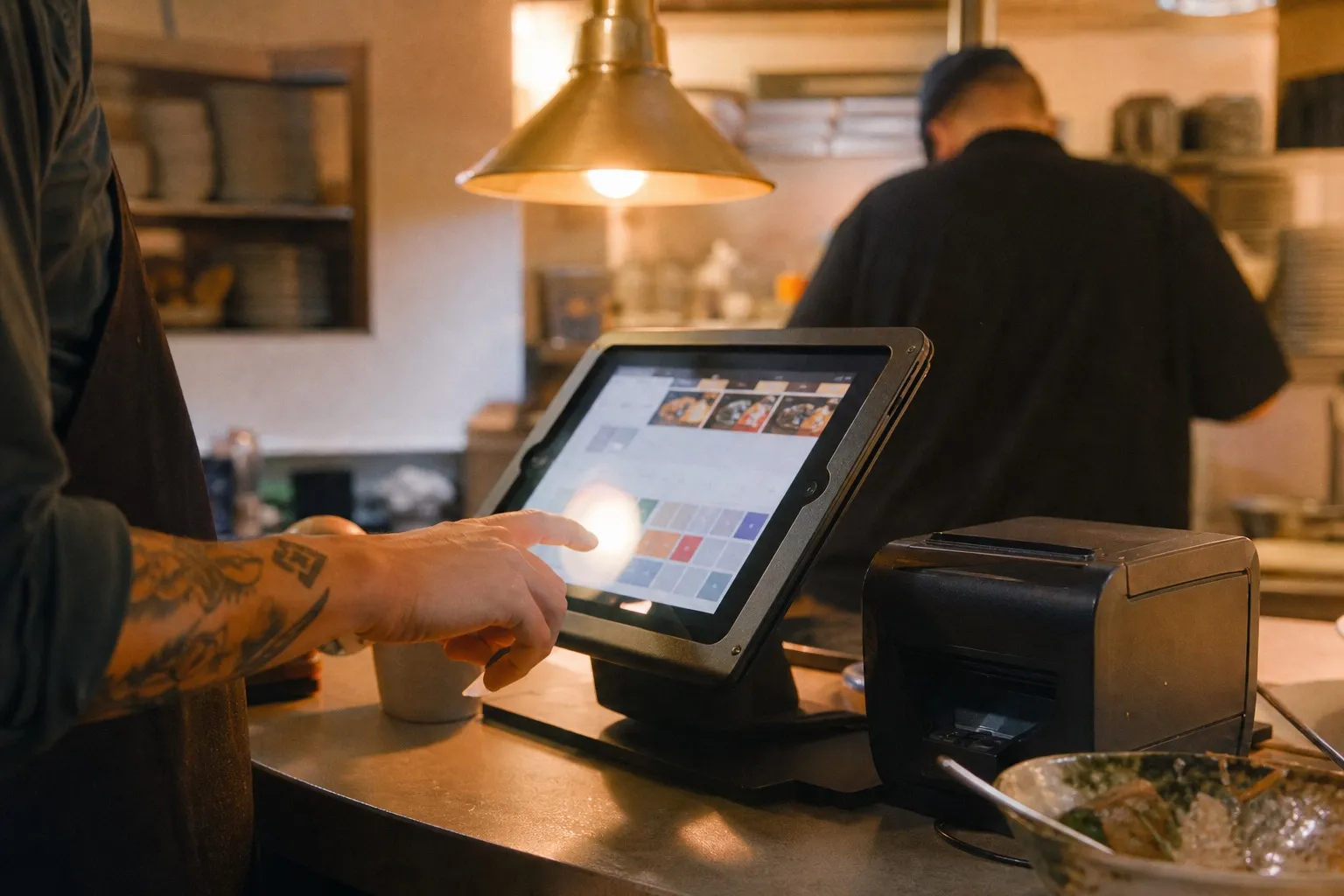
Four voice AI rounds stacked on the desk this winter — PolyAI's $86M at a $750M valuation, Vox AI at $8.7M, Loman at $3.5M, VoiceRun at $5.5M. The seed tier has commoditized. Durable advantage lives somewhere else now.
Friday, 7:40 a.m. Four deal sheets on the desk and one of them is from December I never properly cleared. PolyAI’s $86M Series D — that one I’d marked and moved on from because it printed mid-holiday and the rest of the inbox was Q4 prep. Vox AI’s $8.7M from Headline, sitting next to a print-out from a restaurant trade rag. Loman’s $3.5M from Next Coast, same trade rag. And on top, fresh from yesterday’s TechCrunch wire, VoiceRun — $5.5M seed, Flybridge leading, the kind of round that nine months ago I would have skimmed and dropped in the “watch” pile.
I’m not dropping it. The reason is that all four read differently when you stack them.
Interpretation flag up front: my read on this quarter is that the voice-AI seed tier has commoditized. The $3M-to-$9M check is no longer a moat-purchase — it’s table stakes. Durable advantage, the kind that survives the next twelve months of GPU price moves and model-provider repricing, lives in two places now: vertical concentration (one industry, deep) and integration distribution (where your agent plugs into the customer’s existing tech stack). Capital alone doesn’t buy either. That’s an interpretation, not a fact. You can disagree, and at the close of this piece I’ll tell you the specific number I expect to be wrong about if I am.
VoiceRun: the developer-platform bet at the small end
TechCrunch’s Jan 14 piece puts VoiceRun at $5.5M seed led by Flybridge Capital. Founders Nicholas Leonard (CEO) and Derek Caneja (CTO). The pitch is a “voice agent factory” — a developer platform that sits between two extremes the founders name explicitly: no-code builders like Bland and Retell on one side, low-level toolkits like LiveKit and Pipecat on the other. VoiceRun wants the middle. Code your agent’s behaviour directly, get A/B testing, get one-click deployment, keep your business logic in your own repo.
The customer example TechCrunch surfaces is a restaurant-tech company using VoiceRun for an AI phone concierge handling food reservations. Hold that thought — it’ll matter in a minute.
Leonard’s framing claim, which I am going to mostly take at face value because it’s also what every operator I’ve talked to in the last quarter has said, is that “75% of survey respondents still prefer human customer service representatives” because “voice automation has been brittle and ineffective.” If that’s the addressable opportunity — a market where the current product is bad enough that three-quarters of users actively prefer the human — then $5.5M is not a moat-purchase. It’s a runway-purchase. Eighteen to twenty-four months to find out whether the developer-platform layer is the right place to stand.
I’ll note casually what I won’t model formally: at a $5.5M seed in this category, you’re looking at a typical post-money in the $20M–$30M zone. Roughly a 20x revenue multiple at a $1M ARR mark, which is the kind of number that requires the next round to be priced on a story — vertical wins, integration depth, retention — not on the platform-API revenue itself. Seed-stage voice AI is a 2027 priced-on-narrative bet, full stop.
PolyAI: the only number in the stack that’s actually load-bearing
Now the December round I should have written up four weeks ago. PolyAI’s Series D, announced Dec 15, 2025: $86M, taking total raised over $200M. Georgian, Hedosophia and Khosla led. The supporting cast is the part that should make every other voice-AI founder pause for coffee — NVentures (Nvidia’s venture arm), British Business Bank, Citi Ventures, Squarepoint, Sands Capital, Zendesk Ventures, Point72 Ventures.
The valuation: $750M. That’s not in the company’s own release. It’s SiliconANGLE’s Mike Wheatley reporting the number, and — this is the part I find genuinely useful — Wheatley went to UK Companies House and pulled the filings. PolyAI is a UK company, so its statutory accounts are public. Per Wheatley citing Companies House:
- FY ending Jan 31, 2024: $8.9M revenue
- FY ending Jan 31, 2025: just over $15M revenue
- Trajectory: on track to double ARR past $40M
That’s a 1.7x year on a small base, with the company telling Wheatley they expect the next year to nearly triple it. At a $750M post-money against a trailing $15M, you’re looking at roughly a 50x trailing multiple — Wheatley reports the company’s framing as “25x revenue,” which only works if you mark it against the forward $40M+ number. Either way, this is a multiple that asks you to believe the doubling.
The customer list is the part that does most of the asking. PG&E, UniCredit, Caesars, Golden Nugget, Marriott, Foot Locker. 100+ enterprises, 2,000+ live deployments, 45 languages, 25+ countries. The Forrester ROI study PolyAI cites — 391% ROI, $10.3M average savings per customer — is exactly the kind of vendor-commissioned number I usually discount, but it’s directionally consistent with what I hear from contact-center operators when they actually deploy these things and don’t just pilot them. If the ROI lands, the renewal lands. If the renewal lands, the doubling is plausible. That’s the chain of reasoning the $750M is asking you to accept.
What PolyAI bought with this round — and this is where I want you to look, not at the headline — is air cover. They’re now the only voice-AI vertical (enterprise contact center, specifically) with a published revenue line at scale, public-filing-disclosed, with the kind of investor syndicate that signals the next round is already implicitly priced. Every seed-stage competitor in their category now has to explain to their next-round lead why they’re not just going to get crushed by the company with Marriott on the slide.
Vox AI and Loman: the restaurant pincer
Then the other two rounds, both from the Restaurant Business piece that ran a few weeks back and which is, frankly, the single most useful summary of the restaurant voice-AI competitive set I’ve seen this cycle.
Vox AI: $8.7M seed, Headline leading. Amsterdam-based, drive-thru-specialised, 90+ languages, expanding to SF. Loman AI: $3.5M seed, Next Coast leading. Austin-based, automated phone systems for customer questions and orders. Audivi AI also closed a seed in the same window, amount undisclosed.
The trade rag’s list of who’s already in this market is the part nobody writing about voice-AI funding rounds wants to put in their lede: Presto, Hi Auto, ConverseNow, SoundHound, Google, IBM are the incumbents. The newer 2023-and-later entrants include Incept AI, Palona AI, Maple and Revmo.ai. That is — by my count — at least a dozen funded competitors going for the same drive-thru/phone-order workflow, and we just added three more in one quarter.
The Restaurant Business piece also surfaces the part the cap table doesn’t: a White Castle deployment that accidentally charged a customer $15,400. The systems still need human monitoring in many deployments. Taco Bell, Wendy’s, Bojangles, White Castle and Taco John’s are rolling things out but accuracy remains the choke point. So the addressable market is real (every QSR phone line and drive-thru in the country) and the technology is good enough to deploy at scale but not good enough to deploy unattended. Which means there’s still a window — but it’s narrowing, and the dozen funded entrants are all racing for the same handful of enterprise logo wins that turn a $3M–$9M seed into a $30M+ Series A.
What the four rounds say when you read them together
Stack them: $86M / $8.7M / $5.5M / $3.5M. One late-stage anchor, three seed checks. The PolyAI round is doing the work for the whole category — it’s the data point that lets every voice-AI seed in this stack pitch a next round to a believing lead. Without PolyAI’s December print, the Jan 14 VoiceRun round is harder. Probably 25-50bps harder on valuation, and Flybridge probably writes it anyway, but the round is harder.
But here’s the thing the capital says that I think founders should sit with. The four rounds collectively price the seed tier at $3.5M–$8.7M. Three years ago, that range was $1M–$3M and a friends-and-family deck. The capital floor in this category just got raised, and the reason it got raised is that the cost of getting to a passable voice-agent product has come down at exactly the same time the cost of getting to a defensible one has gone up. Models are cheaper and better. The integration work — POS, CRM, telephony, ordering platform, payments — has not gotten cheaper. It’s gotten more complex, because there are more systems to integrate.
That’s where I land, and it’s the interpretation I’ll defend: the seed tier in voice AI has commoditized at $5M, and the durable advantage is now (a) vertical concentration deep enough that you own the integration map of one industry and (b) integration distribution — being the agent that’s already wired into the customer’s existing stack when they ask the question. PolyAI bought both with $200M total raised and seven years of work. The Jan 14 cohort needs to buy them with $5M and eighteen months, which is a much harder problem.
For operator readers — the part of this column that actually matters to most of you — the read is simpler. If you’re a multi-unit operator evaluating voice AI right now, the seed-tier vendors are not yet differentiated on outcome. They’re differentiated on integration map. Ask which POS, which ordering platform, which telephony stack they’re already live on. That’s the question that tells you whether the pilot will renew. (For the longer arc of how to think about voice agents in hospitality specifically — what to deploy now versus what to wait on — David’s piece on the Voice Agent Maturity Curve is the better read; I’m just doing the cap-table layer here. And the broader question of whether AI is the line item buyers are actually paying for in M&A — I went through that exercise last week with five real transactions.)
The falsifiable bit
If I’m right that the seed tier has commoditized and durable advantage now lives in vertical concentration plus integration distribution, then here’s the prediction I expect to be tested by Q3 2026: at least one of the four startups in this stack — VoiceRun, Vox, Loman, or one of the unnamed seed-tier competitors — will close a Series A at a flat or down round from their seed post-money, because they cannot show a defensible integration map or a vertical concentration story. Not because the product is bad. Because the product no longer wins on the product.
And I’ll be wrong if the same four all close Series As at 3x-plus markups in the next nine months on platform-API revenue alone. That’s the falsifiable line. I’ll come back to it in October.
— Marcus runs The Bottom Line and gets the deal flow before the brokers. Tips: tips@tabletransfers.com.
Featured
More
Browse all 494 posts
The Voice Agent Maturity Curve
mise
·12 min read
The Four Margins of a Restaurant
mise
·14 min read
The AI Premium in Hospitality M&A: Broker Story or Real Number?
the bottom line
·9 min read
What the DoorDash/SevenRooms Deal Actually Buys
the bottom line
·11 min read
Related posts

the bottom line
·11 min read
Darden trades like a tech company. It shouldn't.
the bottom line
·12 min read
Applebee's just became its own franchisee. The territory math is the trade.

the bottom line
·12 min read