Wendy's FreshAI Math: Why Investors Should Care About the Next 500 Stores

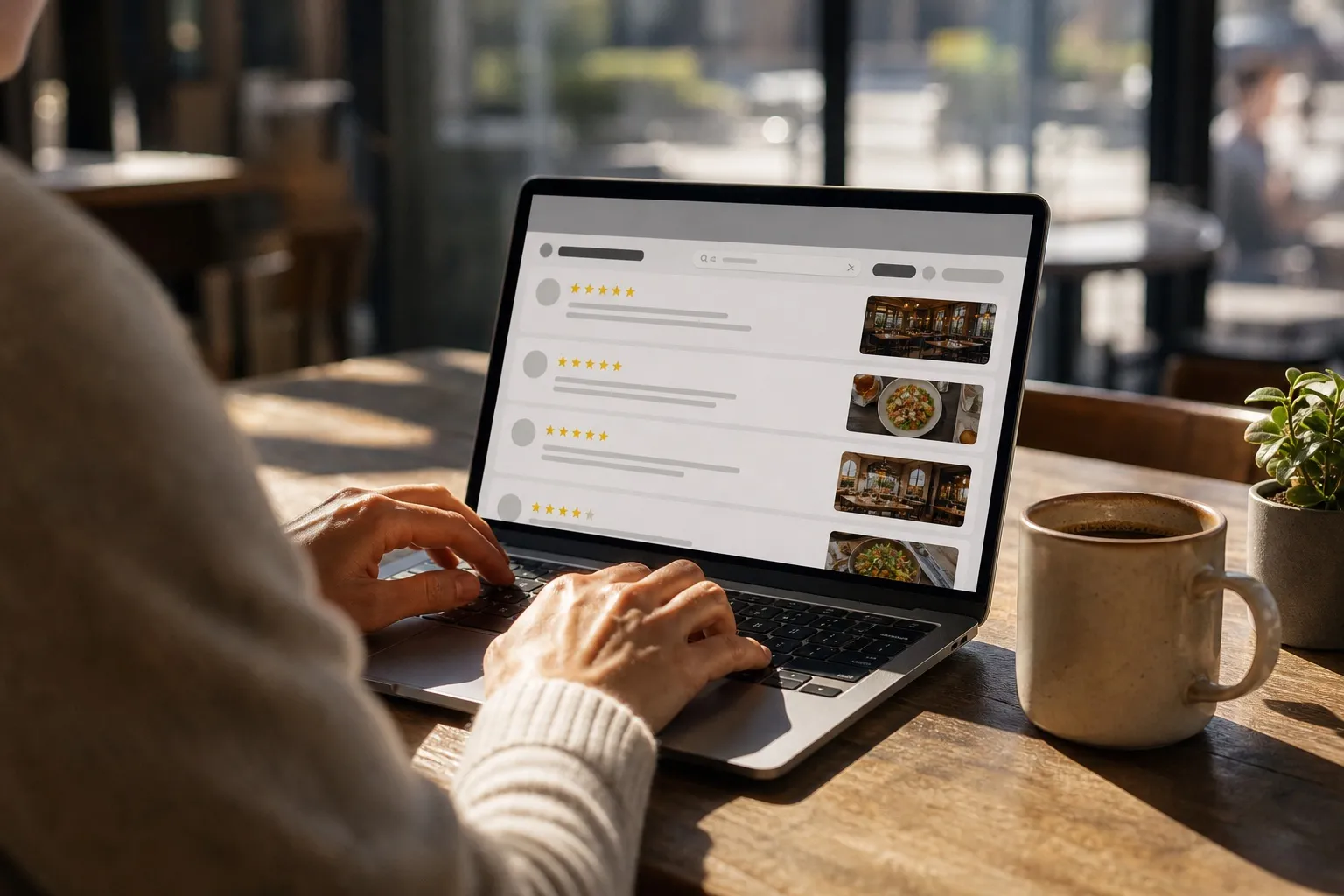
The deployment math behind Wendy's $100–110M capex commitment — how 500 FreshAI installs translate into throughput, labor, and AUV, modeled against TOST/OLO/SOUN comps.
It is Friday afternoon and my desk is a mess. Two monitors, a comp table I rebuilt twice this week, the Wendy’s 8-K from yesterday’s Investor Day printed and marked up in red pen, and a coffee that went cold around the time I finished re-running the FreshAI install schedule for the third time. The radiator clicks. The market closed an hour ago. I am still here because the number that came out of yesterday’s deck — $100 to $110 million of capex for 2025, with 500 to 600 FreshAI installs sitting inside that envelope — is the kind of number that either prints money or quietly disappears into the next 10-K with a hand-wave about “transformation investments.” There is no third outcome. So I want to walk through how I am modeling this, what I am willing to underwrite, and where I think the buy-side is still mispricing the risk.
Let me be blunt about the frame. I am not here to tell you whether the voice-AI cashier is “cool.” I am here to tell you whether the unit economics work at the 500-store breakpoint, because that is the only number that matters. A 100-store pilot can run on goodwill, engineering attention, and a generous interpretation of accuracy metrics. Five hundred stores running across geographies, accents, menu LTOs, and the franchisee operational variance that defines this system — that is a different animal. The math I am about to lay out works only if accuracy holds at scale. If it degrades, the labor-savings line collapses and you are left with an expensive intercom upgrade. That is the contrarian thesis and I want it on the record before the numbers start.
The Capex Envelope Is Smaller Than the Headlines Suggest
Start with what Wendy’s actually committed to. The 2025 capex guide is $100 to $110 million for technology and infrastructure, sitting alongside 68 net new restaurants globally and the continued FreshAI rollout. That is the all-in tech envelope — not the FreshAI line item. FreshAI is one program inside it. So when I see headlines treating $110M as if it is the price tag for 500 drive-thru AI installs, I quietly close the tab.
My base case: the FreshAI hardware-plus-integration cost per store is a meaningful but not dominant share of the envelope. Wendy’s has been explicit that the 100-plus pilot units are already deployed and the target is 500 to 600 by end of year. That means the incremental build from here is roughly 400 to 500 stores. Even if you assume a generous per-store install cost — and I am being deliberately vague here because the disclosed numbers do not let me pin it down without inventing figures — the total FreshAI program slice is comfortably under the full $110M envelope. The rest covers the unglamorous stuff: POS modernization, back-of-house systems, the digital ordering stack that supports the ~11% digital sales mix Wendy’s flagged, and the network/security spend that nobody puts on an investor slide but every CIO has on theirs.
The reason this framing matters is that it changes the hurdle rate. If you mistakenly treat the entire $110M as a bet on voice AI, you need FreshAI to deliver labor or throughput savings against a $110M base before you call it accretive. That is the wrong denominator. The right denominator is the FreshAI-attributable slice, and against that slice the payback math is much friendlier — provided, again, that accuracy at the 500-store mark holds. I covered the broader CFO framing of these tech-platform bets in post 15, and the recurring point is the same: most QSR tech rollouts get judged against the wrong cost base, which is why their ROI debates go in circles for two earnings cycles.
What “500 Stores” Actually Buys You in Throughput and Labor
This is the section where I lose the people who want a clean answer. There isn’t one yet. But there is a structure for thinking about it, and the structure is what I underwrite.
The drive-thru is roughly 70% of QSR transactions at this kind of operator, and the binding constraint inside the drive-thru is not the kitchen — it is the order-taking interface. Every second you shave off the order-take, you get back as either incremental throughput (more cars per hour at peak) or labor reallocation (the order-taker is doing something else). At a 500-store deployment, you are not running a tech experiment. You are running a labor-model change at material scale. The question is whether the order-take is fast enough, accurate enough, and consistent enough that a franchisee actually changes how they staff the peak hour. If they don’t change staffing, you have spent capex and gotten nothing.
My base case: the labor opportunity is real but lagging. Franchisees do not redeploy labor on the first quarter of an install. They wait, they watch the order-accuracy reports, they wait for the LTO season to break it, and then — maybe — they cut a position from the peak schedule. So the labor-savings line in my model ramps over four to six quarters per cohort of stores, not on day one. If you are modeling instant payback you are going to be disappointed in the Q2 print and you are going to write a frustrated note about “execution.” That note will be wrong. The execution will be fine. The model was wrong.
On throughput: the cleaner read is cars-per-hour at peak. If FreshAI shaves even modest seconds off the order-take and the kitchen can absorb it, you pick up incremental transactions at the highest-margin part of the day. That flows to AUV. AUV growth at this stage of Wendy’s same-store trajectory is the variable that moves the equity story, not unit growth. The 68 net new restaurants are a 2026-2027 story. The 500 FreshAI installs are a 2025-2026 AUV story. Investors who conflate the two are mis-weighting their model.
The Comp Table Nobody Wants to Build
Here is where I get unfashionable. The right comp set for valuing this capex is not other QSR operators. It is the restaurant-tech vendor stack — because Wendy’s is, functionally, in-housing a slice of capability that companies like Toast (TOST), Olo (OLO), and SoundHound (SOUN) sell as a service. The question is whether Wendy’s is paying a reasonable build-vs-buy premium for control, data, and brand-consistency, or whether they are reinventing a wheel that a public vendor would happily roll under their drive-thru for a fraction of the capex.
My base case: the build-vs-buy math favors Wendy’s here, but only barely, and only because of the data moat. The voice AI in a drive-thru is not a generic LLM problem. It is a constrained-menu, accent-diverse, ambient-noise, latency-sensitive problem with a closed vocabulary and a finite set of LTO permutations per quarter. The training data that Wendy’s accumulates across 500 stores is proprietary and reusable. A vendor running the same model across multiple brands has to either commingle the data (which the brands will not allow) or run isolated instances (which kills the unit economics). So Wendy’s owns the only version of this dataset that matters for their menu. That is worth something. I would not pay an infinite premium for it, but I would pay the $100-110M envelope premium for it, because the alternative is renting the capability from a vendor whose incentives diverge from yours the moment a competitor signs a bigger contract.
Look at the public comps. TOST trades on a multiple that bakes in years of restaurant-tech penetration. OLO has spent the last two years trying to convince the market its take rate is durable. SOUN’s voice-AI thesis is priced for a level of QSR adoption that, frankly, requires deployments exactly like Wendy’s to materialize — except SOUN would prefer those deployments run on their stack, not on a custom one. The fact that a top-five US burger chain is going custom is, on the margin, a negative signal for the vendor multiple and a positive signal for the operator who is internalizing the capability. The market has not fully priced this. I think it will, slowly, over the back half of 2025 as more operators announce their direction. The GTC keynote on March 18 will accelerate this conversation, because every CIO in QSR is going to walk out of that week with a slide deck about voice-AI infrastructure and a renewed argument with their CFO about build versus buy. I wrote about how this CIO-CFO tension plays out in tech-platform deals in post 16, and the dynamic is identical here.
Where My Model Breaks — The 500-Store Breakpoint
Now the honest part. My base case works if accuracy holds. If it does not, the entire labor-savings line falls out and you are left with a capex bill, a maintenance contract, and an executive team explaining to analysts why the rollout is “paused for optimization.” I have seen that movie. It rates poorly.
Why am I worried about the 500-store breakpoint specifically? Because everything we know publicly about FreshAI’s performance comes from the 100-plus pilot stores. Pilots are a self-selected sample. They are run with engineering attention, hand-picked franchisees, favorable geographies, and a level of operational discipline that does not survive contact with a 500-store rollout schedule. The accuracy curve as you scale from 100 to 500 is the variable I cannot underwrite from public disclosures, and the company has not — to my read — given the market a clean accuracy metric with a methodology I can stress-test. That is a gap. It is a fair gap at this stage of a rollout; nobody publishes accuracy curves mid-deployment. But it is the gap that determines whether my base case holds.
My base case: accuracy at 500 stores is meaningfully below pilot accuracy but still above the threshold where franchisees will redeploy labor. That is a narrow band. If FreshAI lands in that band, the math works and the equity story I outlined above is intact. If it lands below the band, the labor line evaporates and the AUV story has to carry the entire weight of the program — which it might, on throughput alone, but the multiple expansion gets compressed. If it lands above the band — if accuracy actually scales well — then the program is materially undermodeled by the sell-side and there is upside to the consensus 2026 AUV figure.
The risk I am genuinely watching is not the technology. The technology is fine. The risk is the franchisee dynamic. Wendy’s is a heavily franchised system, and franchisees decide how to staff. If the system office can show a clean labor-savings case to franchise council with the second-cohort data, this rolls. If the data is muddy and the franchisees push back, the rollout slows, the capex gets spread over more years, and the AUV ramp stretches into 2027. I am modeling a 60/30/10 split across base/bear/bull on this specifically, and I am not going to publish the bull case until I see Q2 numbers. The bear case is the one to underwrite first, because that is the discipline.
What I’m Doing With This
Position-wise, I am not making a directional call here. This is not that kind of column. What I am doing is rebuilding my QSR-tech model with FreshAI as a discrete line item rather than a footnote, separating it from the broader $100-110M envelope so I can see the slope of the labor and throughput contribution as cohort data comes in. I am also watching the vendor-side comps — TOST, OLO, SOUN — for any sign that operators going custom is showing up in their growth deceleration. It is too early to see it in the prints, but it will start showing up in the guidance language by Q3 if my read is right.
The thing I want you to take away from this column is the framing, not a price target. Wendy’s FreshAI rollout is the first large-scale, public, multi-hundred-store deployment of voice AI in QSR drive-thru by an operator going custom rather than vendor. The next twelve months are a natural experiment. Either the accuracy holds at scale, the labor-savings line ramps, the AUV trajectory steepens, and every other major QSR operator quietly accelerates a similar program; or it does not, and the vendor stack picks up the slack at a markup. There is no in-between outcome that does not collapse into one of those two within four quarters.
I will be back on this when the Q2 cohort data lands. Until then, the radiator is still clicking and my coffee is colder than when I started.
— Oliver writes The Bottom Line on M&A and valuations. Tips: tips@tabletransfers.com.
Featured
More
Browse all 494 posts
The Voice Agent Maturity Curve
mise
·12 min read
The Four Margins of a Restaurant
mise
·14 min read
The AI Premium in Hospitality M&A: Broker Story or Real Number?
the bottom line
·9 min read
What the DoorDash/SevenRooms Deal Actually Buys
the bottom line
·11 min read
Related posts
the bottom line
·11 min read
Darden trades like a tech company. It shouldn't.
the bottom line
·12 min read
Applebee's just became its own franchisee. The territory math is the trade.
the bottom line
·12 min read