Wingstop Just Logged Its First Full-Year Domestic SSS Decline in 22 Years. Smart Kitchen Is the Lever That's Actually Working.
FY 2025 domestic SSS -3.3%, Q4 -5.8%, and a record 493 net new units in the books. The headline is the comp break. The story for operators is that Wingstop's ops-AI rollout is now the part of the model that's earning its keep.
Wednesday, 3:48 p.m. Central, the WING release lands an hour before close and I’m reading it from a bar-back in Dallas with the bartender already polishing glasses around me. The print takes a second pass. Q4 revenue $175.7M, up 8.6%, EPS $1.00 against a $0.85 Street (Globe and Mail, 18 Feb 2026; QuiverQuant, 18 Feb 2026). 493 net new restaurants for the year — 124 of them in Q4 — and system-wide sales of $5.3B, up 12.1%. Digital is now 73.2% of system.
And then the same-store sales line.
Domestic SSS down 5.8% in Q4. Down 3.3% for the full year. On the call, CEO Michael Skipworth said it cleanly: “This was our first same-store sales decline in 22 years” (Globe and Mail transcript). Twenty-two years. Through 2008, through 2020, through the 2023 boneless promotion cycle that made WING a hedge-fund chart on three different desks. The streak broke.
That’s the headline every desk will lead with tonight. Right headline. Not the interesting one.
The contrarian read
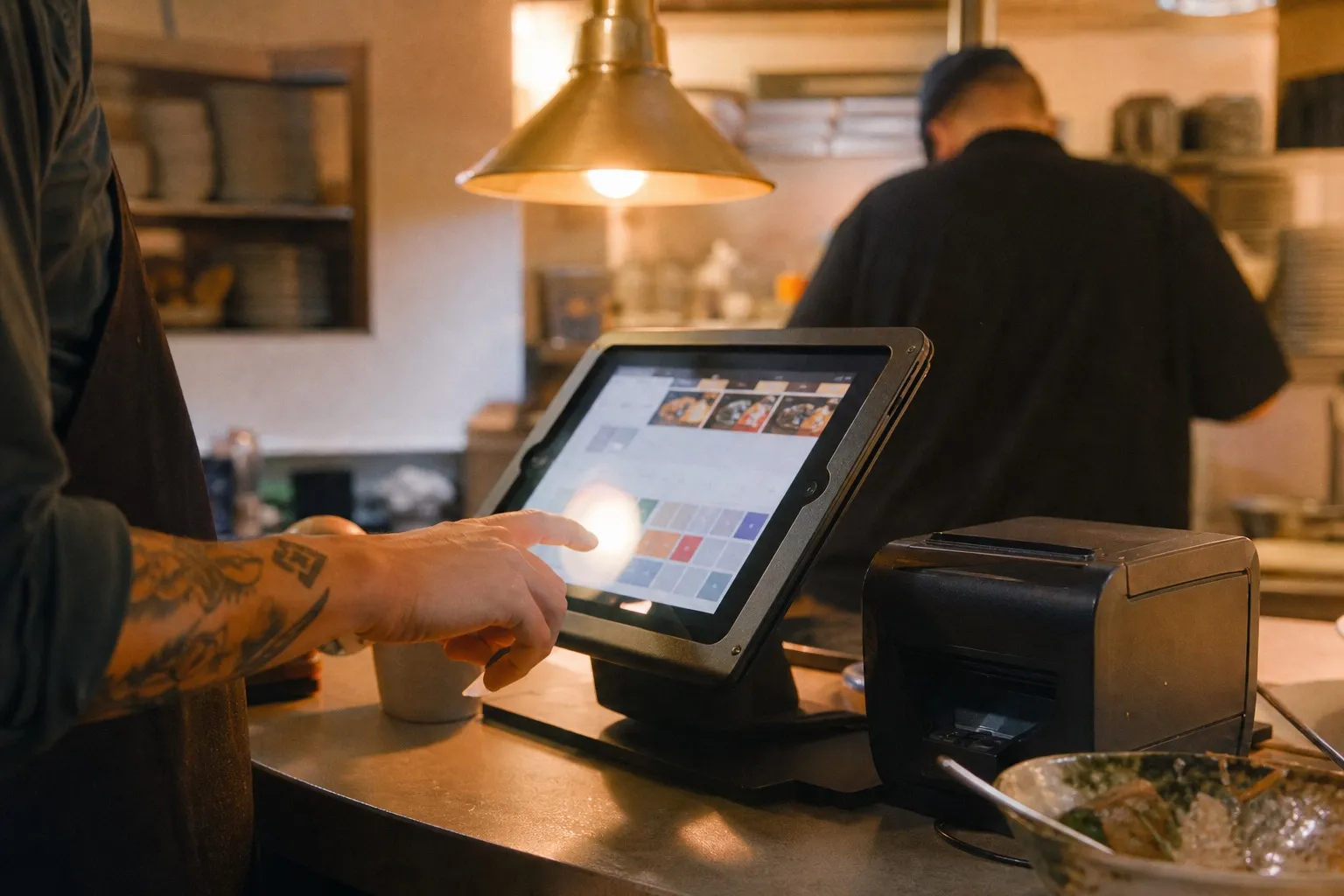
The interesting line is buried in CFO Alex Kaleida’s remarks. “On average, restaurants are consistently seeing delivery time reductions of approximately 15% year-over-year.” The lever that produced it is the Wingstop Smart Kitchen — the chain’s order-orchestration and make-line system — which Skipworth confirmed on the call is “installed in all of our domestic restaurants.”
Fully deployed. Domestically. At a chain that opened 124 stores in a single quarter.
The contrarian read — INTERPRETATION, not anything Skipworth said in those words — is that the Wingstop story has quietly shifted axis. The franchise model is still the growth engine; 19.2% unit growth and ~2,300 future restaurant commitments put the visible pipeline at roughly another full chain. None of that needs the comp to work. What it needs is the unit-level operating model to absorb the volume without the throughput math collapsing — and that is the job Smart Kitchen now owns.
When the comp fails, ops AI is the lever that earns its keep.
Why a 15% delivery-time reduction is the number to write down
Wingstop’s delivery-time problem has been the chain’s running tell for two years. The category is intolerant of slack — a wing order cooling in a third-party bag is a refund event, a one-star review, and a lapsed-frequency cohort at once. A 15% year-over-year reduction in delivery time, system-wide, on a digital mix that is now 73.2% of system sales and a database that grew 20% to 60M+ users, is a structural improvement to the highest-margin, highest-friction part of the P&L.
Skipworth was honest about the gap that remains: “We are not seeing the reduction in our overall delivery times match the reduction we’re seeing in speed.” The kitchen got faster; the last mile didn’t fully follow. That is a third-party-courier problem, and naming it matters — it tells you the in-store ceiling has been raised and the next bottleneck is downstream of the make-line.
Same shape as the McDonald’s drive-thru voice-AI arc Leila has been tracking (The McDonald’s AI Drive-Thru case study): a multi-year, multi-vendor ops-AI deployment where the value shows up as a structural change in unit-level throughput, not a comp swing. Wingstop’s variant applies the idea to the kitchen instead of the order point.
What the comp print actually says
A few things on the SSS line itself, because the bear case is real.
Q4 -5.8% is the second consecutive negative quarter. Stacked against the +35% two-year comp Skipworth flagged, the math is less alarming than the headline — Wingstop is lapping the largest promotional cycle in chain history — but it is still a print that says price-and-frequency are not working at the level a 22-year streak operator is used to. Company-owned restaurants ran +1.6% in Q4 per Kaleida, outperforming the franchise system. That is a useful tell about where the operating-discipline gap sits.
Management’s response was Club Wingstop, the loyalty rebuild — Skipworth flagged “nearly 50% of active guests in the pilot market have already enrolled” — and continued investment in the digital database. Reasonable. Slow-acting. Loyalty enrollment in a pilot market does not fix a Q1 2026 comp. Smart Kitchen, already domestically deployed, can.
What an operator should actually do this week
If you run a chain in the 200-to-2,000-unit range and you are watching Wingstop’s print with one eye on your own Q1 comp, the takeaway is uncomfortable: the part of the model that’s working is the part that took the longest to build. Smart Kitchen did not get installed in a domestic chain that just opened 493 restaurants in a calendar year. The 15% delivery-time improvement is the back-end of a multi-year capex and integration cycle that started before the comp broke.
Two things to watch into Q1.
One: whether Skipworth elevates a Smart Kitchen throughput metric to the standing-disclosure tier. Right now the 15% figure is a call-remark. If Wingstop starts tabling delivery-time and ticket-time as KPIs the way Starbucks tables Rewards transactions, the analyst narrative re-prices around the ops-AI story. Small disclosure change. Large multiple consequence.
Two: whether the franchise system absorbs the throughput gain into ticket. A faster kitchen on a flat digital order base eventually shows up as more orders per hour or higher attach rates. Neither moved the Q4 comp. They are the leading indicators for whether Smart Kitchen translates from a cost-side win into a top-line one in 2026.
The 22-year streak is the print. The 15% is the print three years from now.
— Luca covers chains and operators for The Pass. Tips: luca@tabletransfers.com.
Featured
More
Browse all 494 posts
The Voice Agent Maturity Curve
mise
·12 min read
The Four Margins of a Restaurant
mise
·14 min read
The AI Premium in Hospitality M&A: Broker Story or Real Number?
the bottom line
·9 min read
What the DoorDash/SevenRooms Deal Actually Buys
the bottom line
·11 min read