DoorDash Is Not a Delivery Company Anymore

Bbot in 2022. Wolt at $8.1bn. SevenRooms at $1.2bn. Deliveroo at £2.9bn. A $100m platform rebuild on the Q1 call. The map of DoorDash's restaurant operations stack is finally legible — and it isn't a marketplace map.
I spent Tuesday morning rereading DoorDash’s Q1 2026 earnings transcript at the kitchen counter of a friend’s wine bar in the Mission, because she’d asked me, while pulling shots, whether she should bother renewing her SevenRooms contract now that “DoorDash owns it.” It’s the question every independent operator is sitting on this month and most of them aren’t asking it out loud. The honest answer is that the SevenRooms question is the wrong question. The right question is what DoorDash is building — and once you map the pieces it has bought since 2022 against what Tony Xu said on the May 6 call, the answer stops looking like a delivery company at all.
So let me put the map on the table.
The acquisitions, in order
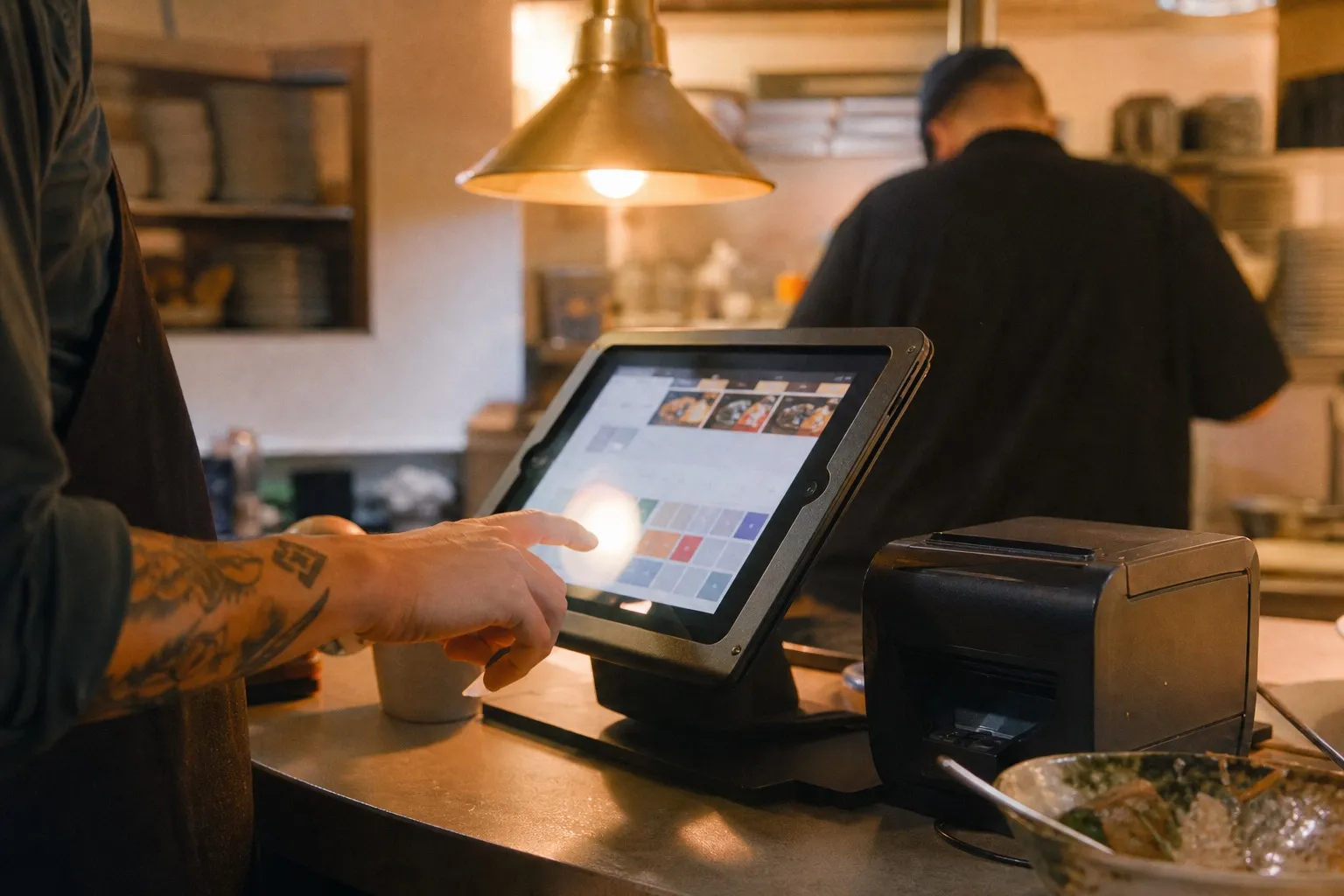
DoorDash announced its agreement to acquire Bbot — a contactless in-store ordering and payments platform — on March 1, 2022 (DoorDash IR). Bbot’s product is QR-to-pay, tableside ordering, and tab management — on-premise technology that has nothing to do with delivery and everything to do with the host stand and the bar (Restaurant Dive). At the time the pitch was “expanding DoorDash Storefront” — the merchant-direct online ordering tool — into the dining room.
DoorDash closed the Wolt deal on June 1, 2022, in an all-stock transaction valued at roughly €7bn ($8.1bn) (Sifted; Mergersight). Wolt is read by most people as a Europe-expansion play, which it is. It is also a merchant-software acquisition. Wolt’s merchant tooling — order management, dispatch, in-app marketing — was substantially more mature than DoorDash’s in the segments Wolt served, and a non-trivial amount of what’s now shipping in DoorDash’s merchant portal has Helsinki fingerprints on it.
Then 2025 happened, and 2025 is when the strategy stopped being deniable.
SevenRooms — announced May 6, 2025, closed June 13, 2025, for $1.2bn in all cash (CNBC; DoorDash). Thirteen thousand venues globally. Marriott, MGM, Wynn, Wolfgang Puck on the customer list. CRM, reservations, waitlist, table management, revenue management, email and SMS marketing — the entire front-of-house guest layer.
Deliveroo — announced the same day, closed October 2, 2025, at 180 pence in cash per share, valuing Deliveroo at £2.9bn on a fully diluted basis (DoorDash IR; Reuters via Yahoo Finance). Tony Xu’s open letter framed it as putting DoorDash and Deliveroo “in 40+ countries” combined (DoorDash).
That is two billion-dollar deals in 2025 alone. SevenRooms is not a delivery business. Bbot was never a delivery business. The pattern is louder than the press releases.
What Tony Xu said last Wednesday
On the Q1 2026 call (May 6), DoorDash reported revenue up 33% year-over-year to $4.0bn, marketplace GOV up 37% to $31.6bn, and orders up 27% to 933 million (DoorDash IR; Motley Fool transcript). Those are the headline numbers. The numbers worth reading are buried two pages deeper.
DoorDash disclosed it has allocated roughly $100m to a new global technology platform — a single stack consolidating marketplace, merchant, and (now) Deliveroo and Wolt infrastructure — with “major domain mapping completed and live production traffic initiating” (Motley Fool transcript). Xu also said “well over half” of DoorDash’s code, “probably closer to two-thirds,” is now written with AI assistance.
Translate that out of investor-speak. DoorDash has spent the last four years buying merchant software and the last twelve months consolidating it onto a single platform. The Q1 call is the first one where the platform is described as live, not aspirational.
The Commerce Platform is the actual product
DoorDash’s own merchant marketing now leads with the Commerce Platform — its bundle of merchant-direct tooling (branded online ordering, branded mobile apps, on-store loyalty, CRM, email/SMS marketing) sold separately from the marketplace (DoorDash Merchants; Restaurant Dive on the expansion). It is sold to operators who specifically do not want their guests routed through the orange app. The pitch is: own your channel, own your guest data, run your loyalty program, and we’ll be the rails.
SevenRooms slots into this stack as the front-of-house guest layer. Bbot is the on-premise ordering layer. Storefront is the off-premise direct-ordering layer. Wolt and Deliveroo are the international marketplace layers. The unifying technology spine is the $100m platform rebuild Xu spent a third of the analyst call defending.
This is a hospitality technology company that happens to also run a delivery marketplace. Read in that order, the M&A makes sense. Read in the other order — as a delivery company occasionally buying restaurant software — it doesn’t.
What this means for operators this week
A few practical reads.
If you’re on SevenRooms. Your contract is fine. The integration roadmap will follow the Wolt playbook — slow, regional, with the existing product mostly preserved. The thing to negotiate at your next renewal is data portability, because the value of your guest CRM compounds the longer it sits inside a stack you don’t control. (See Isaac’s piece on Resy/Amex this week for the exact mechanism — that one is about Resy but the structural argument is identical.)
If you’re buying or selling a group. DoorDash’s stack is now a real comp for any restaurant valuation that hinges on AI tooling or proprietary guest data. Oliver’s case against the AI premium and his pricing on this week’s cafe group both treat AI-tooling moats as expiring assets; DoorDash’s Commerce Platform is one reason those moats expire. If a 12-unit group is being priced on the strength of its in-house CRM, ask whether DoorDash sells a comparable bundle for $200 a store a month.
If you’re reading this against the four-margin frame. DoorDash’s Commerce Platform compresses operating margin, not gross. The labour you save is on your marketing manager and your front-of-house GM, not your line cook. Price the savings against the right margin or you’ll overpay.
If you’re a distributor watching this. Samuel’s Pass on Sysco’s Smart Order is the parallel move on the inventory side. Vendor-consolidation pattern is the same. Incentive problem is the same. Read the two together.
Tomorrow’s Pass: two of the largest US private-equity-backed steakhouse groups are renegotiating their delivery contracts in response to the Deliveroo close. Luca is filing it after the European close.
— Hana files The Pass every weekday morning. Tips: tips@tabletransfers.com.
Featured
More
Browse all 494 posts
The Voice Agent Maturity Curve
mise
·12 min read
The Four Margins of a Restaurant
mise
·14 min read
The AI Premium in Hospitality M&A: Broker Story or Real Number?
the bottom line
·9 min read
What the DoorDash/SevenRooms Deal Actually Buys
the bottom line
·11 min read