DoorDash's $1B Ad Business Is the Trade Most Missed

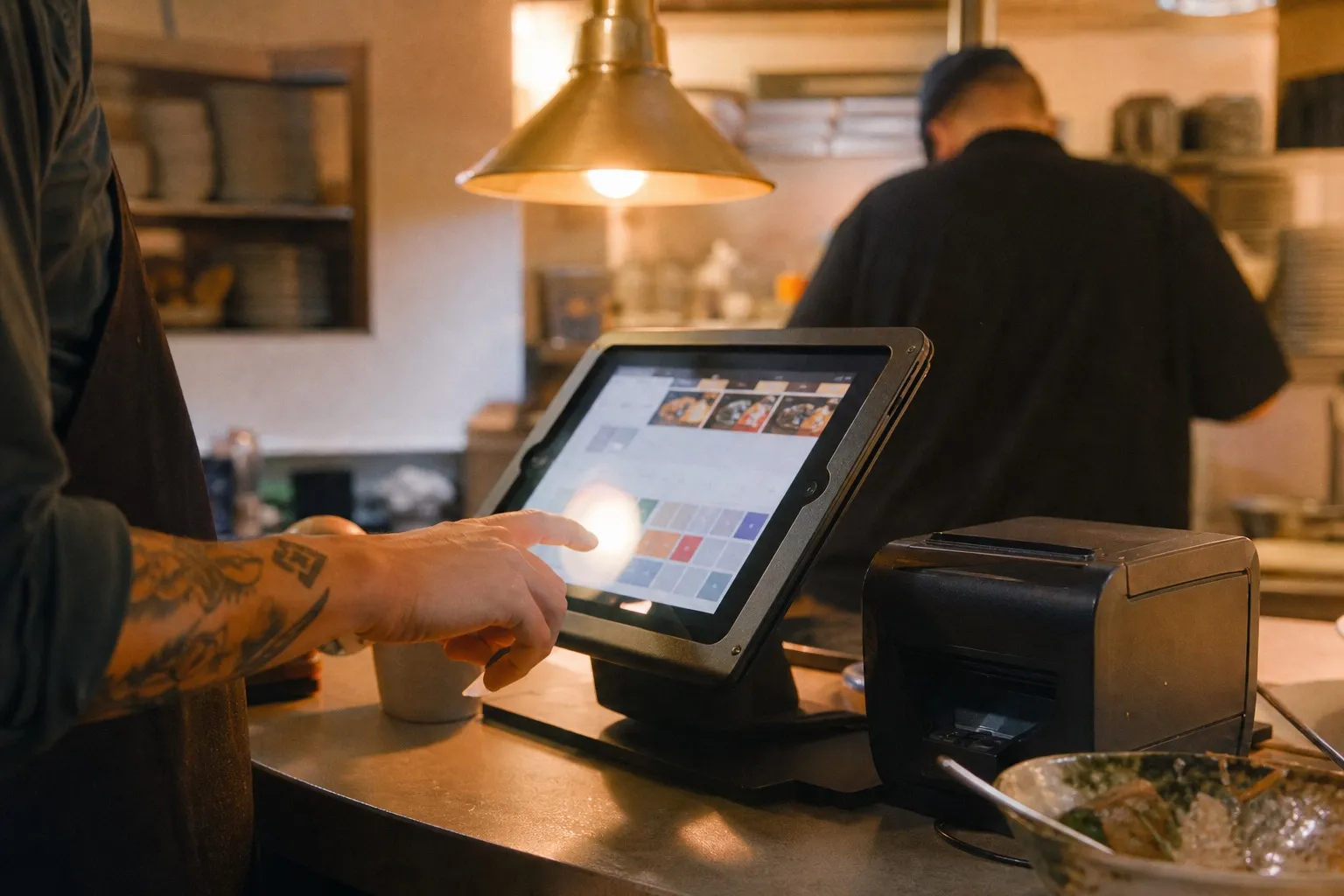
Six months ago, DoorDash was a delivery company. The Q2 print and the $1B ad ARR confirmation reframe the equity story as a margin-expanding ad-platform play. Investors pricing fee-take-rate risk missed the second-order revenue layer entirely.
I spent Wednesday afternoon on the phone with a sell-side analyst who covers DASH and has had a Hold on the name since the SevenRooms announcement. He wanted to walk through the Q2 model line by line because, in his words, “the take-rate story I’ve been telling clients for two years just stopped being the story.” He’s right, and he’s late. The DoorDash trade flipped over the spring, the August 6 print confirmed it, and the people still arguing about regulatory exposure to delivery fees are arguing about last decade’s P&L.
The contrarian thesis is simple. DoorDash is no longer best understood as a delivery marketplace dragging a thin contribution margin uphill against city fee caps and labor classification risk. It is now a vertically integrated commerce platform whose advertising layer is generating roughly $1B of annualized run-rate revenue at gross margins that have nothing to do with the courier economics underneath. The Q2 marketplace numbers — GOV of $24.2B up 23% year over year, 761M orders up 20%, and net revenue margin of 13.5% versus 13.3% a year ago — are not a delivery print. They are a demonstration that the take rate is structurally expanding because the second-order revenue layer is finally large enough to move the average.
The market reaction told you which investors got it. The stock surged on the print. The sell side hadn’t modeled the ad business as a discrete line. The buy side that had been long since the Wolt synergy quarter just got paid.
The math that broke the take-rate bear case
For three years the resident DASH bear case has run on a single arithmetic worry: as cities cap delivery fees and as the courier wage floors institutionalize, contribution margin per order has to compress. The 13% net revenue margin was the ceiling, and any quarter that printed below it was confirmation. Any quarter that printed above it was a mix accident.
Then look at what Q2 actually did to that frame. Marketplace GOV grew 23% to $24.2B. Total revenue grew faster than GOV at 25% — the number CNBC clocked in the earnings recap — which means take rate expanded. Net revenue margin moved up twenty basis points to 13.5%. Net income hit $285M. None of that is a delivery story. The order economics are fine, but they are not the explanation. Revenue is growing faster than GOV because the ad and platform revenue layered on top of the courier transaction is now meaningful enough to push the blended take rate up even as fee caps and driver pay constrain the underlying marketplace cut.
If you want the cleanest signal: $24.2B of GOV at 13.5% net revenue margin is roughly $3.27B of net revenue from marketplace alone, against a reported total revenue line that includes platform, ads, and the SevenRooms contribution. The $1B annualized ad run-rate — confirmed by management on the Q2 call — slots in as a high-margin layer that the bear case never had a line item for. Pull that $1B out of the revenue stack and the take-rate compression argument suddenly looks coherent again. Leave it in, and the model breaks.
That is the second-order revenue the sell side missed. It is not a future option. It is in the trailing quarter at materially better margins than the courier economics it sits on top of.
What $1B of ad ARR actually buys you
The reflex response when a marketplace announces an ad business is to anchor on Amazon. That is the wrong comparable for DoorDash and it has been the wrong comparable for two years. Amazon’s ad business runs on a logged-in retail purchase intent signal scraped across decades of SKU-level history. DoorDash’s ad business runs on a much narrower but more decision-relevant signal: a hungry user, a thirty-minute purchase window, a geofenced supply graph, and a basket that converts before the session closes.
That is a different product even though it shares an interface. CPG brands and quick-service chains pay for placement because the click-to-purchase window is short and the substitution risk is high — a Coke ad against a Pepsi default works in a way a Coke ad on a search results page does not. That is why I have heard the ad team’s effective CPMs from operators close to the program quoted in ranges that would be unhinged for any retail surface that does not own checkout.
Hold the $1B figure against the rest of the print and you see why this is a margin-expanding business rather than a top-line one. Ad revenue does not require courier capacity. It does not require restaurant supply expansion. It does not have a city fee cap. It is sold against inventory that already exists because the orders already exist. The 761M order count is the ad inventory. Every incremental order is incremental impressions, and the impressions are now monetizing at a rate that pulls the blended margin up rather than down.
The 10B lifetime orders DoorDash announced this quarter is not a vanity number. It is the cumulative size of the first-party purchase graph the ad business prices against. The graph is the moat. The CPG buyer is buying access to a captive, hungry, transacting audience that has nowhere else to be in the next twenty-five minutes.
SevenRooms is the supply-side hedge nobody is pricing
The cleanest tell that management is building toward a commerce-platform identity rather than a delivery identity is that DoorDash bought SevenRooms in cash, closed the acquisition in June 2025, and immediately moved it inside the commerce platform structure rather than letting it sit as a standalone reservation product.
I wrote about the strategic logic of the deal in a forthcoming May Bottom Line on the SevenRooms acquisition and walked through DoorDash’s wider commerce-platform thesis in an upcoming May piece on the commerce stack. The short version: SevenRooms gives DoorDash a first-party relationship with full-service restaurants that the delivery marketplace structurally cannot reach. Reservation data is the upstream signal for the dine-in advertiser the ad business cannot currently serve.
Connect those two facts. The ad business at $1B ARR today is mostly QSR and CPG inventory. The SevenRooms integration unlocks a second tier of inventory — full-service operators who do not have a delivery economic relationship with DoorDash but who do have a guest data relationship — and a second tier of advertiser, the brand whose buyer is a high-frequency dine-in customer. Read against an upcoming spring piece on the Resy/Amex partnership and how reservation data monetizes, it is the same playbook executed with cash on the balance sheet instead of a card network’s loyalty stack.
This is what the bear case keeps missing. Every time you look at DASH on a single-line marketplace P&L, you see fee-take-rate risk. Every time you look at it on a commerce-platform P&L, you see a company that bought the supply-side relationship for the next tier of ad inventory and is amortizing the courier business as the audience-acquisition engine.
What’s actually in consensus and what isn’t
I went through six sell-side models on Friday. Three of them carry no separate ad revenue line. Two of them carry an “advertising and other” line bundled with platform services at a single-digit growth rate. One of them — to its credit — has the ad business broken out, but at roughly $700M of 2025 revenue, materially below the $1B annualized run-rate management confirmed on the call.
That is the gap. Consensus has not absorbed the disclosure even though the disclosure is in the transcript. The bull case for DASH from here is not a multiple expansion argument. It is an earnings revision argument. As the sell side reworks models to carry an explicit ad line at run-rate, the 2026 revenue and EBITDA estimates have to move. The 2026 net income estimate has to move further because the ad business carries margins that the rest of the stack does not.
The risk is regulatory and concentration. Regulatory because if a city or state decides ad placement on a delivery marketplace is a deceptive trade practice in the way fee disclosure has been litigated, the inventory price compresses. Concentration because a meaningful share of the $1B run-rate is presumably coming from a handful of national CPG buyers, and CPG ad budgets have been visibly tightening in 2025. Both risks are real. Neither risk is in the same ZIP code as the take-rate-compression risk the bear case was built on.
How to trade it from here
The trade is not “buy DASH because Q2 was good.” Q2 was already in the tape by mid-August. The trade is that consensus 2026 numbers are going to be revised upward over the next two quarters as the ad business is broken out and modeled at run-rate, and the trailing reaction to those revisions is structurally underbought because the marginal seller — the long-only fund that owned DASH as a logistics name and rotated out on take-rate risk — is not the marginal buyer of an ad-platform name.
Watch three numbers on the next print. First, whether management discloses a discrete ad revenue line in the Q3 release rather than leaving it inside platform services — that disclosure forces every model to update. Second, whether net revenue margin holds above 13.5% with marketplace GOV growth decelerating from the 23% Q2 print, because that is the test of whether the ad layer is structural mix or quarterly noise. Third, whether SevenRooms contribution shows up as a discrete sleeve or stays buried; pulling it out of the operating segment commentary signals management is treating it as the second-tier ad inventory engine, which is the read I’d want.
Six months ago, DoorDash was a delivery company with an ad experiment. The Q2 print made it a commerce platform with a delivery business attached. The trade most missed is the one where you have to redo the model rather than redo the rating.
— Marcus edits The Bottom Line for TableTransfers. Tips: ma@tabletransfers.com.
Featured
More
Browse all 494 posts
The Voice Agent Maturity Curve
mise
·12 min read
The Four Margins of a Restaurant
mise
·14 min read
The AI Premium in Hospitality M&A: Broker Story or Real Number?
the bottom line
·9 min read
What the DoorDash/SevenRooms Deal Actually Buys
the bottom line
·11 min read
Related posts

the bottom line
·11 min read
Darden trades like a tech company. It shouldn't.
the bottom line
·12 min read
Applebee's just became its own franchisee. The territory math is the trade.
the bottom line
·12 min read