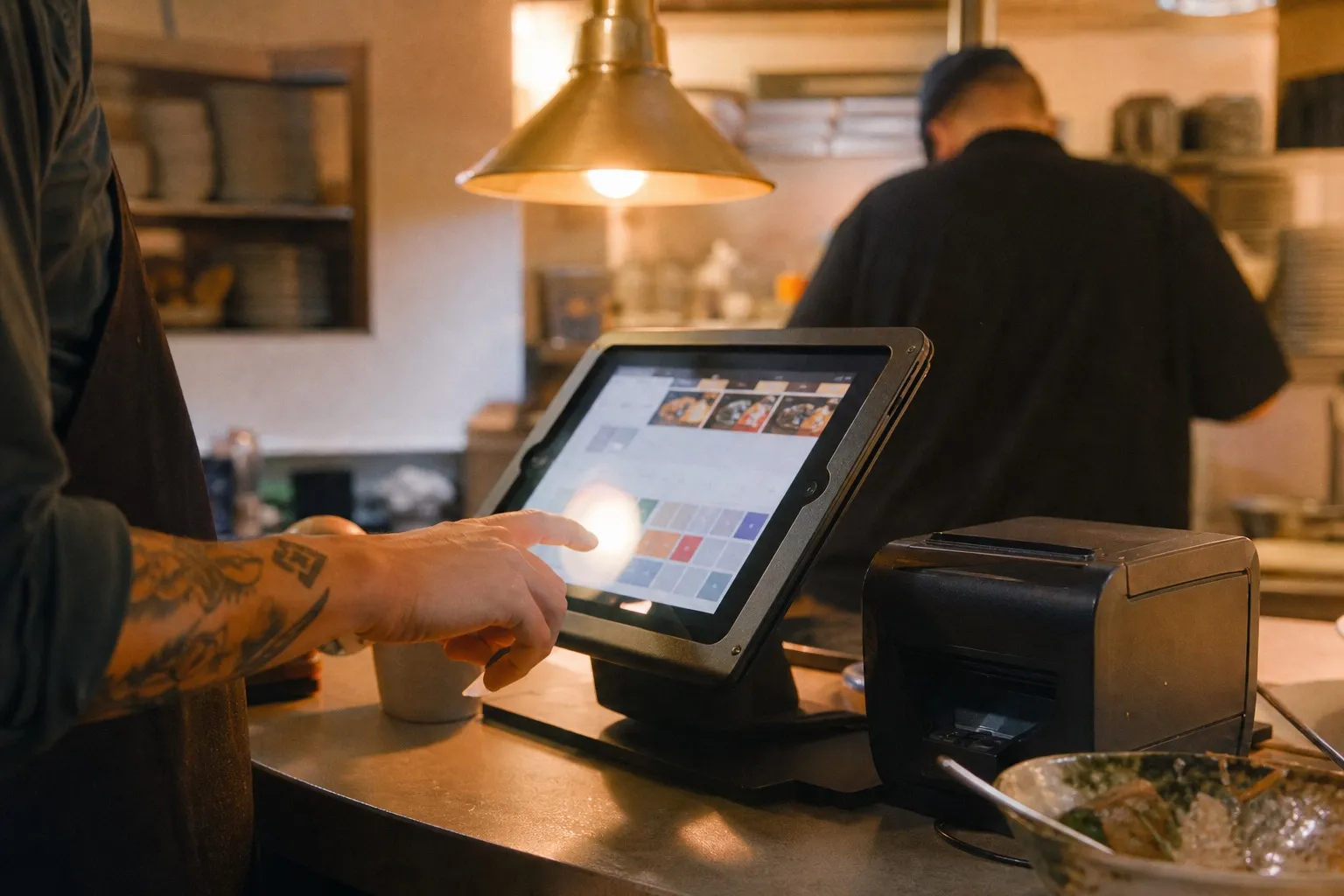
Olo's Layoff List Is the New Restaurant-Tech Bellwether

Olo cut staff two weeks after going private. The signal isn't PE behavior — it's the new floor on restaurant SaaS gross margins, and every other vendor in the category is running the same spreadsheet right now.
I was halfway through editing a Service segment on Tuesday when the Olo note hit my inbox. A source forwarded the internal slide — restrained language, the usual “difficult decisions,” a roster of impacted roles spread across product, sales engineering, and a chunk of customer success. I closed the editing software and started a new doc. The interesting story wasn’t that Olo had cut staff two weeks after the take-private closed. The interesting story was the math underneath it, and the fact that every competitor on Olo’s board deck is now running the same spreadsheet.
The contrarian read: this isn’t PE behavior. Private equity didn’t invent the layoff. What Thoma Bravo did was establish a new floor on restaurant-SaaS gross margins — and that floor is now visible to every CFO in the category. Olo’s list is the bellwether. The next twelve months of restaurant-tech consolidation will be priced against it.
Three Rounds In Three Years Is Not A Pattern, It’s A Trendline
Let’s stack the receipts. Olo cut 11% in 2023. Another 9% in 2024. And then this — undisclosed percentage, but confirmed by Restaurant Dive on Sept 16 and corroborated the next day by Restaurant Business. The company ended 2024 with 617 employees. You can do the cumulative arithmetic yourself; the headline number isn’t the point. The point is the cadence. Three reductions in three calendar years is no longer a correction — it’s an operating model.
And Olo is not alone. Restaurant365 trimmed roughly 9% in August. That happened before a take-private, not after one, which tells you the pressure isn’t coming from sponsors. It’s coming from the underlying unit economics of selling software to operators who themselves run on 4-6% margins and have been quietly renegotiating every renewal since the back half of 2024.
Mark this as interpretation, not gospel: when two of the largest standalone vendors in the category cut staff inside a six-week window, the question isn’t “what’s wrong with vendor X.” The question is what gross-margin number their boards have circled in red on the FY26 plan, and what headcount level gets them there. My read is that the new floor sits north of 70% adjusted, and getting there means a permanently smaller customer success org per dollar of ARR. That’s structural. It doesn’t reverse on a rate cut.
”Key Areas That Matter Most” Is The Tell
Olo’s public statement leaned on a familiar phrase: focus on the “key areas that matter most to our customers.” I’ve been covering this beat long enough to translate. Key areas means platform engineering, payments, and the integrations that produce switching costs. Less-key areas — read that as exposed — tend to be regional sales overlay, mid-market customer success, and the longer tail of product surface that doesn’t directly compound retention. That’s the same playbook Toast investors keep asking about on every earnings call, and it’s the lens I’m bringing to an upcoming desk review of Toast’s stack and cost structure.
The acquirer logic is consistent. If you’re underwriting a public-to-private at a 30%+ premium, you have to find the gross-margin step-up somewhere; it doesn’t appear in revenue, because the customer base is the customer base. It appears in the cost line. So a layoff list two weeks post-close isn’t a surprise — it’s the model.
What this means for the next two quarters: expect a fresh tier of mid-market vendors to either find a strategic dance partner or quietly run their own version of the exercise. I’m tracking a handful of names for a forthcoming May piece on M&A in the category, and the pattern I keep seeing in the data room narratives is identical — adjusted EBITDA bridges that only close if a meaningful percentage of the org doesn’t make the cut. Operators, for their part, should not assume their account team next quarter is the account team they have today. Ask, on every renewal call, who owns the relationship in twelve months. If the AE pauses, you have your answer.
The Olo list is not a one-off. It is the curve everyone else is now plotting against.
— Samuel hosts the Service podcast for TableTransfers. Tips: tips@tabletransfers.com.
Featured
More
Browse all 494 posts
The Voice Agent Maturity Curve
mise
·12 min read
The Four Margins of a Restaurant
mise
·14 min read
The AI Premium in Hospitality M&A: Broker Story or Real Number?
the bottom line
·9 min read
What the DoorDash/SevenRooms Deal Actually Buys
the bottom line
·11 min read