The Olo Aftermath: What's Left of Public Restaurant SaaS

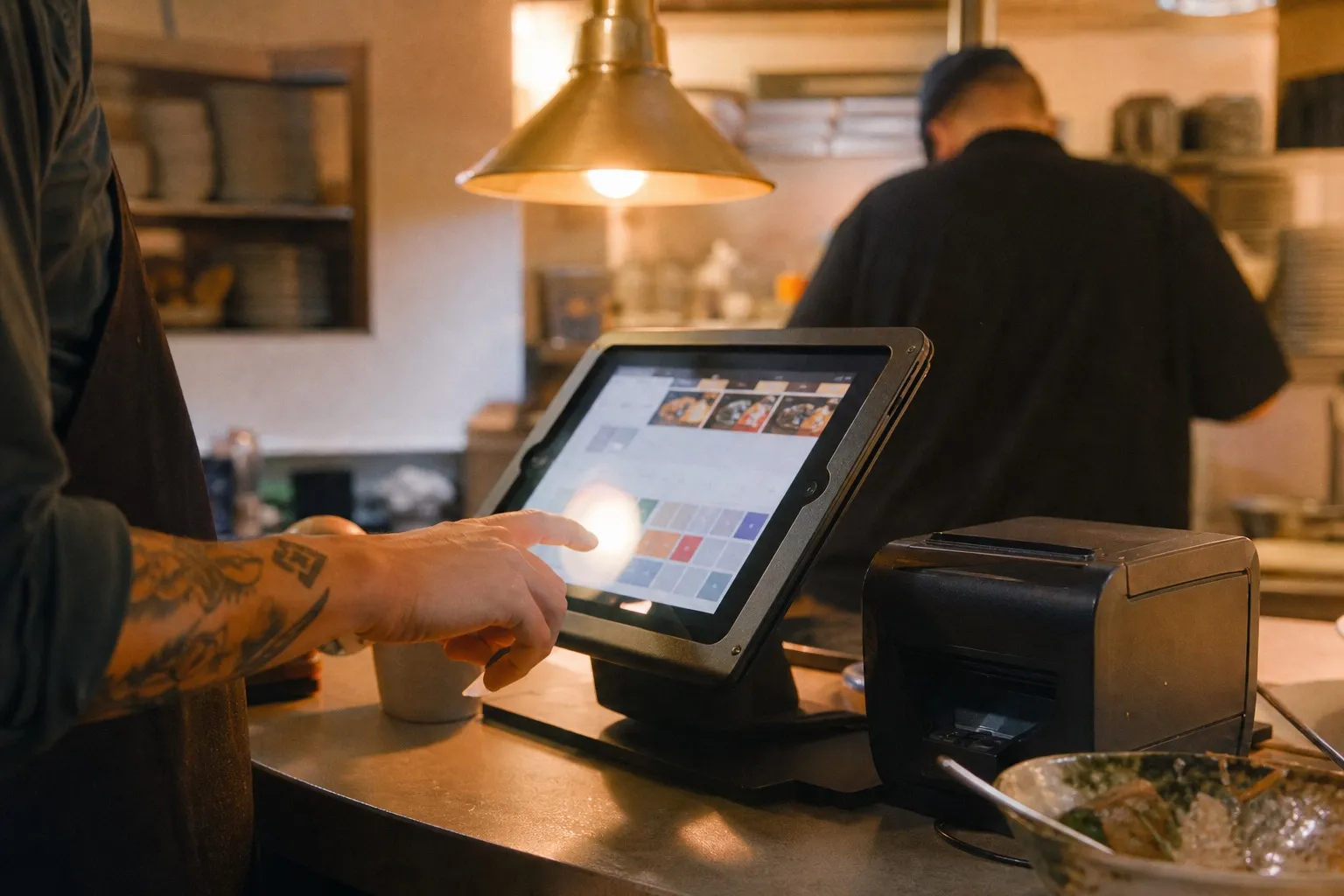
Four months after Thoma Bravo took Olo private at $2.0B, the public-markets restaurant-SaaS thesis is effectively dead. What remains — the open-platform pitch — now has exactly one credible public counter-example, and its name is Toast.
I was scrolling Olo’s last 10-Q on a Friday morning between coffees, the ticker still cached in my browser even though it hasn’t been a ticker since September, and the thing that struck me was how quiet the delisting was. No farewell letter. No long-form CEO Medium post. Noah Glass kept his job, the deal closed September 12, 2025, the stock stopped trading, and that was the end of restaurant SaaS as a public-markets category for retail investors. Four months on, nobody in the deal community has filled the seat. Nobody is going to.
Here is the contrarian read, up top, flagged as opinion: the public-markets restaurant-SaaS thesis is dead, and the Olo take-private is the headstone, not the cause. That’s my interpretation, not a Bloomberg consensus call. But once you put the trade next to the trading history — more than a 65% decline from the 2021 IPO to the unaffected price — the conclusion writes itself. The category did not get bought. The category got euthanized at a 65% control premium, and the buyer who pulled the trigger was a software PE shop paying an average-of-market multiple, not a strategic paying for a moat.
Let me walk through what that actually means for 2026.
The deal, briefly, for anyone who skipped September
Thoma Bravo closed the all-cash acquisition of Olo on September 12, 2025, at $10.25 per share, ~$2.0 billion equity value. Stockholders approved on September 9; the common ceased trading and was delisted from NYSE the same week. The $10.25 number was a 65% premium to the April 30, 2025 unaffected close of $6.20. Noah Glass stays on as CEO. Goldman ran the sell-side; Morgan Stanley advised Thoma Bravo; Goodwin Procter and Kirkland & Ellis handled legal. Standard take-private mechanics, no financing condition, no surprises.
The asset Thoma Bravo bought is an “open SaaS” platform serving 88,000 restaurant locations and over 750 brands — Dutch Bros, Waffle House, and a long tail of enterprise chains who, for fifteen years, ran their digital ordering on Olo’s rails because Olo was the non-aligned option. That word — open — is going to do a lot of work in the rest of this column. Hold it.
The price was $285M in 2024 revenue, ~$323M Q1-2025 annualized, 7× trailing. Not a heroic SaaS multiple. SaaS-median, plus control. I wrote up the multiple math in the broader M&A roundup; the short version is that if there were a real “AI premium” for restaurant tech, the cleanest pure-play in the category is where it should have shown up. It didn’t.
Why the public-markets thesis is dead (opinion, flagged)
Look at the chart and the float. Olo IPO’d in March 2021 at a $4.6B market cap on opening day, rode the pandemic re-rating, and then declined more than 65% from listing before the take-private was announced. Four years of public-company life, ending at $6.20 unaffected. The fundamentals weren’t the problem — average annual revenue growth of 24%, GAAP profitability achieved in Q1 2025 with $1.8M net income. Olo was executing. The public market just didn’t want to capitalize it.
That’s what kills a category. Not bankruptcies. Not failures. A profitable, growing, category-leading pure-play trading at 4-5× revenue and being rescued at 7× by sponsors because the public bid wasn’t there. Once that happens, the next CEO sitting on a comparable restaurant-SaaS asset asks a very practical question: why am I staying public? They aren’t.
Opinion, again, because the brief asks me to flag it: between now and end of 2026, you’ll see at least one more restaurant-tech public-to-private trade at sub-8× revenue, and the bid will come from PE, not strategic. Falsifiable. Write it down.
What “open SaaS” actually meant — and why the meaning matters now
Olo’s pitch, for the entire life of the company, was that it was the neutral platform between brands and channels. A Dutch Bros could plug Olo into DoorDash, Uber Eats, its own app, its own kiosks, and the underlying ordering engine wouldn’t care. Olo didn’t own the consumer relationship and didn’t compete with the chains’ POS choice. That’s the open SaaS phrasing in the original announcement — restated in the closing release as a platform with “over 400 integration partners”.
That is a real product position. It is also, historically, a hard public-markets story to tell, because “we will not vertically integrate against our customers” is the opposite of what equity research likes to hear. The bid wants moats. Openness is the structural absence of one.
So the next question is: who is left in the public bid carrying the open-platform pitch? The honest answer is one company. Toast. And Toast IQ — the AI suite our Vibe Check desk reviewed last week — is the textbook closed counter-example, the asset the equity desk does want to underwrite. POS, payments, payroll, marketing, voice, ordering, all welded together, all sold as one. The opposite of Olo’s pitch.
Toast IQ as the closed-stack reference
I’m not going to redo the module-by-module Toast IQ teardown; Jordan handled that on the Vibe Check desk and the reading is worth your fifteen minutes. The Bottom Line read is simpler. Toast trades, has traded, and will keep trading at a multiple the Olo public bid never paid, because Toast’s pitch is exactly what equity research underwrites: the closed loop. Hardware in the restaurant, payments on top, lending behind it, AI as the upsell wrapper. Vertical integration as a product.
The market priced Olo at 4-5× revenue when it was open. The market prices Toast at a structurally higher multiple because it isn’t. That gap is the entire thesis, distilled. The Olo trade closed the open-platform end of the public bid. Toast IQ marks the closed-platform end as the only model remaining.
That’s not a normative claim. I’m not saying closed is better for restaurants — operators have plenty to say about lock-in, and the anti-AI-premium thesis from Oliver covers the operator side of that economics question with more rigor than I’ll do here. I’m saying it’s the only model the public bid is willing to price.
What the buy-side actually got at $2.0B
Thoma Bravo paid 7× trailing revenue for an asset throwing off ~$1.8M of GAAP net income in Q1 2025 and growing 21% top line. That math doesn’t pencil as a flip. It pencils as a five-to-seven-year operational thesis where the sponsor compounds margin, layers payments and marketing revenue on top, and exits at 4-5× the entry equity value either via a strategic sale or an IPO into a different market regime.
Hudson Smith, the Thoma Bravo partner running the deal, said on the closing: “We see enormous potential ahead for them to scale their business, expand their capabilities, and deepen their impact on how restaurants operate.” Translate from sponsor-speak: we’re going to bolt more revenue lines onto the 88,000-location distribution, we are not going to be in a public-comp pissing match while we do it, and we will sell this in 2030 to a strategic that wants the chain estate. Standard Thoma Bravo playbook — see also Anaplan, see also Coupa, see also the rest of the vertical-SaaS book.
The interesting question for operators is what happens to the openness under sponsor ownership. The press release language was carefully preserved — Olo will “continue operations under its current name and brand”, Glass retains the CEO seat. But Thoma Bravo’s revenue-expansion playbook is not famously hands-off. The 400-integration partner number, the neutrality between POS choices, the willingness to plug into competing channels — all of those are operator-friendly stances that cost money to maintain when the sponsor is modeling a 2030 exit. That’s my read. Watch the partner page over the next eighteen months.
What this means for the 2026 deal sheet
Three actionable consequences for anyone underwriting restaurant-tech M&A in the next twelve months.
One. The “next Olo” is not going public. The pipeline of growth-stage restaurant-SaaS companies that would historically have IPO’d at 8-10× revenue is now structurally tilted toward sponsor-controlled liquidity. If you’re an LP at a vertical-SaaS fund, your J-curve on a 2024-2025 vintage is going to play out in sponsor secondaries and add-on acquisitions, not S-1s. The brokers will tell you this is a “temporary window.” It isn’t. The Olo trade reset the floor.
Two. The “open vs. closed” axis is now the only meaningful axis in restaurant-tech multiple analysis. If you’re modeling a target, the first question is which side of the line it sits on. Olo, the gold-standard open pure-play, cleared 7× with a 65% control premium attached. Closed, integrated platforms with the lending/payments wrapper will clear materially higher. Pick a side and price it. Stop modeling “restaurant SaaS” as a single category — it isn’t one anymore, and the Olo trade is the evidence.
Three. For enterprise chains with Olo dependencies: the contract terms you negotiated in 2022 with a public, neutral, equity-research-watched counterparty are now being managed by a sponsor with a five-year IRR target. Your re-up in 2027 will be a different conversation. Hudson Smith’s commentary about “deepening impact” is, charitably, a promise of more product. Less charitably, it’s the setup for cross-sell pressure that didn’t exist in the public era. Plan the renewal accordingly.
Falsifiable predictions, for the file
I’ll put two on the wall and revisit them in twelve months.
One: by year-end 2026, at least one more meaningful US-listed restaurant-tech pure-play will announce a take-private at a sub-8× trailing revenue multiple. Sponsor bid, not strategic.
Two: Toast will not, in 2026, materially walk back the closed-stack narrative. The IQ suite will deepen, not open. If anything, the partner-integration page will get narrower, not broader, as Toast IQ swallows third-party features module by module.
Both checkable from public filings. Both, in my read, very likely. Mark the date.
A third one, weaker conviction, for the sponsors reading this: there will be a partner-channel renegotiation inside Olo’s customer base by Q3 2026 that surfaces publicly via at least one enterprise-chain RFP. The Thoma Bravo playbook will not allow the neutrality posture to remain unmonetized for six more years. The first chain to walk will be a tell. Watch the announcements.
The shorter version of all of the above is this: when the cleanest pure-play in a category gets rescued by a sponsor at a SaaS-median multiple, after a profitable quarter, after four years of execution, the category isn’t being valued — it’s being retired from public view. The remaining public bid will pay for closed stacks. Operators get one shorter list of credible neutral counterparties. PE gets the five-year compounding. Public-markets investors get to read about it in deal sheets.
I’ll be back Monday with the casual-dining quiet list, the same as every January. The deal flow does not slow down because the listing count did.
— Marcus runs The Bottom Line and gets the deal flow before the brokers. Tips: tips@tabletransfers.com.
Featured
More
Browse all 494 posts
The Voice Agent Maturity Curve
mise
·12 min read
The Four Margins of a Restaurant
mise
·14 min read
The AI Premium in Hospitality M&A: Broker Story or Real Number?
the bottom line
·9 min read
What the DoorDash/SevenRooms Deal Actually Buys
the bottom line
·11 min read
Related posts
the bottom line
·11 min read
Darden trades like a tech company. It shouldn't.
the bottom line
·12 min read
Applebee's just became its own franchisee. The territory math is the trade.
the bottom line
·12 min read