Toast On Fortune's Most Admired — A Vanity Headline With a Real Read-Through

Toast made Fortune's 2026 World's Most Admired Companies list this week. The headline is vanity; the category placement is the tell — and it points to where TOST's investor narrative is actually going.
Toast announced Tuesday that it had been named to Fortune’s 2026 World’s Most Admired Companies list, the company’s first appearance on the ranking. The newsroom note cites Toast’s footprint of roughly 156,000 restaurant locations and frames the award as recognition for the platform’s hospitality role. As corporate vanity news goes, it lands as expected: a press release, a LinkedIn ribbon, an internal all-hands moment.
The contrarian read — and the one operators and investors should sit with — is the category Fortune put Toast in. It’s not Hospitality. It’s “Consumer Credit Card and Related Services.” (Interpretation flag: the moat read below is mine. Fortune publishes the categorization; what it implies about TOST’s narrative is editorial.) That placement is a tell. Toast is being benchmarked, by the outlet that sets the corporate-reputation default, against payments companies rather than the POS-software cohort the company has historically been read with. The 2026 investor narrative will follow the category, not the product page.
What “payments, not POS” actually means
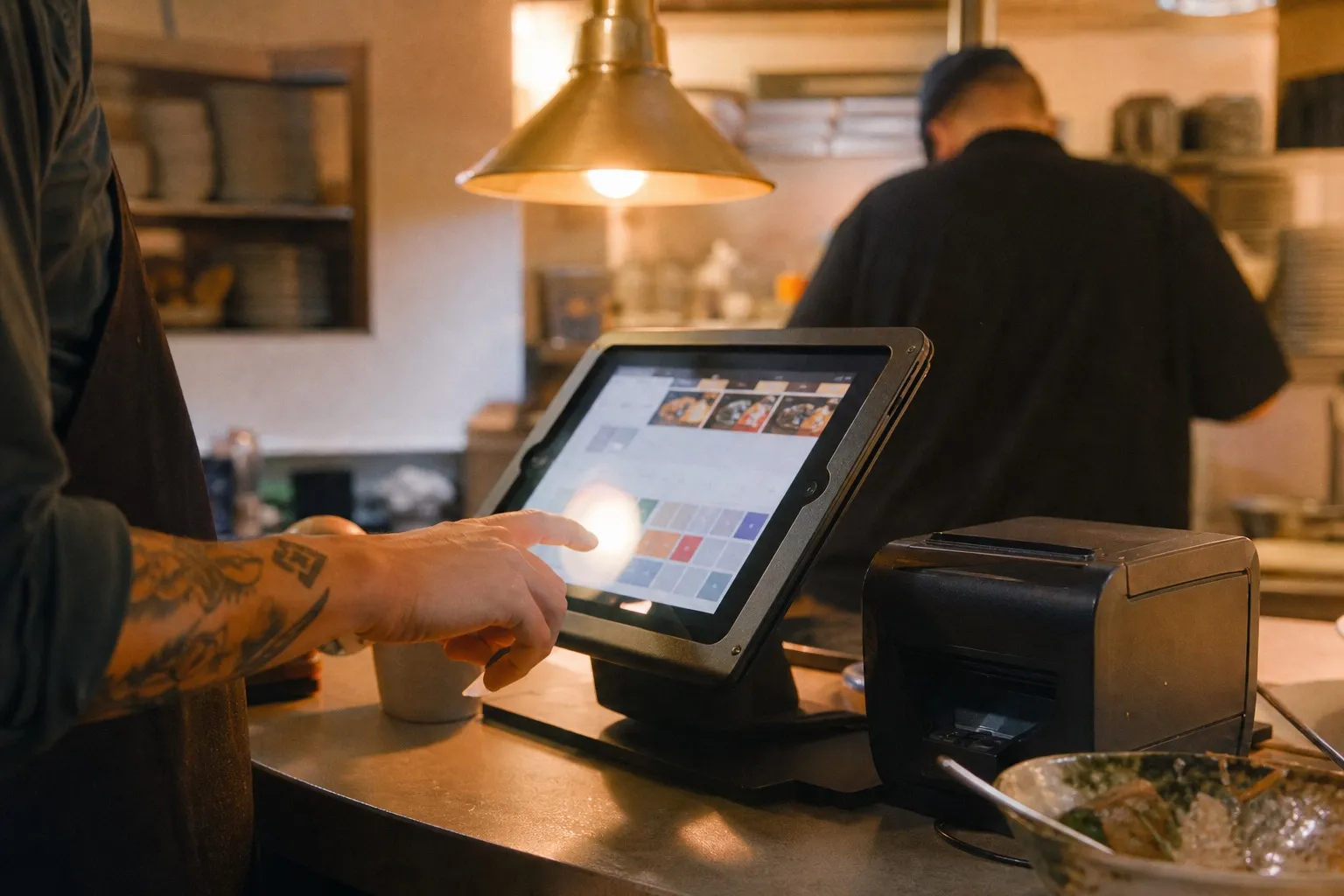
Toast’s revenue mix has two layers that matter here. The subscription line — the SaaS fee a restaurant pays per terminal, per location, per month — is the one the POS framing leans on. The payments line — the take rate Toast keeps on every card swipe the restaurant runs through Toast’s processing — is the one that scales with restaurant sales volume rather than with seat count.
In plain English: if Toast were primarily a POS company, the lever that grows the business is adding locations. If Toast is primarily a payments company, the lever is processing more dollars through the locations it already has. Those are different stories, with different multiples, and the second is the one Fortune’s category placement implicitly underwrites.
The math points the same way. Subscription services revenue at Toast grew faster than overall revenue in 2025, but the larger denominator on the P&L is financial technology solutions revenue — the payments-take line — and it grows with gross payment volume per location, not with location count alone. The TIKR earnings preview framed the Q1 setup the same way: recurring gross profit growth is the metric the call will be judged on. Recurring gross profit blends SaaS and payments take rate — it’s the read on the engine the Fortune category is benchmarking.
Why this matters the week before Q4 prints
Toast’s Q4 2025 results are due in February, and the buy-side will be watching three numbers in that order: gross payment volume per location, recurring gross profit, and EBITDA. The order is not coincidence. It’s the order an investor reads a payments company in.
The dominant sell-side narrative until recently was still “best-in-class restaurant POS with an AI overlay.” After the ToastIQ pilot we covered in October and the desk read Sofia put up last spring, the AI overlay is real. It’s also not what drives the multiple. What drives the multiple is the payments take rate, the volume riding it, and whether ToastIQ’s agentic features — the ones that take an action rather than describe one — pull more of a restaurant’s spend into the Toast graph (and therefore into the payments line) over time.
Fortune naming Toast in the Consumer Credit Card category is the cleanest signal yet that the reputation machine has moved with the financials. It doesn’t mean Toast stops being a POS company. It means the investor and partner conversations in 2026 will treat the POS as the distribution and payments as the product.
What I’d watch from here
Three things, before Q4 prints in February:
- The wording in Toast’s earnings press release. If the lead paragraph frames the quarter around recurring gross profit and payment volume rather than location count, the company is leaning into the same read Fortune’s category is doing for it.
- Take rate trend versus volume per location. A payments company can grow take rate, volume per location, or both. Operators feel one of those (take rate) directly and don’t feel the other. Investors weight them the same.
- Whether ToastIQ Grow and the action-taking layer get cited as payments drivers. If management starts crediting the agentic features for higher GPV per location — rather than for retention or NPS — the narrative consolidation is done.
The “Most Admired” line is a vanity headline. The category line is a strategy disclosure. Read the second one.
— Hana edits The Pass. Tips: hana@tabletransfers.com.
Featured
More
Browse all 494 posts
The Voice Agent Maturity Curve
mise
·12 min read
The Four Margins of a Restaurant
mise
·14 min read
The AI Premium in Hospitality M&A: Broker Story or Real Number?
the bottom line
·9 min read
What the DoorDash/SevenRooms Deal Actually Buys
the bottom line
·11 min read