UK Hospitality's £3.4bn April Cliff: Inside the Spring Statement Reaction
Kate Nicholls calls Chancellor Reeves's Spring Statement 'yet another missed opportunity' as the sector heads into a £3.4bn annual cost increase from April 1. Operators are accelerating AI to absorb the shock.
The television above the bar is muted, but the ticker is doing the talking. I am wedged into a corner banquette in the upstairs office of a Soho restaurant group, watching the Chancellor’s Spring Statement on a laptop balanced on a stack of allergen folders. The operations director next to me has a calculator open. She is not listening to Rachel Reeves. She is multiplying.
“Twenty-two sites,” she says, without looking up. “Six days.”
That is the mood across UK hospitality this afternoon. The Chancellor delivered a Spring Statement long on fiscal discipline and short on anything resembling a lifeline for the sector that, in six days, absorbs what UKHospitality chief executive Kate Nicholls has called a “devastating £3.4bn annual increase to the sector’s tax bill.” Employer National Insurance Contributions rise from 13.8% to 15% on April 1. The threshold drops. The National Living Wage steps up. Business rates relief tapers. The arithmetic is not subtle, and nobody in this office is pretending otherwise.
Nicholls’s verdict, issued within an hour of the Chancellor sitting down, was characteristically blunt: another missed opportunity. The trade body had spent weeks pressing for a delay, a phased approach, anything that would soften what operators have been calling the April cliff since before Christmas. They got nothing. The Statement contained no hospitality-specific measures. The sector that employs 3.5 million people was, once again, not in the speech.
The cliff is a calendar problem, not a budget problem
What makes April 1 so violent is not the size of any single tax change. Operators have absorbed wage hikes before. They have absorbed NIC changes before. What they have not absorbed is all of them landing on the same Tuesday, while energy contracts reset, while business rates multipliers shift, while the post-Christmas trading lull is still draining cash reserves that were never fully replenished after a soft February half-term.
A survey circulated by UKHospitality this week put numbers on the panic. Two-thirds of UK operators say they will cut hours or headcount in response to April’s cost stack. Roughly a third are reviewing site closures. The middle of the market — the 8-to-30-site groups that do not have private-equity backing but are too big to run on founder energy — is where the squeeze is sharpest. They have the cost base of a chain and the margin profile of an independent.
The operations director closes her calculator. “We’re not closing anything,” she says. “But we’re not opening either. And the rota gets thinner.”
That phrase — the rota gets thinner — is the one I have heard most often this week. It is what operators say when they mean: we are going to ask the same number of covers from fewer people, and we are going to find the productivity somewhere.
Where the productivity comes from this time is different
In every previous cost shock — 2016, 2020, 2022 — the productivity came from the same places. Squeeze suppliers. Trim menus. Push servers harder. Cross-train kitchen porters. Renegotiate rent. Those levers have all been pulled, and most of them are now pulling back. Suppliers are running on their own NIC increases. Menus are already cut to the bone. Servers are leaving the industry, not absorbing more sections.
What is different about the 2025 cliff is that, for the first time, operators have a genuinely new lever. The AI tooling that was a curiosity in 2023 and a pilot in 2024 is now a line item in 2025 capex budgets. Forecasting engines that cut food waste by 15-20%. Rota optimisers that shave 3-4% off labour without touching headcount. Voice-ordering at drive-thrus. Reservation systems that price dynamically by daypart. Inventory tools that close the gap between theoretical and actual GP without a stocktake at midnight on a Sunday.
I have written before about why the restaurant tech stack is consolidating around a small number of category winners, and about how operators are quietly rebuilding the back-of-house data layer that makes any of this possible. The Spring Statement is, perversely, the best thing that has happened to those vendors all year. April 1 is the forcing function. Operators who were planning to evaluate AI tooling in Q3 are signing in Q2. Operators who were planning to roll out across estates in 2026 are accelerating to H2 2025.
The contrarian read
The consensus reaction to today’s Statement is that the Chancellor has, as Nicholls put it, missed another opportunity. That is correct as a political read. It is incomplete as an industry read.
The £3.4bn cost increase is real. The closures will be real. The headcount cuts will be real. But the second-order effect is that UK hospitality, which has lagged US peers on tech adoption by roughly three years, is about to close most of that gap in eighteen months. Not because operators are excited about AI. Because the alternative is a P&L that does not work.
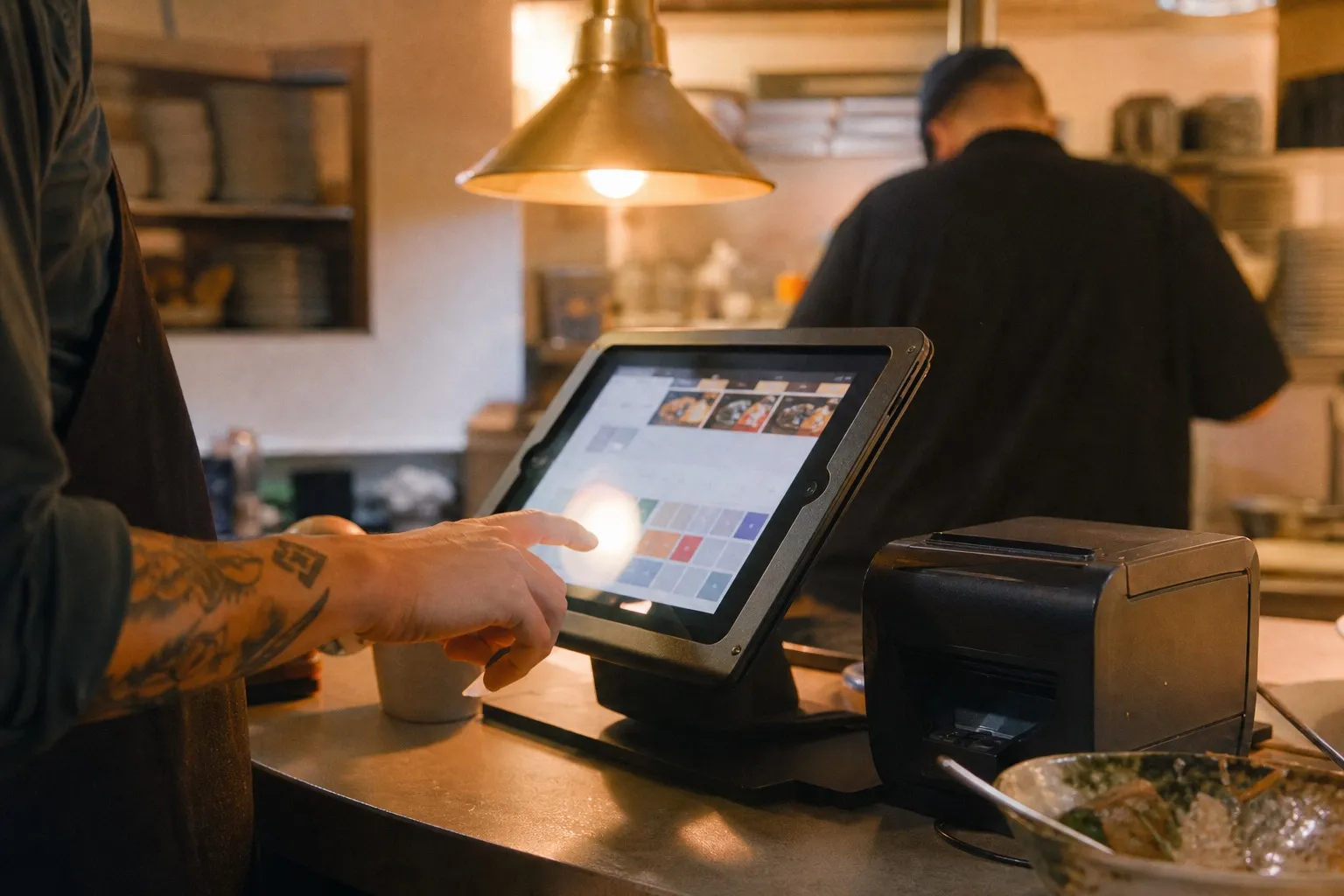
The operations director walks me out past the prep kitchen. A tablet is mounted above the pass running a forecasting dashboard that did not exist six months ago. She nods at it. “That bought us two heads last month,” she says. “We’ll need it to buy us four next month.”
The Chancellor did not give the sector relief. The sector is going to build its own.
— Luca covers restaurant operators. Tips: tips@tabletransfers.com.
Featured
More
Browse all 494 posts
The Voice Agent Maturity Curve
mise
·12 min read
The Four Margins of a Restaurant
mise
·14 min read
The AI Premium in Hospitality M&A: Broker Story or Real Number?
the bottom line
·9 min read
What the DoorDash/SevenRooms Deal Actually Buys
the bottom line
·11 min read