Yum and Nvidia Unveil the Biggest AI Partnership in QSR History

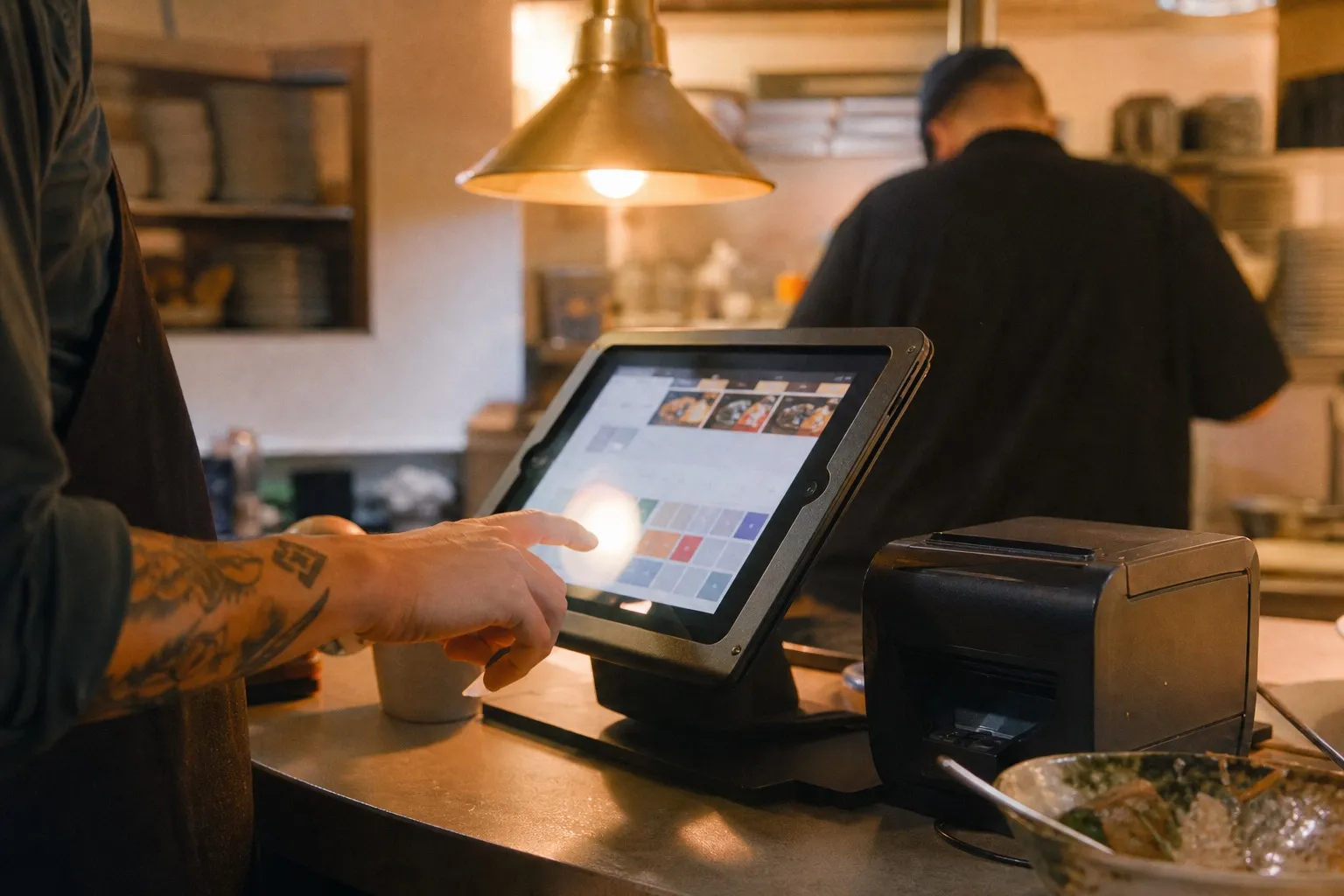
At GTC today, Yum is Nvidia's first restaurant partner. Voice agents deployed in three months. 500 stores in Q2. NIM microservices on AWS. The Google-vs-Nvidia QSR split is now formalized.
The keynote hall at GTC smells like fresh carpet glue and burnt coffee, which is exactly the smell of a tech conference that has outgrown its venue twice and is about to outgrow it a third time. I am wedged into row P, next to a guy from a logistics company who keeps muttering “okay, okay” every time a number with nine zeros appears on the screen. Then the slide flips. A Taco Bell logo. A KFC logo. A Pizza Hut logo. A Habit Burger logo. And underneath, in Nvidia green: Yum! Brands — our first restaurant partner.
The logistics guy stops muttering. Somebody three rows up actually laughs, the short surprised laugh of a person who just lost a bet. I write down one sentence in my notebook and underline it twice: The QSR AI map is now drawn.
The Announcement, In Plain English
Here is what Yum and Nvidia put on the wire today, and what Nvidia’s own blog post reframes for the developer audience, and what the 8-K filing makes official for the shareholders:
- Yum becomes Nvidia’s first restaurant industry partner. Not “first major.” First, period.
- Three workstreams: voice AI ordering (drive-thru and call centers), computer vision (back-of-house plus dining room analytics), and restaurant intelligence (the catch-all bucket where the labor and inventory dashboards live).
- The voice agents were built and deployed in three months. That is the number Nvidia wants you to remember. Three months from kickoff to live audio.
- 500 restaurants in Q2. Not pilot. Rollout.
- The stack is NIM microservices on AWS. Yum’s existing AWS footprint stays. Nvidia’s inference runtime gets bolted on top.
- Yum operates 61,000+ locations across KFC, Taco Bell, Pizza Hut, and Habit Burger. That is the denominator now.
The press release uses the word “industry-first” four times. Nvidia’s post uses “accelerate” six. Both decks bury the most interesting line: the platform Yum is calling Byte by Yum! — the in-house AI suite the company has been quietly building for two years — is now the delivery vehicle for everything Nvidia ships. Yum is not buying an AI product. Yum is fusing Nvidia into its own platform and reselling the platform back to its 61,000 franchisees.
My read: this is not a vendor announcement. This is a platform announcement. Yum just told Wall Street it intends to be the operating system its franchisees pay rent to, and Nvidia just told every other restaurant CTO that the GPU layer of that operating system is taken.
Why Three Months Matters More Than 500 Stores
Everyone in the press scrum is asking about the 500. That is the wrong number to fixate on. Five hundred stores is a Q2 commitment any large brand can make if they throw enough field ops at it — we watched a similar mechanic play out in the call-center retrofit cycle where the bottleneck was never the model, it was the headset inventory and the training-room scheduling.
The number that should rattle competitors is three months. Three months from “let’s build a voice agent” to “the voice agent is taking orders at a Pizza Hut.” For context, the industry’s previous reference point for a voice-AI deployment at a national chain — the one I broke down in this earlier piece — was measured in years, not quarters, and ended with the partner being quietly unwound.
What changed? NIM. Nvidia’s inference microservices ship the model, the runtime, the guardrails, and the scaling primitives as one container. You do not assemble a stack. You pull an image. Yum’s engineers (and the Byte by Yum! team in Plano) get to skip the part where you spend six months arguing about whether to fine-tune Llama or pay for a hosted endpoint, because Nvidia hands you the endpoint and the fine-tune harness in the same package, and AWS gives you the GPUs to run it on.
My read: the three-month figure is the actual product. The 500 stores are the proof. Every restaurant CTO in the keynote hall just did the math on their own deployment timeline and felt their stomach drop a floor.
The Google-vs-Nvidia Split Is Now Official
Here is the part nobody on stage said out loud, but everyone in the hall understood. As of today, the QSR AI map looks like this:
- Google’s side: McDonald’s (the Google Cloud partnership announced late last year, generative AI across the restaurant), Wendy’s (FreshAI on Google Cloud, drive-thru voice in production).
- Nvidia’s side: Yum — all 61,000 of them.
That is not a coincidence and it is not a procurement quirk. It is two different bets about where the value sits. Google is betting the value is in the application layer — Gemini, Vertex agents, the data warehouse — and the GPUs are a commodity they will rent from whoever is cheapest. Nvidia is betting the value is in the inference layer — NIM, the CUDA moat, the developer experience — and the application is whatever the partner wants to build on top.
Yum picking Nvidia means Yum thinks the second bet wins. It also means Yum wants to own the application layer itself, via Byte by Yum!, and is happy to pay Nvidia rent on the inference layer to keep Google out of the architecture diagram.
My read: this is the formalization of a split that has been informal for eighteen months. The next mid-tier chain that picks a side — Chipotle, Domino’s, Restaurant Brands International — will be choosing a camp, not a vendor. And the camps will not be easy to switch between, because the data gravity of two years of drive-thru audio is real.
What I’m Watching Next
A few things I am going to be chasing once I am out of this hall and back in cell range:
- Which brand goes first inside Yum. The press release does not name names. My money is on Taco Bell — they have the most digital-native customer base and the youngest drive-thru audio corpus, and the Plano team has been running Taco Bell pilots since at least last summer. Pizza Hut call centers are the dark horse because call-center voice is technically easier than drive-thru voice (no road noise, no idling engines, no menu-board lag).
- What the franchisee economics look like. Yum collects royalties on a percentage of sales. If Byte by Yum! gets bundled into the existing tech fee, franchisees absorb it quietly. If it gets line-itemed, expect the franchisee associations to make noise by summer.
- Whether Nvidia signs a second restaurant partner this year. “First” is only valuable if there is a “second.” If Nvidia stays exclusive with Yum through 2025, the moat tightens. If they sign, say, Inspire Brands or Domino’s by Q4, the camp expands and Google’s position narrows.
- The labor story Yum is not telling yet. Voice agents in 500 drive-thrus is a labor story whether Yum frames it that way or not. The press release is careful to say “augment team members.” The next ten-K will say something more honest.
The keynote ends. The logistics guy next to me exhales and says “well, that’s the whole industry then.” He is not wrong. He is just early by about six months.
— Maya covers restaurant tech. Tips: tips@tabletransfers.com.
Featured
More
Browse all 494 posts
The Voice Agent Maturity Curve
mise
·12 min read
The Four Margins of a Restaurant
mise
·14 min read
The AI Premium in Hospitality M&A: Broker Story or Real Number?
the bottom line
·9 min read
What the DoorDash/SevenRooms Deal Actually Buys
the bottom line
·11 min read